
Japan Data Center Industry: Cloud Expansion, AI Demand, and Infrastructure Growth
Digital Transformation, Cloud Adoption, and AI Expansion Driving Infrastructure Demand
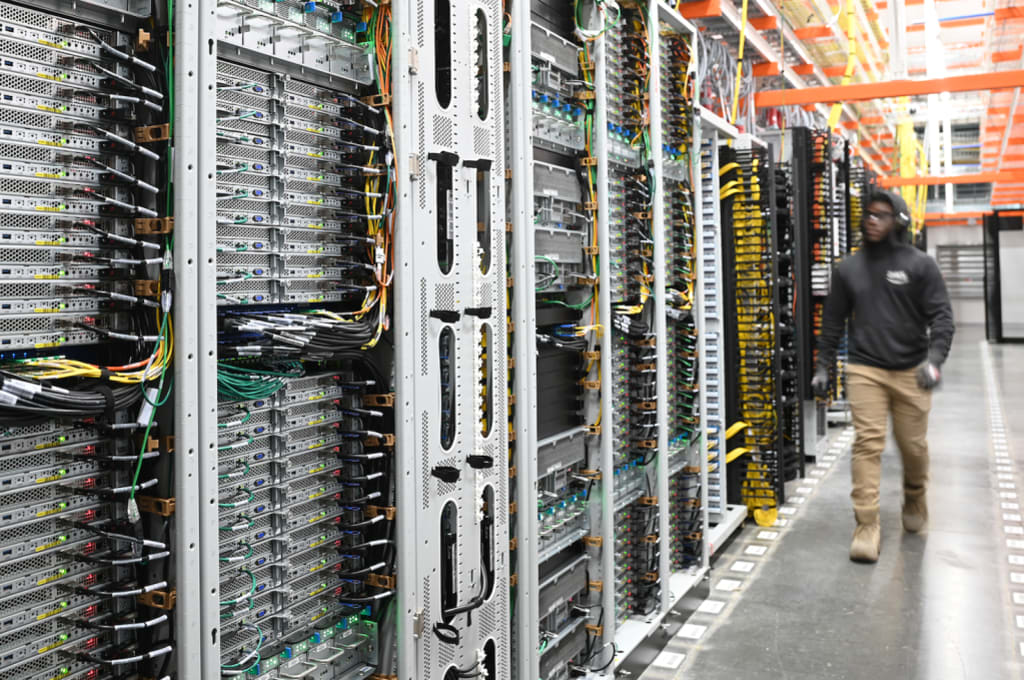
Market Overview
Data centers form the backbone of the digital economy, supporting cloud computing, artificial intelligence, online services, financial transactions, and enterprise IT operations. In Japan, the rapid expansion of digital services, high internet penetration, and advanced technological adoption have made data center infrastructure a critical national asset.
According to the latest report by IMARC Group, the Japan data center market reached a capacity of 1.4 GW in 2025. The market is projected to grow to approximately 2.2 GW by 2034, expanding at a compound annual growth rate (CAGR) of 4.74% during 2026–2034.
Download a Free Sample PDF of This Market Report for Detailed Insights
Growth is being fueled by increasing demand for cloud services, digital transformation across industries, expansion of 5G networks, and the rising computational requirements of artificial intelligence applications.
Key Drivers Supporting Market Expansion
- Rapid Cloud Adoption Across Industries
Businesses in Japan are increasingly migrating workloads to cloud platforms to improve scalability, efficiency, and cost management. Financial institutions, manufacturing firms, retailers, and public agencies are all investing heavily in cloud infrastructure, driving demand for modern data centers.
- Expansion of Artificial Intelligence and Big Data
AI applications require enormous computing power and storage capacity. From predictive analytics and autonomous systems to generative AI and real-time processing, these technologies are significantly increasing demand for high-performance data centers.
- Growth of Digital Services and E-Commerce
Online retail, digital payments, streaming platforms, gaming, and remote work solutions continue to expand across Japan. The surge in data traffic generated by these services necessitates reliable and scalable infrastructure.
Government Policies and Strategic Support
The Japanese government recognizes digital infrastructure as essential to economic growth and national competitiveness. Policy initiatives promoting digital transformation, smart cities, and advanced communication networks are indirectly accelerating data center development.
Programs supporting 5G deployment, regional digitalization, and public-sector IT modernization are creating sustained demand for secure and resilient data storage and processing facilities.
Authorities are also emphasizing data sovereignty and cybersecurity, encouraging domestic infrastructure development to ensure that critical information remains securely managed within national boundaries.
Additionally, sustainability guidelines are influencing new projects, with policies promoting energy efficiency, renewable power usage, and reduced environmental impact.
Recent Investments and Industry Developments
Major technology companies and infrastructure providers are expanding their presence in Japan’s data center sector.
Global cloud providers have announced large-scale investments in new facilities, particularly in the Tokyo and Osaka metropolitan areas, which serve as primary connectivity hubs. These regions benefit from robust fiber networks, stable power supply, and proximity to major business districts.
There is also growing interest in regional data centers to support disaster resilience and reduce latency for users outside major urban centers.
Hyperscale facilities designed for AI workloads are becoming increasingly common, featuring advanced cooling technologies, high-density server configurations, and improved energy management systems.
In addition, partnerships between telecom operators, real estate developers, and energy providers are facilitating the development of next-generation digital infrastructure across the country.
Role of Technology and Innovation
- High-Density Computing Infrastructure
Modern data centers are designed to handle AI training, machine learning, and complex analytics, requiring powerful processors and specialized hardware such as GPUs and accelerators.
- Advanced Cooling Solutions
Energy-efficient cooling systems, including liquid cooling and optimized airflow designs, are being deployed to manage heat generated by high-performance equipment while reducing operational costs.
- Renewable Energy Integration
Operators are increasingly adopting renewable energy sources and energy management technologies to meet sustainability goals and reduce carbon emissions.
Japan Data Center Industry Trends
Urban concentration remains a defining feature of Japan’s data center landscape, with Tokyo serving as one of the world’s largest connectivity hubs. However, concerns about land availability, power constraints, and disaster risks are encouraging expansion into secondary locations.
Edge computing is gaining importance as applications such as autonomous vehicles, smart manufacturing, and Internet of Things (IoT) devices require low-latency processing closer to end users.
Security and reliability remain top priorities, with facilities designed to withstand earthquakes, power disruptions, and cyber threats.
Market Segmentation
Component Insights:
- Solution
- Services
Type Insights:
- Colocation
- Hyperscale
- Edge
- Others
Enterprise Size Insights:
- Large Enterprises
- Small and Medium Enterprises
End User Insights:
- BFSI
- IT and Telecom
- Government
- Energy and Utilities
- Others
Regional Insights:
Kanto Region
Kinki Region
Central/ Chubu Region
Kyushu-Okinawa Region
Tohoku Region
Chugoku Region
Hokkaido Region
Shikoku Region
Competitive Landscape
The Japan data center market includes global cloud providers, telecommunications companies, colocation service providers, and infrastructure developers. Competition is driven by location advantages, connectivity, energy efficiency, security standards, and scalability.
Companies capable of delivering hyperscale capacity while meeting strict reliability and sustainability requirements are particularly well positioned.
Market Outlook
The Japan data center market is expected to grow steadily over the next decade as digital transformation accelerates across all sectors of the economy.
Demand from artificial intelligence, cloud computing, 5G services, and data-intensive applications will continue to drive new investments in high-capacity infrastructure.
With strong government support, technological innovation, and increasing reliance on digital services, data centers will remain a cornerstone of Japan’s digital future, enabling economic growth, technological advancement, and global competitiveness.
About the Creator
It's 2026. Songs Turning 10 This Year
In 2016, we saw the rise of short form videos and what would lead to the birth of TikTok. We cannot forget the Snapchat filters no matter how cringe worthy some of them might have been. It was also the year in which the hit series Stranger Things debuted.
By Jasmine Aguilara day ago in Beat
Why I Buy Second-Hand Vinyl Records
My apologies. This originally had my commentary but was blocked by YouTube due to the album "Thick as a Brick" playing in the background. So I repurposed it as an Instagram reel with ninety seconds of the music that got it blocked.
By Mike Singleton 💜 Mikeydred 2 days ago in Beat


Comments
There are no comments for this story
Be the first to respond and start the conversation.