
Japan Semiconductor Market: Size, Trends, and Growth Outlook
Government Initiatives, Strategic Investments, and AI-Driven Demand Reshaping the Industry
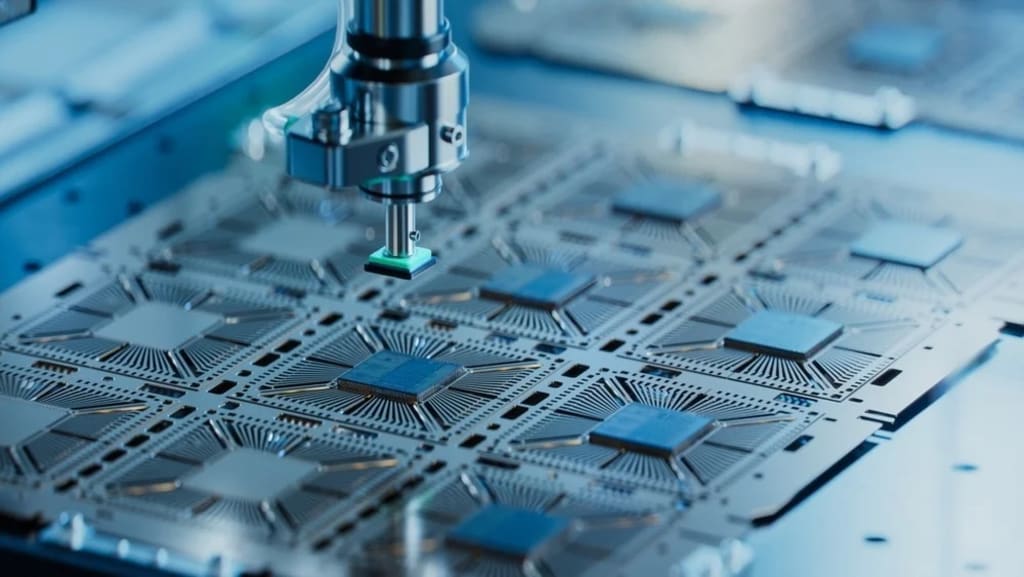
Market Overview
Semiconductors are fundamental to modern technology, enabling the operation of consumer electronics, automotive systems, industrial equipment, telecommunications networks, and artificial intelligence platforms. Japan has historically been a major global player in semiconductor materials, manufacturing equipment, and specialized chip technologies, making the industry central to the country’s economic security and technological competitiveness.
According to the latest report by IMARC Group, the Japan semiconductor market was valued at USD 42.3 billion in 2025. The market is expected to reach approximately USD 63.2 billion by 2034, growing at a compound annual growth rate (CAGR) of 4.40% between 2026 and 2034.
Download a Free Sample PDF of This Market Report for Detailed Insights
Growth is being supported by expanding demand from automotive electrification, consumer electronics, digital infrastructure, and advanced manufacturing sectors. Increasing reliance on semiconductors across nearly all industries has reinforced their strategic importance in Japan’s long-term economic planning.
Key Drivers Supporting Market Expansion
- Rising Demand from Automotive and Electronics Industries
Japan’s automotive sector is undergoing a major transformation toward electric and autonomous vehicles, both of which require significantly higher semiconductor content than conventional cars. Chips are essential for battery management systems, driver-assistance technologies, power control, and onboard computing.
At the same time, strong global demand for consumer electronics such as gaming consoles, smartphones, imaging devices, and smart appliances continues to support semiconductor consumption.
- Industrial Automation and Robotics Leadership
Japan is one of the world’s leaders in robotics and precision manufacturing. Factories increasingly rely on sensors, control systems, and machine intelligence powered by advanced semiconductors. As Industry 4.0 adoption accelerates, demand for high-performance chips across industrial sectors is expected to grow steadily.
- Expansion of Data Centers and Artificial Intelligence
The rapid growth of artificial intelligence, cloud computing, and big-data processing is driving the need for powerful processors and memory devices. Data center expansion across Japan is therefore contributing significantly to semiconductor demand.
Government Policies and Strategic Support
Recognizing the critical role of semiconductors in economic security, Japan has implemented extensive policy measures to revitalize domestic chip production and reduce dependence on overseas supply chains.
Government initiatives include large-scale subsidies, tax incentives, and support for research and development. Public funding programs have allocated trillions of yen to strengthen manufacturing capacity, promote innovation, and attract foreign investment.
Japan is also fostering regional semiconductor clusters, particularly in areas such as Kyushu, which has emerged as a major hub due to its concentration of manufacturing facilities and supportive infrastructure.
In addition, the government is encouraging international collaboration with allied countries to secure stable access to advanced technologies and raw materials while mitigating geopolitical risks.
Recent Investments and Industry Developments
Significant domestic and international investments are reshaping Japan’s semiconductor landscape.
A major manufacturing facility operated by Taiwan Semiconductor Manufacturing Company (TSMC) in Kumamoto Prefecture represents one of the largest foreign investments in Japan’s technology sector. Supported by substantial government subsidies, the plant is expected to produce chips for automotive and industrial applications, helping stabilize supply chains.
U.S.-based Micron Technology has also announced plans to invest heavily in advanced memory production in Hiroshima, focusing on chips used in artificial intelligence and high-performance computing. Government backing for this project underscores Japan’s commitment to next-generation semiconductor technologies.
Meanwhile, domestic initiatives such as the Rapidus project aim to develop and mass-produce cutting-edge logic chips using advanced process nodes. These efforts are intended to restore Japan’s competitiveness in high-end semiconductor manufacturing and reduce reliance on foreign suppliers.
Role of Technology and Innovation
- Advanced Manufacturing Processes
Continuous progress in semiconductor fabrication is enabling the production of smaller, faster, and more energy-efficient chips. These improvements are critical for applications such as AI systems, autonomous vehicles, and next-generation communication networks.
- Power Semiconductor Development
Japan maintains a strong position in power semiconductors, which are essential for electric vehicles, renewable energy systems, and industrial equipment. As global electrification accelerates, demand for these components is expected to rise significantly.
- Research Collaboration and Ecosystem Strengthening
Universities, research institutes, and private companies are working together to advance semiconductor design, materials science, and production techniques. Government-supported programs are helping to build a resilient innovation ecosystem.
Japan Semiconductor Industry Trends
Recent global supply chain disruptions have highlighted vulnerabilities in semiconductor availability, prompting Japan to prioritize domestic production capacity. Strategic partnerships with international firms are helping to secure access to advanced manufacturing technologies.
The growing importance of artificial intelligence, autonomous systems, and 5G communications is expected to drive long-term demand for sophisticated semiconductor solutions.
Sustainability is also becoming a key consideration, with manufacturers focusing on energy-efficient production processes, reduced environmental impact, and responsible resource management.
Market Segmentation
By Component
- Memory Devices
- Logic Devices
- Analog ICs
- Discrete Semiconductors
- Others
By Application
- Consumer Electronics
- Automotive
- Industrial
- Telecommunications
- Healthcare
- Others
By Region
Kanto Region
Kansai / Kinki Region
Central / Chubu Region
Kyushu–Okinawa Region
Tohoku Region
Chugoku Region
Hokkaido Region
Shikoku Region
Competitive Landscape
The Japan semiconductor market includes a mix of domestic manufacturers, global chipmakers, equipment suppliers, and materials producers. Competition is influenced by technological expertise, production efficiency, supply reliability, and the ability to meet evolving industry requirements.
Companies that combine advanced manufacturing capabilities with secure supply chains and innovation in next-generation technologies are likely to maintain a strong market position.
Market Outlook
The Japan semiconductor market is expected to grow steadily over the coming decade as the country intensifies efforts to rebuild its domestic chip ecosystem and secure technological leadership.
Government support, large-scale investments, and rising demand from AI, automotive electrification, and digital infrastructure will continue to shape the industry’s trajectory.
As semiconductors remain essential to modern economies and national security, Japan’s focus on innovation, resilience, and international collaboration is likely to reinforce its position as a key player in the global semiconductor landscape.
About the Creator
It's 2026. Songs Turning 10 This Year
In 2016, we saw the rise of short form videos and what would lead to the birth of TikTok. We cannot forget the Snapchat filters no matter how cringe worthy some of them might have been. It was also the year in which the hit series Stranger Things debuted.
By Jasmine Aguilar2 days ago in Beat
The Creative Process Behind Kērd Daikur Songs
Behind every memorable piece of music is a story shaped by emotion, intention, and creative discipline. That philosophy is deeply reflected in kērd daikur songs, where sound becomes a personal expression rather than just entertainment. Each track carries a distinct atmosphere, built to connect with listeners on a deeper level—both through recorded releases and kērd daikur live performances.
By kerddaikur4 days ago in Beat
'Till Death We Do Art
There would be nothing divine in this world without art. Nature may surpass the divine to all intents and purposes, but like everything it absorbs and is absorbed by, it remains here, stuck on the surface of this world, ever-present, physically bound to the universe.
By Avocado Nunzella BSc (Psych) -- M.A.P 7 days ago in Art



Comments
There are no comments for this story
Be the first to respond and start the conversation.