
Guitar Serial Numbers Reveal Why My 'Mint 1965 Stratocaster' Had 1982 Numbers: A Market Lesson
Master the art of decoding serial numbers to authenticate vintage guitars, determine production dates, and avoid costly counterfeits in the modern used guitar market.


I've been staring at scratched plastic, worn-down brass, and half-faded ink on guitar headstocks for longer than I care to admit. You know what's funny? Half the guitars I've bought over the years had serial numbers that told me everything I needed to know, but I barely looked at them until I got burned on a fake '62 Strat.
Here's the thing about serial numbers – they're not just random digits some factory worker thought looked pretty. They're the guitar's birth certificate, its travel document through time, and sometimes its death warrant if someone's been shady with it.
Why You Should Actually Care
You can walk into a guitar shop, point at a dusty Fender and ask "Does it sound good?" But you're missing half the story. That serial number? It's telling you whether the seller's asking $2,000 for a guitar that left the California factory in 1965... or whether it's actually a 1995 Mexican model someone put vintage tuners on.
I've seen more deals fall apart over serial numbers than I can count. Usually it's some poor soul who bought a guitar from a "family friend" who "had it since new," only to discover the numbers don't add up.
Fender's Secret Code (Or Lack Thereof)
Old Fenders drive me absolutely crazy. You look at a '59 Strat and think the serial number's going to tell you everything. Sometimes it does. Sometimes it's completely worthless.
Before 1976, Fender just grabbed a number and stuck it on. I've personally seen three legitimate '57 Strats with the same serial number. The company literally used the same numbers over and over. It's enough to make you paranoid about every vintage guitar.
The good news: Pre-1976 Fenders had date stamps in the neck pocket, on the neck heel, and sometimes under the bridge pickup. The bad news? You can't see most of those without taking the guitar apart, and nobody selling a "mint condition" vintage guitar wants you taking it apart.
After 1976, Fender actually got organized. The serial numbers became useful overnight. A guitar starting with "S9..." from that era? That's a 1979 model. A "E8..." means 1988. Suddenly the game became simple – assuming the serial number on the headstock actually matches the guitar you're holding.
Gibson's Mind Games
Gibson serial numbers have triggered more headaches than any other brand I've dealt with. At least Fender used some kind of pattern. Gibson changed their mind every decade or so.
I picked up a Les Paul from a pawn shop in Atlanta last year. Serial number starts with 0098. My first thought was "Great, another eighties Norlin axe." Nope. After twenty minutes with the Gibson database, turns out it's actually a '59. That fifteen hundred dollars I spent suddenly felt like I'd won the lottery.
The modern eight-digit stuff? That's easy. The old six-digit nightmare from the sixties and seventies? Good luck. I've known dealers who've been wrong three times on the same guitar because those old numbers kept changing.
Here's my trick: Look for inconsistencies. Real Gibson serials from before 1977 just have a different feel. The stamping looks different. The spacing feels weird. Once you've handled enough of them, fake numbers literally look wrong to your eyes.
PRS Got It Right (Finally)
PRS serial numbers actually make sense, which somehow feels unnatural after dealing with vintage Gibson and Fender stuff. Starting in 1985, they used month, year, and production numbers in a logical format. You can actually tell when you see a 1992 Custom 24 just by looking at the serial number.
The problem? The really old ones sometimes have sloppy stamping. Paul Smith's crew hand-stamped those early guitars, and some days their hands weren't exactly steady. I've seen numbers so crooked you'd swear they were fake, but they weren't.
Martin Makes You Work For It
Martin serial numbers are like solving a puzzle, except the puzzle keeps changing. The system evolved significantly over the years, and you need a PhD in vintage banjo restoration to understand some of the early stuff.
I recently authenticated a 1937 OM-28 for a friend. The serial number was so tiny I missed it the first three times I looked. Turns out those old Martins can make you feel pretty stupid if you don't know what you're looking at.
The post-1987 Martin system isn't too bad. Pre-1987? Grab a reference book and prepare to feel confused. The really old ones are stamped so lightly that half the numbers might be missing.
The Stuff That Actually Matters
I've taught more people than I can count to read serial numbers, but here's what nobody tells you: The numbers are just the start. What really matters is how they match the guitar's physical characteristics.
A '59 Stratocaster has specific features, specific tuners, specific everything. The serial number should match what you're seeing in every other part of the guitar. When they don't line up, you've got yourself a problem.
I've walked away from three perfectly good-looking vintage guitars in the last month because the serial numbers weren't playing nice with the rest of the story. One guy kept insisting his "mint 1965 Stratocaster" had the original pickups, but the serial number said 1982. He genuinely believed what he was selling – sometimes the confusion isn't intentional, just honest ignorance.
How Much Should You Trust Them?
Serial numbers are like weather forecasts: Usually right, sometimes wrong, and occasionally designed to make you uncomfortable. I've learned to trust my gut more than anything else.
If a serial number looks perfect but the guitar feels off, I walk away. If the number seems sketchy but everything else checks out, I might still walk away. Life's too short for questionable guitars.
Rule number one: Never buy a vintage guitar based on the serial number alone. Rule number two: Always check the serial number before you buy. Rule number three: When in doubt, refer to rules one and two.
What I Still Don't Know
The serial number game keeps changing. I learn something new every month, usually from making expensive mistakes. Some vintage Gibson guitars from the seventies have numbers that don't exist in any reference book. Some Fenders left the factory with no numbers at all. Sometimes you just have to accept that you can't figure out everything.
I keep a notebook. Every strange serial number, every inconsistent date stamp, every guitar that doesn't fit the rules. After fifteen years of this, the notebook's pretty thick. It helps with the next mystery that shows up.
Your Next Steps
You don't need to become a serial number detective overnight. Just start looking, start paying attention, start noticing patterns. Next time you see a vintage guitar, take a picture of those numbers. Look 'em up later. See what you learn.
The guitar world is full of good stories and expensive mistakes. Knowing your serial numbers won't prevent every mistake, but it'll keep you from making the expensive ones more often than not.
And remember: If something feels wrong, it probably is. Trust your instincts, but trust the numbers more. When those guys disagree, your instincts usually know who's lying.
About the Creator
Resyn Marketplace
Resyn is a commission-free marketplace where musicians buy, sell, and trade gear safely. Connect with verified sellers, discover unique instruments, and keep 100% of what you earn. No fees. No flippers. Just real players.
Keep reading
More stories from Resyn Marketplace and writers in Beat and other communities.
How to Authenticate an Expensive Vintage Guitar Before Buying to Avoid Counterfeits in 2025
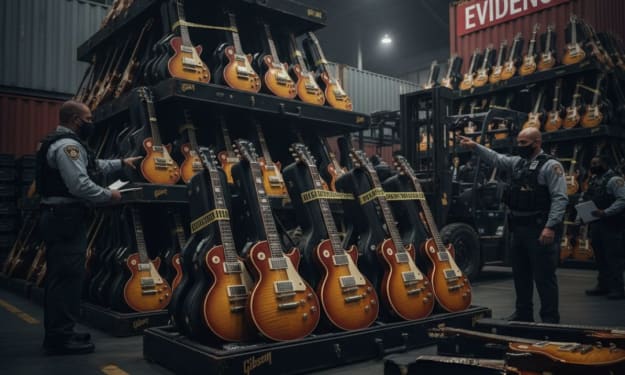
In 2024, experts estimate that over 70% of signed guitar authentication requests revealed forgeries, costing collectors millions in worthless purchases. Last November, U.S. law enforcement seized 3,000 counterfeit Gibson guitars valued at more than $18 million at Long Beach Seaport—the largest seizure of counterfeit musical instruments to date.
By Resyn Marketplace3 months ago in Beat
It's 2026. Songs Turning 10 This Year
In 2016, we saw the rise of short form videos and what would lead to the birth of TikTok. We cannot forget the Snapchat filters no matter how cringe worthy some of them might have been. It was also the year in which the hit series Stranger Things debuted.
By Jasmine Aguilar6 days ago in Beat


Comments
There are no comments for this story
Be the first to respond and start the conversation.