
Stratocaster vs Telecaster: The Differences That Matter When Choosing Your Next Guitar
A practical guide to the real-world tone, feel, and hardware differences between Fender's two most iconic guitars...

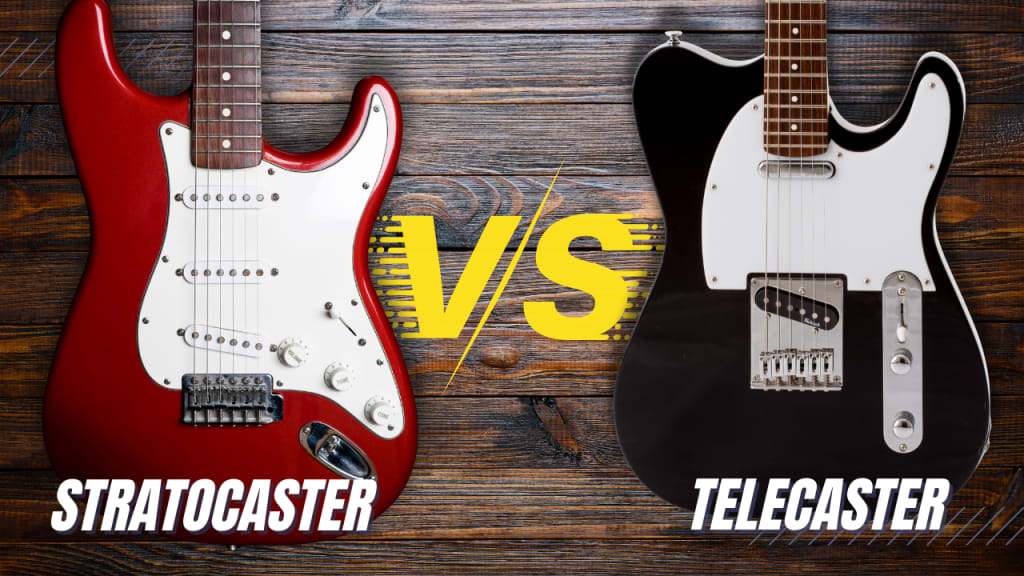
The Stratocaster vs Telecaster debate is a timeless one, with both Fender legends having shaped rock, country, blues, funk, and indie over 70 years and remaining the go-to choice for players at every level. While they share a common bloodline, the differences that matter most - tone, feel, hardware, and mod potential - can steer your buying decision in a very particular direction, because knowing how a Strat and a Tele differ in real-world use will save you time, money, and buyer's remorse.
The Core Design Differences Between Stratocaster and Telecaster
The Stratocaster has a contoured body that's famously ergonomic, with belly cuts and forearm contours making it a comfortable bedfellow for long sessions, whether you're sitting or standing, and upper fret access is almost easy, thanks to the double-cutaway design. In contrast, the Telecaster uses a more traditional slab body with a single cutaway, which is simple, plain, and direct, although some players might find the hard edge less comfortable for forearm placement, while many players appreciate the solid, non-frilly feel of a Telecaster, especially when it comes to performing live on stage.
The Tele's single cutaway also provides a distinct visual shape that immediately says classic guitar, and, consequently, if comfort for all-night playing sessions and ease of upper-fret access is your main concern, the Stratocaster's curves are your new best friend, but if you prefer a guitar with a firm, solid feel and a classic profile that's as iconic as it is simple, the Telecaster gets the nod.
Pickup Configuration: The Foundation of Tone
The Stratocaster is typically equipped with three single-coil pickups and five-way switching, which offers a wide range of tonal options, including the celebrated "in-between" quack in positions 2 and 4, because this configuration allows for versatility and tonal diversity, whereas the Telecaster is usually fitted with two single-coil pickups and three-way switching, with the bridge pickup mounted to a metal plate, which adds to the aggressive, cutting voice, and the neck pickup having a warm, rounded character that balances the bite, thus, Strats are made for versatility and tonal diversity, while Teles are all about immediacy and focus with two very distinct voices that cover a wide territory.
Tone Comparison: What You'll Actually Hear
A great Strat is glassy, chimey, and expressive, with bell-like highs, scooped mids, and spanky cleans, and overdriven, the Strat can be vocal and fluid, especially in the neck and neck-middle positions, because it's a go-to for blues, funk, pop, and classic rock tones, as seen in the playing styles of Hendrix, SRV, and Clapton, although a classic Tele is all about bright, punchy, present tones, with its bridge pickup slicing through any mix, making it perfect for rhythm parts and lead lines that demand authority, and its neck pickup being warm and round, with a soulful, almost jazzy quality, which is why the Tele is the very definition of simple and effective.
Suitable Genres and Player Types
The Stratocaster is well-suited for:
- Blues
- Funk
- Pop
- Classic rock
- R&B
- Jam-oriented styles that make good use of expressive trem work and multiple pickup positions
While the Telecaster's sound is also well-suited for:
- Worship and church music
- Session work
- Country and Americana
- Punk, indie, and alternative rock
Notable players include Jeff Beck, Keith Richards, Merle Haggard, and James Burton.
Tonewood and Body Construction
The body of a Telecaster is made from ash, but was commonly made of alder in the 1950s, with the 1960s to 1980s models also made of ash, and such a body is usually supplied in two pieces of wood glued together along a center seam, although some more costly models feature a higher grade of wood, and most are alder, while ash is also used, and on many production Telecasters, the body is made from two pieces of ash, top and back, separated by a center seam, while others are made from a single piece.
Tremolo and Bridge Systems
The swivel tremolo system designed by Leo Fender was also debuted in the Esquire/Telecaster, with the Bridge able to be raised and lowered using the adjustment screws to raise and lower pitch, and another visual difference is its usually brass bridge saddles upon which the strings are loaded, as contrasted with the original fixed bridge that is a part of the non-tremolo bridge system, because the purpose of the tremolo is to allow for pitch variations while adding texture to the music, and in standard usage, the tremolo arm is used to drop the pitch of the strings, thereby creating a special effect of the note's attack, while string bending is also possible, as demonstrated by guitarists such as Jeff Beck and David Gilmour.
Fixed vs Tremolo: Which One Fits You
Telecasters are almost always equipped with a fixed hardtail bridge, with a string-through-body design, which gives the Tele excellent tuning stability, makes it easier to maintain, and provides a strong attack, because many players believe that the Tele's bridge plate and brass saddles also play a significant role in its snappy sound, whereas if you want the trem-based expressiveness and a fluid feel under your picking hand, the Strat's tremolo system is a huge advantage, but if you want rock-solid tuning and direct attack, the Tele's fixed bridge is a better choice.
Modding and Customization Potential
The Strat mod ecosystem is enormous, with common mods including:
- HSS or HSH pickup configurations for humbucker muscle
- Hotter single-coils and noiseless pickups
- Upgraded trem blocks and locking tuners
- The 5-Way Super Switch for extended tonal routing options
Although the Telecaster is a simpler instrument, it's no less receptive to creative upgrading, with popular mods including:
- 4-way switch for series wiring and thicker tone
- Hotter bridge pickup or humbucker in the neck
- B-bender or Bigsby systems for country/Americana textures
The Tele remains a modder's canvas, with a minimalist ethos.
Buying Guide: Which Models Fit Your Budget
Entry-Level Squier's budget lines are capable of delivering some impressive quality for practice, backup, or first serious guitars, because Player Series models are the next best step up for gig-ready instruments, without an American price tag, and the mid-range sweet spot offers excellent pickups, stable hardware, and consistent build quality, which represents the best value for most working players, balancing price and performance, although vintage and collectible market Strats and Teles are super collectible, and can appreciate over time, with the value influenced by the year, originality, condition, and provenance.
Choosing the Right Guitar for You
You should choose a Stratocaster if you:
- Need maximum versatility
- Love expressive vibrato
- Want a guitar that adapts to multiple genres and sessions
- Appreciate contoured comfort for long sets and rehearsals
You should choose a Telecaster if you:
- Want simplicity and reliability
- Love punchy rhythm work and cutting leads
- Prefer a strong fundamental tone that stays defined in the mix
- Want rock-solid tuning and easy maintenance
Building a Two-Guitar Setup
Both guitars are very complementary to one another, because many guitarists build a versatile two-guitar rig with a Strat for smooth, glassy tones and a Tele for punch and bite, and if you already have one, then the other can add some serious tonal depth to your arsenal that a pedal just can't give you, thus, when ready, you can shop verified listings and trade directly with trusted sellers without paying middleman fees at Resyn Marketplace.
Final Thoughts: Why Both Icons Endure
Both the Stratocaster and Telecaster are iconic for a reason, because the Strat provides comfort, versatility, and articulation with your whammy bar, while the Tele gives you cut, simplicity, and the bulletproof reliability of a hardtail, and which guitar is best for you depends on your playing style, the music you play, and the feel you want in your hands, so if you can, play both through your own rig, and when ready, shop verified listings on a commission-free marketplace.
About the Creator
Resyn Marketplace
Resyn is a commission-free marketplace where musicians buy, sell, and trade gear safely. Connect with verified sellers, discover unique instruments, and keep 100% of what you earn. No fees. No flippers. Just real players.
Keep reading
More stories from Resyn Marketplace and writers in Beat and other communities.
How Much Does It Cost to Replace Guitar Strings? The Complete 2026 Price Breakdown
Look, if you're reading this, you probably already know strings wear out. But what does it actually cost to keep your guitars playing well? The answer depends on what you play, how often, and whether you're doing it yourself or paying someone else.
By Resyn Marketplaceabout a month ago in Beat
It's 2026. Songs Turning 10 This Year
In 2016, we saw the rise of short form videos and what would lead to the birth of TikTok. We cannot forget the Snapchat filters no matter how cringe worthy some of them might have been. It was also the year in which the hit series Stranger Things debuted.
By Jasmine Aguilar6 days ago in Beat
Just A Minute
Introduction As I write this or rather put this together, there are forty-one hours to go before the Vocal "Just A Minute" Challenge, and it got me thinking, what about a playlist of songs that last sixty seconds or less, and there are a lot of good ones that are literally gone in sixty seconds.
By Mike Singleton 💜 Mikeydred 2 days ago in Beat




Comments
There are no comments for this story
Be the first to respond and start the conversation.