
Documentary Review: 'Moby Doc' A Pretentious Look at a Pretentious Artist
Moby Doc is for fans of Moby only.

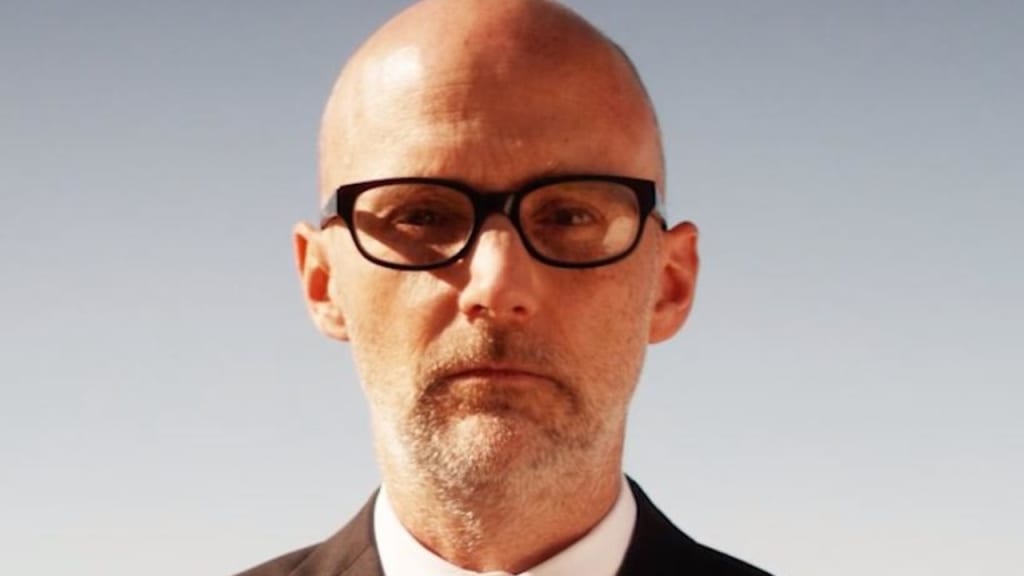
If you plan on watching the new documentary Moby Doc, all about the music artist Moby, then you must be a fan first. The documentary is utterly impenetrable to those who aren’t already in Moby’s fandom. Being someone outside of the Moby fandom, aware of him mostly through cultural osmosis, I was rarely engaged or invested in the rather obtuse and off-putting artiness of Moby Doc. I appreciate that Moby and director Robert G Bralver wanted to do something different and fitting for Moby’s unique personality, but the artful touches are a little too extravagant for those who aren’t already familiar with Moby’s personality and art.
The documentary posits that Moby Doc came to be as Moby himself was attempting to find a better understanding of himself. He begins the project with just himself and a camera in a confessional style though he can’t resist breaking the fourth wall and ruining any sense that we are seeing anything that isn’t fully performative. Perhaps that’s his personality, perhaps everything he does is for show and for attention, that’s fine, but it doesn’t feel revealing, it feels like another layer of irony or defensive artfulness.
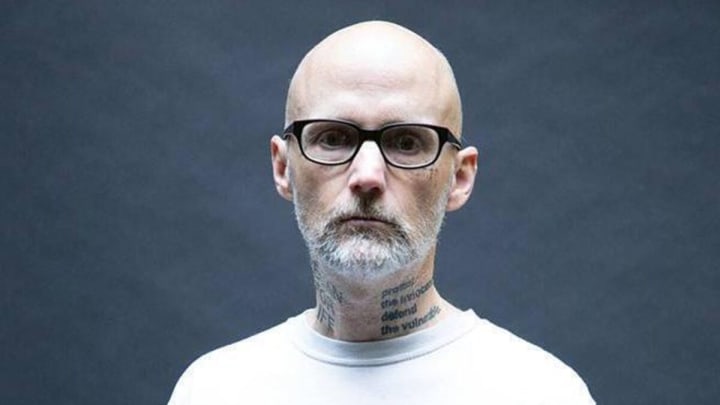
From there, the movie transitions to Moby playing with little wooden dolls, dressing them, painting them, all to have them portray his childhood in New York and Connecticut. He was the son of an alcoholic father who took his own life and a mother who was emotionally unavailable. As Moby explains, his childhood was difficult but he learned an important lesson, one that he carries with him to this day: animals are better than humans. On this point, Moby and I completely agree.
The cats, dogs, and rats that Moby grew up with, the rats were from his dad’s job as a researcher and not an infestation, were the only source of comfort Moby had growing up. This has carried forward into his adulthood as he became a vegan out of love for animals and has used his celebrity to promote animal rights causes. This is all really admirable and I genuinely find this aspect of his life to be interesting and worthy of exploration but that is not what Moby Doc is about.
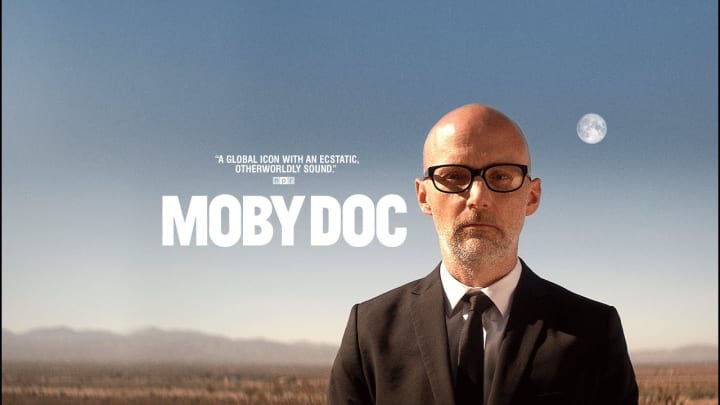
Instead, the documentary meanders through a navel-gazing look at Moby’s career from indie darling DJ in 1980’s New York City to massive worldwide pop star with his record “Play,” to his time with David Bowie and the career resurgence that caused. All of this is told via a disjointed narrative that bounces confusingly back and forth in time via artful segments involving Moby getting therapy, Moby acting out his childhood traumas via an acting troupe of his friends to animated segments.
I appreciate not wanting to do yet another direct to camera series of talking head interviews. Lord knows, all documentary fans have tired of the typicality of such docs. They have their place, because experts remain interesting to talk to, the right expert can make any talking head segment more interesting, but the desire to change things up in a documentary format is admirable. That said, Moby Doc could stand to have a little more structure. As it is, it feels like a self-important art piece rather than an insightful work of documentary non-fiction.
My familiarity with Moby, as I mentioned before, is mostly through cultural osmosis. I’ve never sat down and listened to his music. The one thing I’ve known about Moby is the time he claimed to have dated Natalie Portman in his auto-biography, something she was forced to deny in media reports calling Moby ‘Creepy.’ This incident is not included in Moby Doc but since it likely occurred during his many bouts with heavy drug use, his confusion can be forgiven somewhat. I didn’t go into Moby Doc expecting an explanation for this incident and he did eventually apologise for the mischaracterization.
That was the only thing I really knew about Moby before Moby Doc and it remains one of the few things I feel I still know about Moby after Moby Doc. The documentary doesn’t tell us much because there doesn’t appear to be much to tell. Traumatic childhood led to drug abuse as an adult, poor decisions and many career lapses and relapses. The artfulness of the telling of Moby’s story is fine, it looks like he put a lot of effort into these artful touches and the different way to tell a story via documentary. However, that same style feels like a barrier to anything truly insightful or memorable.
About the Creator
Sean Patrick
Hello, my name is Sean Patrick He/Him, and I am a film critic and podcast host for the I Hate Critics Movie Review Podcast I am a voting member of the Critics Choice Association, the group behind the annual Critics Choice Awards.
Keep reading
More stories from Sean Patrick and writers in Beat and other communities.
Movie Review: 'Nobody'
Hutch is a rather diffident fellow, a serious normie, on the surface. Hutch's life rarely changes from day to day. He has a routine like clockwork, a seriously boring marriage, on the brink of collapse from the weight of apathy, and two normie kids. It appears, again, on the surface, to be a painfully normal existence. And yet, something in Hutch’s manner causes you to wonder about him. His workouts are rather intense for a man whose life is spent behind a bean counter desk.
By Sean PatrickExclusive • 5 years ago
Ludacris and Nelly draw backlash over bookings at MAGA-coded music festival
Ludacris and Nelly headlining a mostly right-wing event is good for them. It’s also great for the genre of hip hop. The two rap veterans have showcased their talents on other stages. Why can’t they perform for mostly MAGA folks and grab that bag?
By Skyler Saunders2 days ago in Beat
Top Underground Rappers in 2026 You Need to Know
The definition of “underground rapper” has changed. In 2026, the underground is no longer a place artists sit while waiting to be discovered. It’s where many of the most effective careers are being built—intentionally. These artists aren’t invisible. They’re independent, data-aware, and often outperforming signed acts in engagement, consistency, and long-term value.
By RapRadarDigest5 days ago in Beat




Comments
There are no comments for this story
Be the first to respond and start the conversation.