
Astronaut Snaps Photo of Artemis II Sitting on Launch Pad Below
An astronaut aboard the ISS captures a rare orbital view of Artemis II, highlighting the rocket’s scale, engineering complexity, and the upcoming lunar mission


Stunning new images from space offer a rare perspective of NASA’s Artemis II rocket poised for its historic lunar mission
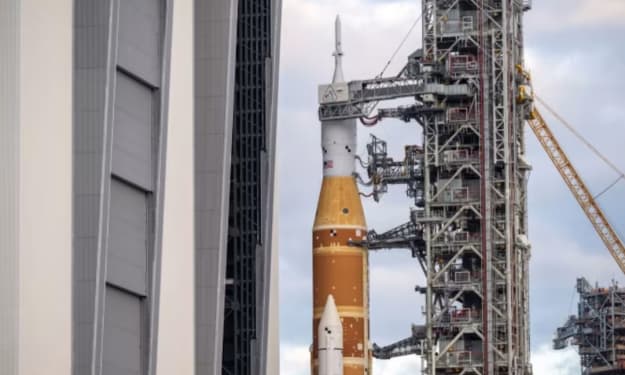
NASA’s Artemis II mission, the first crewed flight of the Artemis program, is generating global excitement as it prepares to carry astronauts around the Moon. Recently, an astronaut aboard the International Space Station (ISS) captured a striking photo of the Artemis II rocket sitting majestically on the launch pad at Kennedy Space Center in Florida. The image not only highlights the scale and complexity of the Space Launch System (SLS) but also underscores the collaborative efforts involved in humanity’s return to lunar exploration.
A Rare Perspective from Orbit
The photograph, shared widely on social media and by NASA’s official channels, offers a view of Artemis II from hundreds of kilometers above Earth. From this vantage point, the rocket appears both massive and precise, surrounded by the launch infrastructure, fueling lines, and support structures. The image captures the iconic orange core stage of the SLS, Orion spacecraft atop, and the launch tower that has stood as a sentinel for decades of space exploration.
Images like this are rare because most spacecraft photos are taken from the ground. Capturing Artemis II from the ISS allows scientists, engineers, and the public to appreciate the rocket in a unique context—showing how human activity in space and on Earth are interconnected in ongoing exploration efforts.
Artemis II Mission Overview
Artemis II is NASA’s first crewed mission to lunar orbit since the Apollo era. The mission will carry four astronauts around the Moon but will not attempt a landing. Its primary objectives include testing Orion’s life-support systems, crew operations, navigation, and safety protocols in deep space.
The mission is expected to last approximately 10 days, during which the crew will travel hundreds of thousands of kilometers, orbit the Moon, and return to Earth. This mission is a critical precursor to Artemis III, which aims to land astronauts on the Moon’s south pole and establish a sustainable presence for future exploration.
Engineering Feats on Display
The photo taken from the ISS provides more than just aesthetic appeal—it offers a glimpse into the engineering complexity of Artemis II. The SLS rocket stands over 98 meters tall, making it the tallest rocket NASA has ever built. Its core stage, painted in a distinctive orange hue, houses powerful RS-25 engines designed to provide the thrust necessary to escape Earth’s gravity.
Atop the rocket sits the Orion spacecraft, which will carry astronauts safely through deep space. Orion’s service module, provided by the European Space Agency, is visible as part of the spacecraft stack, underscoring international collaboration in lunar exploration.
The launch tower and supporting infrastructure, including fueling lines and crew access arms, are also captured in the image. These elements are essential for pre-launch operations, from loading propellant to conducting final system checks, and highlight the meticulous preparation required for a crewed lunar mission.
Astronaut Photography and Its Significance
Astronauts aboard the ISS frequently take photographs of Earth and space operations, providing a perspective that cannot be replicated by satellites or ground-based cameras. These images serve multiple purposes:
Public engagement: Stunning visuals inspire global interest in space exploration and STEM education.
Technical analysis: Photos can be used to inspect structures, check alignment, and monitor conditions before launch.
Historical record: Images document critical moments in humanity’s exploration efforts, creating a visual archive for future generations.
The photo of Artemis II from orbit not only excites the public but also reinforces the interconnectedness of space missions—the ISS observing Artemis II on Earth represents two major pillars of human spaceflight working in tandem.
International Collaboration Highlighted
Artemis II is not just a NASA endeavor; it represents a global effort. The European Space Agency’s contribution of the Orion service module illustrates international commitment to deep-space exploration. Images like the one taken from the ISS emphasize this global partnership, showing that lunar exploration is a collaborative achievement that spans continents.
Countdown to Launch
With Artemis II now on the launch pad, NASA engineers are conducting final tests and simulations. These include the “wet dress rehearsal,” where the rocket is fueled and a full countdown is simulated, as well as inspections of mechanical systems, communication networks, and safety protocols.
Once these procedures are complete, a launch date will be selected based on technical readiness and favorable weather conditions. The mission will mark a major milestone in the Artemis program and in humanity’s journey beyond low-Earth orbit.
Inspiring a New Generation
The astronaut-captured photo of Artemis II resonates with students, educators, and space enthusiasts worldwide. It serves as a tangible reminder that space exploration is active, ongoing, and evolving. Programs like Artemis aim to inspire the next generation of scientists, engineers, and astronauts who will continue humanity’s quest to explore the Moon, Mars, and beyond.
Conclusion
The image of Artemis II from the ISS offers more than a striking visual—it provides perspective on the scale, complexity, and ambition of modern space exploration. As NASA prepares to launch the spacecraft, the photograph reminds us of the human ingenuity, international collaboration, and meticulous planning that make deep-space missions possible. Artemis II is poised to test the limits of spacecraft and crew alike, bringing humanity one step closer to a sustained presence on the Moon and setting the stage for future journeys into the cosmos.
-
About the Creator
Keep reading
More stories from Salaar Jamali and writers in Beat and other communities.
Ludacris and Nelly draw backlash over bookings at MAGA-coded music festival
Ludacris and Nelly headlining a mostly right-wing event is good for them. It’s also great for the genre of hip hop. The two rap veterans have showcased their talents on other stages. Why can’t they perform for mostly MAGA folks and grab that bag?
By Skyler Saunders10 days ago in Beat


Comments
There are no comments for this story
Be the first to respond and start the conversation.