Tasnimul Tonon
Stories (3)
Filter by community
Can India and Pakistan de-escalate tensions after Pahalgam attacks?
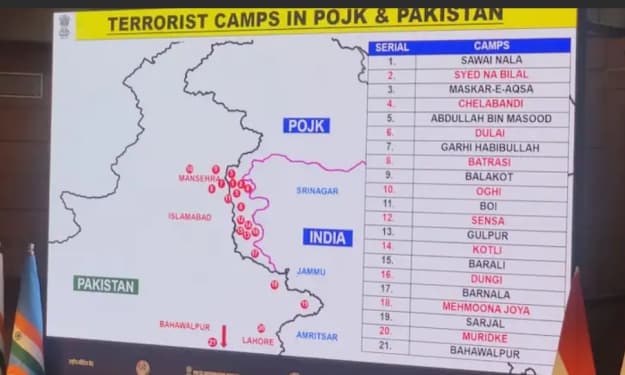
India and Pakistan are in the middle of their biggest crises in years, after the terror attack in India-administered Kashmir, where 26 people—25 Indian civilians and a Nepali—were massacred while picnicking in a meadow near the town of Pahalgam on April 22, 2025. Both nuclear-armed nations have fired war rhetoric and hostile diplomatic offensives, shaking the stability of the region and the rest of the world, already dealing with two ongoing, deadly wars, and a fragile world order. Needless to say, both nations must urgently engage in de-escalation. But the political reality of de-escalating the current volatile situation between India and Pakistan is much easier said than done. There's little precedent that the nuclear-armed nations would spike a hot war; however, the short-and long-term stability in South Asia after the deadly Pahalgam attacks appear bleaker than ever before.Though India and Pakistan have exchanged fire across the Line of Control (LoC) since the deadly attack, threats of military actions have echoed louder than actual military actions. But alarming non-kinetic responses have dominated the tit-for-tat exchanges. India has put in abeyance, the historical Indus Water Treaty—a water-sharing agreement brokered by the World Bank in 1960, that has survived three wars between the two nations. The Indus treaty governs the distribution of waters from the river and its tributaries, which feed 80 percent of Pakistan's agricultural sector. If India cuts Pakistan's access to the Indus River, the long-term blows to Pakistan's agrarian economy and its people would be dire. Pakistan has also suspended the Simla Agreement, which among other matters recognises the LoC as the de facto international border between the nuclear-armed nations in Kashmir.
By Tasnimul Tonon10 months ago in Horror
FARMING
The global financial crisis was still three years away, but in 2005 a financial pall was already hanging over Bradwell Grove Estate in the Cotswolds. Rising oil prices – affecting in particular chemical fertiliser, had rocketed while crop prices stayed low. Manager of the 3500-acre farm, Charles Hunter-Smart, found that “revenues were not covering high running costs,” largely due to the substantial cost of the chemicals used to drive crop productivity.
By Tasnimul Tonon10 months ago in Families