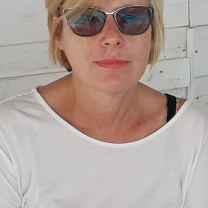
Patrizia Poli
Bio
Patrizia Poli was born in Livorno in 1961. Writer of fiction and blogger, she published seven novels.
Stories (284)
Filter by community
Donne che emigrano all'estero
It is no longer surprising that the network brings together, aggregates and gives life to projects that come out of the virtual (but does this universe really exist?) to become real. This is the case of “Women who Emigrate Abroad”, a collection of thirty-four testimonies — excerpts from blogs, posts published on a specific Facebook page, fragments of interviews and diaries — of expat women, i.e. Italians who, by choice, for professional or family reasons, have moved abroad. The authors have very different ages and professions, they currently live in both European Union and non-EU countries. The texts are not accompanied by images and are free, each one tells about what they like best, about very different aspects of life in the adopted country. Many have emigrated because they could not find work here, due to the crisis that has hit us since 2008. Others have sought a less provincial, less moralistic place, and many, finally, have followed a love.
By Patrizia Poli4 years ago in Confessions
Liala
After 1950, the contempt for the bourgeois novel, which now aspires to be part of literature, ceases. But first, in the Fascist period and beyond, there was a clear division between mass and entertainment literature, with large-scale novelists (Zuccoli, D’Ambra, Pitigrilli, DaVerona) and novels written by intellectuals for other intellectuals (Gadda , Landolfi, Bilenchi, Vittorini, Bersani).
By Patrizia Poli4 years ago in Geeks
Television To Read
Anyone who has a grandmother with an apron as armor and a ladle brandished as a sword, may have realized that the legendary “Artusi” has now been replaced in the kitchen by the books of “La prova del cuoco”, branded Eri Rai. Eri is the publishing brand with which Rai publishes books, magazines and multimedia products connected with its programming, churning out an average of fifty texts a year and defines itself as “The Rai to read”.
By Patrizia Poli4 years ago in Education
Alessio Piras, "Omicidio in piazza Sant'Elena"
Undecided between the detective story and the intellectual novel, Alessio Piras, in Murder in Piazza Sant'Elena, mixes the two genres, alongside the classic, and highly inflated, Commissioner, another protagonist, a shoulder who actually towers over, the intellectual Lorenzo Marino , in large part, we suspect, the author's alter ego. The two find themselves collaborating on the case of Paco, a South American boy killed by a badly cut drug overdose in the alleys of Genoa. It will be discovered that behind it there are personal events and the hypocrisy of a moralistic and rotten bourgeois world.
By Patrizia Poli4 years ago in Fiction
Grazia Deledda, "Cenere"
Grazia Deledda (1871–1936) completed only elementary studies but accumulated disparate readings ranging from Dumas to Balzac, from Scott to the Invernizio. She was especially passionate about Eugene Sue, whom she defined as “capable of moving the soul of an ardent girl.” As Vittorio Spinazzola states in the preface to the Mondadori edition of “Cenere” in 73, her vocation is fueled by a “disorderly ultra-romanticism” prone to emphasis and melodrama. “She read everything, good stuff and mediocre stuff, in the library put together, a bit at random, by her father; and she obeyed her instinct that suggested that she write.” (Dino Provenzal)
By Patrizia Poli4 years ago in Fiction
Childcraft
The salesman of Childcraft rang the door, well dressed and with a briefcase. It was the early sixties, the serial installments invaded the houses, a sign of an emancipation within everyone’s reach, of a tangible social progress made up of concrete things, such as cars, holidays, the bottled wine, the refrigerator, the kids’ TV. Intimidated housewives and grandparents made him sit in the good living room, offering coffee and spirits. With dignity and refinement, he opened his briefcase and showed new samples of books that would mark an entire generation, stimulating curiosity and imagination, forging the taste of many of us.
By Patrizia Poli4 years ago in Education
Sabrina
“It’s late, Mario, let me go”. She threw herself out of the car, fumbled with the lock, for a moment the light illuminated the entrance hall. She wore a shirt that was a little big on her. He was impressed with the image of his thin shoulders disappearing into the door.
By Patrizia Poli4 years ago in Fiction
Christmas in the Sixties
I am thinking about what Christmas was like in the sixties. Not everyone’s, mine. I lived in a nuclear family: father, mother, me. My brother hadn’t been planned yet. A provincial town in Tuscany, an apartment in a popular neighborhood, furnished in a functional and modern way, because we were a family in step with the times. My mother worked, drove the Bianchina and did the shopping at Smec, the first supermarket to set foot in the center. We lived the economic boom with hope, proud of the progress that would only bring civilization, proud of the refrigerator, the toaster, the blender, the carbonated water with the potholders of the Idrolitina, the bottled wine on the table.
By Patrizia Poli4 years ago in Families
Ceppo, that is Christmas in my days
I am thinking about what Christmas was like in the sixties. Not everyone’s, mine. I lived in a nuclear family: father, mother, me. My brother hadn’t been planned yet. A provincial town in Tuscany, an apartment in a popular neighborhood, furnished in a functional and modern way, because we were a family in step with the times. My mother worked, drove the Bianchina and did the shopping at Smec, the first supermarket to set foot in the center. We lived the economic boom with hope, proud of the progress that would only bring civilization, proud of the refrigerator, the toaster, the blender, the carbonated water with the potholders of the Idrolitina, the bottled wine on the table.
By Patrizia Poli4 years ago in Families
Jojo Moyes, "Me Before Y"ou
There are books that may not be literary masterpieces but they make you rediscover the pure and simple pleasure of reading, not only for the desire to dedicate every free moment to them, but also because you end up living in them, feeling part of the story, as if the story was yours too. You wake up in the morning already immersed in that emotion and with that emotion you go to bed in the evening.
By Patrizia Poli4 years ago in Geeks