Patrizia Poli
Bio
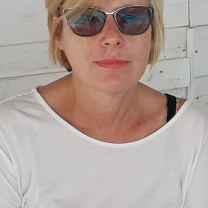
Patrizia Poli was born in Livorno in 1961. Writer of fiction and blogger, she published seven novels.
Stories (284)
Filter by community
Carlo Valentini, Elvira the model of Modigliani
“Death overtook him when he came to glory” Being portrayed by Modì, it was used to say in the environment, was like “having your soul undressed”. The setting is that of Montmatre and Montparnasse, the portrait in particular stands out on the cover of Carlo Valentini’s book: “Elvira the model of Modigliani”.
By Patrizia Poli4 years ago in Geeks
George MacDonald, "At the Back of the North Wind"
George MacDonald, known for his fairy tales and his fantastic novels, moved into that pre-Raphaelite atmosphere of which William Morris was a part and entered the context of acquaintances that included Mary Shelley, John Ruskin, Charles Dickens, William Thackeray , Mark Twain (whom he was friends with) and CS Lewis.
By Patrizia Poli4 years ago in Fiction
Another Life
Another life, Netflix 2019 series in two seasons by Aaron Martin, does not have great attractions as science fiction, and proposes all the clichés for lovers of the genre. We have the spaceship “Salvare” and the intergalactic mission, we have a crew made up of elements that do not always get along with each other, we have evil aliens that parasitize the brains of humans, we have a mysterious artifact that has come to earth from deep space, we have viruses that lurk in the body of the astronauts making them explode like in “Alien”, we have the intelligent on-board computer, we have hypersleep and the leap in dimension, we have black holes, pulsars and wormholes, we have the encounter with the different that inevitably turns into a descent into oneself, in a psychoanalytic recovery of the repressed, as if one was afraid to really imagine these aliens and these new worlds, as if there was no other possibility than to turn in on oneself instead of looking outside. Unfortunately, many secondary plots are aborted, such as August’s pregnancy of uncertain paternity.
By Patrizia Poli4 years ago in Futurism
The Novel
We have repeatedly argued for the lack of a purely Italian narrative, understood as a great wide-ranging romance tradition. This depends on the delay with which this genre has established itself with us, due to the slowness in the development of the middle class, that is “those citizens” placed by luck between the idiot and the scholar “(Foscolo) .
By Patrizia Poli4 years ago in Geeks
Pinocchio
The Florentine Carlo Lorenzini (1826–1890), better known to the public of adults and children with the name of Collodi, borrowed from his mother’s town, was a patriot of the wars of Independence but also a bookseller, reviewer, publisher. He translated French fairy tales, including Perrault’s famous ones.
By Patrizia Poli4 years ago in Fiction
Social phobia in the sixties
Giana Anguissola (Travo, Piacenza 1906 — Milan 1966) begins writing at the age of sixteen, collaborating with the Corriere dei Piccoli on which she publishes novels and short stories. Her most famous novel is “Violetta la Timida” from 1963, which wins the Bancarellino prize.
By Patrizia Poli4 years ago in Psyche
"Fifty Shades of Grey" vs "Twilight"
By fanfiction we mean the continuation of a cult story by fans. Readers hungry for more material can continue the story, fill in the gaps, resurrect their favorites, create sequels or prequels. In the case of the fanfiction of “Twilight” by S. Meyer, or the infamous, inflated, “Fifty Shades of Grey” — where Grey stands for Grey but also for the surname of the icy, embalmed, stockfishic protagonist — more than a continuation it is a question of a parody by which the writer Erika James was carried away.
By Patrizia Poli4 years ago in Geeks
Susanne Collins, "Hunger Games"
What creates an editorial phenomenon is the novelty of the subject. The same goes for Eco’s murderous monks, Meyer’s “vegetarian” vampires, Dan Brown’s sangreal lineage, or James’s sadomasochistic bondage. Everything that comes after is in the wake, it is an imitation of the original.
By Patrizia Poli4 years ago in Futurism
Writing vs Painting
Published in 1934 by the Hogarth Press, an essay links Virginia Woolf to Walter Richard Sickert, whom she, in her diary, calls “my Sickert” (see annotations of Tuesday April 17, 1934) complaining that, with the painter she loves, critics “are contemptuous” (Friday 2 November 1934).
By Patrizia Poli4 years ago in Education
Louisa May Alcott, "Little Women"
The region around Boston was simple and genuine countryside. “There,” says Cunliff, “the aspiring writer could live on very little, cultivating a piece of land to get what he needed for his livelihood […] and making an occasional trip to Boston to borrow books, or meeting with a publisher. […] it was in that circle of cultured and intimately connected communities, around Boston, that the phenomenon of transcendentalism appeared, an imprecise term hardly attributable to any of the most important figures of the time. “
By Patrizia Poli4 years ago in Fiction
Le fiabe sonore
Not long before Christmas 1966, the Fratelli Fabbri editors distributed a promotional disc of “Le Fiabe Sonore”, with “I tre Porcellini”, free of charge in the newsstands. The following week, the first official issue, “Puss in Boots” by Charles Perrault, came out, accompanied by a large format (27x35) issue with splendid romantic and yet ironic, alluring, but modern illustrations.
By Patrizia Poli4 years ago in Fiction
Wuthering Heights
At the age of three, Emily Brontë had already lost her mother and was growing up in memory of her two missing little sisters, Maria and Elisabeth. Her aunt raised her, Charlotte, Anne and Patrick (called Branwell from her maternal surname) with Wesleyan methodism, in family reunions a common theme was the account of uplifting deaths. The father was Irish, the mother from Cornwall, more than English they were Celts, and this legacy of myths and folklore, combined with the wild nature in which they grew up, enhanced the imagination of the siblings.
By Patrizia Poli4 years ago in Fiction