Noman Afridi
Bio
I’m Noman Afridi — welcome, all friends! I write horror & thought-provoking stories: mysteries of the unseen, real reflections, and emotional truths. With sincerity in every word. InshaAllah.
Stories (202)
Filter by community
My New Night Shift Job Has 3 Simple Rules. I Just Broke Rule #2.
My New Night Shift Job Has 3 Simple Rules. I Just Broke Rule #2. I needed the money. That is the only sentence that can accurately explain why I took this job without asking enough questions. When your landlord is knocking on your door for rent and your bank account is in the negatives, you tend to overlook the red flags.
By Noman Afridi3 months ago in Horror
I Married the Love of My Life, and I Have Never Felt More Alone
If you looked at our Instagram profile, you would probably hate us. We look perfect. We go on date nights every Friday at the trendiest restaurants. We smile broadly in photos at weddings, our arms wrapped around each other. We hold hands when we walk into parties, projecting the image of a solid, unbreakable unit. Our friends constantly tell me, “You guys are so lucky. You are relationship goals.” I smile, say thank you, and squeeze his hand. Then I go home, lock the bathroom door, turn on the shower so he can’t hear me, and sit on the floor in silence because it is the only place I can breathe. I love my partner. That is not the issue. He is a good man. He works hard to provide for us. He doesn't raise his voice. He is kind to my parents. He remembers anniversaries and buys me flowers on Valentine's Day. On paper, he is everything a woman should want. But somewhere along the way, we stopped being "soulmates" and started being "roommates." The loneliness didn't happen overnight. It wasn't a sudden explosion. It was a slow, quiet erosion, like water wearing down a rock. It started when we stopped asking, “How are you really feeling?” and started asking, “Did you pay the electric bill?” It started when we stopped talking about our dreams, our fears, and our wild ideas, and started talking only about logistics. Schedules. Groceries. Chores. The maintenance of life took over the living of it. Now, our evenings are a perfectly choreographed routine. We sit on the same sofa, watching the same TV show, but we are miles apart. He is scrolling on his phone, laughing at videos I can't hear; I am reading a book I don't talk to him about. There is a physical body next to me—warm, breathing, familiar—but the emotional connection feels like a ghost that haunts the house. There is a specific, sharp kind of pain in this. When you are single, you expect to be alone. You make peace with the silence. You fill it with friends, hobbies, music, and noise. You own your solitude. But when you are married, the loneliness feels like a betrayal. You think, “I signed a contract against this feeling. I promised to share my life. Why do I feel so isolated?” I remember our last anniversary dinner. We were at a beautiful Italian restaurant, surrounded by candlelight. We ordered our food. We commented on the wine. And then… silence. I looked at him, desperate for connection. I wanted to talk about how I was feeling anxious about my job, or how I missed painting. But he was looking around the room, distracted. “The service is slow tonight,” he muttered. That was it. That was our conversation. I realized then that he sees me, but he doesn't see me. He sees the wife who manages the house, not the woman who is screaming inside. I try to talk to him sometimes. I say, “I feel like we’re drifting. I feel lonely.” He looks confused, genuinely baffled. “What do you mean? We’re fine. We just had dinner together. I’m right here.” He thinks "presence" is the same thing as "connection." He doesn't understand that you can hold someone’s hand and still can’t feel their heart. He thinks that because we aren't fighting, we are happy. He doesn't realize that the opposite of love isn't hate; it's indifference. I realized recently that I am grieving. I am grieving the loss of the person who used to look at me across a crowded room and know exactly what I was thinking. Now, I have to explain my sadness to him like I am explaining a complicated math problem, and he still doesn't get the answer. I am writing this because I know I am not the only one. I know there are thousands of people reading this right now, sitting next to their spouses on a comfortable couch, feeling completely invisible. It is a terrifying realization: Being single is lonely. But being with someone who makes you feel alone is shattering. I don't know if we will fix this. I don't know if couples counseling can bridge a gap this wide. I don't know if we will survive another year. But I know that I cannot keep pretending. Tonight, I will turn off the TV. I will put down my phone. I will turn to him and ask a real question. Not about the bills. Not about dinner. But about us. If he answers, maybe we have a chance. If he turns away, then at least I will know the truth. We are taught to fear divorce, to see it as a failure. But perhaps we should fear a loveless, silent marriage even more. Because wasting your life waiting to be seen is the ultimate tragedy.
By Noman Afridi3 months ago in Humans
Why I Stopped Being a "Good Person": The Day I Quit People-Pleasing
For as long as I can remember, my identity was wrapped up in one simple word: "Yes." “Can you help me move apartments this weekend?” Yes. (Even though I had a fever.) “Can you cover my shift at work?” Yes. (Even though it was my only day off.) “Can I borrow money?” Yes. (Even though I was struggling to pay my own rent.) I wore my exhaustion like a badge of honor. I convinced myself that this was what it meant to be a "good person." I thought that if I sacrificed enough, if I gave enough, if I suffered enough for others, then I would be worthy of love. I treated relationships like vending machines: I inserted kindness, expecting respect to fall out. But the machine was broken. The turning point didn't come during a dramatic argument. It happened on a quiet Sunday afternoon. I was sitting in my car, parked outside a friend’s house. I had just spent four hours helping them organize their garage. I was tired, hungry, and my back was aching. I checked my phone. It was my birthday. Not a single person I had spent the last year "saving" had sent me a message. Not one. I sat there in the silence, staring at the steering wheel, and for the first time, I didn't feel angry at them. I felt angry at myself. I realized that I wasn't being kind. I was being transactional. I was doing things for people not because I wanted to, but because I was terrified that if I stopped being useful, they would stop liking me. I was buying their companionship with my labor. I had turned myself into a doormat and then complained that people were wiping their feet on me. That day, I made a decision. I decided to try a dangerous experiment. I decided to start saying "No." The first time was terrifying. A coworker asked me to do a report that was his responsibility. My heart hammered in my chest. My palms sweated. The old instinct to please screamed at me to just agree. But I took a deep breath and typed: “I can’t do that. I have my own workload to finish.” I waited for the world to end. I waited for him to scream at me, to fire me, to hate me. Instead, he simply replied: “Okay, no problem.” The world didn’t end. But my world shifted. Over the next few months, I went on a "No" spree. I stopped attending events I didn't want to go to. I stopped listening to drama that drained my energy. I stopped apologizing for taking up space. The reaction was revealing. Some people—the ones who truly cared about me—respected my boundaries. They were happy to see me taking care of myself. But the others? The ones who only liked me for what I could do for them? They became angry. They called me selfish. They called me "changed." They fell away from my life like dead leaves. And honestly? It was the greatest relief of my life. I realized that losing a "friend" who only calls you when they need something is not a loss. It is a gain. It is gaining back your time, your energy, and your self-respect. I am no longer a "nice" person. "Nice" is polite. "Nice" is quiet. "Nice" is doing what you are told. Instead, I am striving to be a kind person. There is a difference. Kindness is honest. Kindness comes from a place of strength, not fear. A kind person helps you up when you fall, but they won't lay down so you can walk over them. Today, my circle is smaller. My phone is quieter. But when I say "Yes" now, I mean it. I am not giving from an empty cup anymore. If protecting my peace makes me the villain in your story, then so be it. I would rather be a happy villain than a miserable hero.
By Noman Afridi3 months ago in Humans
The Hardest Text I Ever Sent: Why I Had to Cut Ties with My Family
My thumb hovered over the "Send" button for forty-five minutes. The screen of my phone had dimmed and brightened a dozen times. My battery was dying. My hands were shaking so bad I had to set the phone down on the kitchen table. The message was short. Only three sentences. But it had taken me thirty years to write them. “I cannot do this anymore. Please do not contact me. I need space to heal.” That was it. No long explanations. No accusations. Just a final, quiet boundary. Sending a breakup text to a lover is painful. But sending a breakup text to a parent? That feels like a crime. It feels like you are violating a natural law. We are raised on the idea that “Family is everything.” We are told that you have to forgive family because, well, they’re family. We are told to respect our elders even when they disrespect our existence. For years, I swallowed that pill. I endured the backhanded compliments at Thanksgiving dinners. “Oh, you’re wearing that? It makes you look… healthy.” I endured the guilt trips whenever I tried to live my own life. “We sacrificed everything for you, and you can’t even visit every weekend?” I endured the gaslighting. Whenever I tried to confront them about how their words hurt me, I was told I was "too sensitive," "ungrateful," or "imagining things." I was the family peacemaker. I was the sponge that absorbed all the toxicity so it wouldn't spill over onto anyone else. I thought that if I was just "good enough," or "successful enough," they would finally treat me with kindness instead of criticism. But the breaking point didn't come with a bang. It came with a whisper. It was a random Tuesday. My mother called me, screaming about a decision I had made regarding my career. She called me selfish. She brought up mistakes I made when I was twelve. She weaponized my insecurities against me. And suddenly, the fog lifted. I realized: This is never going to change. I was waiting for an apology that was never coming. I was drinking poison and expecting the other person to die. I hung up the phone. The silence that followed was terrifying. I typed the text. The guilt hit me before I even sent it. The voice of society whispered in my ear: “But she’s your mother. You only get one family. How can you be so cruel?” But then a new voice spoke up. A voice I hadn't heard in a long time. My own. “What about me? Don’t I deserve peace? Don’t I deserve to not feel anxious every time my phone rings?” I pressed send. Then, I did something even harder. I blocked the number. The first week was hell. I felt like a limb had been amputated. I kept checking my phone, expecting angry voicemails that couldn't come through. I grieved. Not for the relationship I lost, but for the relationship I never had. I grieved the fantasy of the loving family I wanted so desperately. But by the second month, something strange happened. The knot in my stomach—the one that had been there since I was a teenager—started to loosen. I slept better. My anxiety attacks stopped. I started to smile without forcing it. I realized that toxicity doesn't become "healthy" just because it comes from a relative. Abuse is abuse, even if it shares your last name. I am not advocating for everyone to leave their families. Family is beautiful when it is safe. But I am writing this for the person holding their phone right now, thumb hovering over the block button, feeling like a monster. You are not a monster. You are a survivor. You are allowed to protect your energy. You are allowed to walk away from people who constantly hurt you. You are allowed to choose yourself. I lost a family that day. But for the first time in my life, I found myself. And that was a trade worth making.
By Noman Afridi3 months ago in Humans
I Achieved Everything I Wanted at 30, and I Have Never Been More Miserable
The champagne in my glass cost more than my first car. I was standing on the balcony of my penthouse apartment, overlooking the city skyline. The lights below looked like scattered diamonds. Inside, my colleagues were celebrating my promotion. I had just been named the youngest partner in the firm’s history. I was thirty years old. I was debt-free. I drove a German car. I wore an Italian suit. By every metric of the modern world, I had won the game. People looked at me with envy. My LinkedIn inbox was full of congratulations. My parents were proud. So why was the only thought in my head: “Is this it?” For the last ten years, I have been running a marathon. I bought into the "Hustle Culture" completely. I woke up at 5 a.m. I listened to motivational podcasts that told me sleep was for the weak. I worked weekends. I missed birthdays. I missed weddings. I missed the last years of my grandmother’s life because I was "too busy building my empire." I treated happiness like a level in a video game. I told myself: “I’ll be happy when I get that degree.” “I’ll be happy when I get the six-figure salary.” “I’ll be happy when I buy this house.” I hit every target. I unlocked every achievement. But the happiness never arrived. Instead, I found something else waiting for me at the top: Silence. The silence of an empty apartment because I didn’t have time to date. The silence of a phone that only rings for work, because my friends stopped calling years ago after I cancelled on them for the tenth time. The silence of my own mind, which has forgotten how to relax without feeling guilty. I realized standing on that balcony that night that I had become a human doing, not a human being. We are taught that money buys freedom. But for me, it bought golden handcuffs. The more I earned, the more I spent, and the more trapped I felt to maintain this lifestyle. I wasn’t working to live anymore; I was living to work. The anxiety was physical. It felt like a tight band around my chest that never loosened. I had developed a chronic fear of stillness. If I wasn't being "productive," I felt worthless. I couldn't watch a movie without checking emails. I couldn't take a walk without listening to a business audiobook. I had optimized my life so much that I had optimized the joy right out of it. Two weeks after that party, I had a panic attack in the elevator. My body simply said, “Enough.” I ended up in a doctor’s office, wearing my expensive suit, shaking uncontrollably. The doctor asked me a simple question: “What do you do for fun?” I stared at him blankly. The question felt like a riddle in a foreign language. Fun? I didn't have hobbies. I had goals. I didn't have pastimes. I had side hustles. That was the breaking point. I haven't quit my job yet—I’m not reckless. But I have started to dismantle the life I built. I sold the flashy car. I stopped working on weekends. I reached out to an old friend and apologized for being absent. We grabbed coffee. It was a cheap, $3 coffee in a paper cup. We sat on a park bench and talked about nothing important for an hour. And for the first time in a decade, I felt a spark of something real. I am writing this for anyone who is currently grinding themselves into dust chasing a future version of happiness. Stop. There is no finish line. There is no magical gate you walk through where everything suddenly feels perfect. If you cannot find peace in a small apartment, you will not find it in a penthouse. If you cannot be happy with a cheap coffee, you won't be happy with expensive champagne. Don't sacrifice your today for a tomorrow that might not feel the way you expect. Success is not the number in your bank account. Success is having someone to share a meal with. Success is sleeping without a pill. Success is liking the person you see in the mirror, not just the title on your business card. I am rich, yes. But I am just now starting to learn how to be wealthy.
By Noman Afridi3 months ago in Humans
The Day I Realized I Was the Villain in My Own Love Story
She didn’t slam the door when she left. There was no screaming, no throwing of vases, no dramatic exit like you see in the movies. There was just silence. The kind of heavy, suffocating silence that rings in your ears long after the person is gone. She simply packed her bag, looked at me with eyes that were no longer angry—just tired—and walked out. At the time, I told myself she was the problem. “She gave up on us,” I thought. “She didn’t try hard enough. She didn’t understand my love.” I played the role of the heartbroken victim perfectly. I told my friends how much I had done for her. I told them how I protected her, how I worried about her, how I just wanted to know where she was because I cared. My friends nodded and bought me drinks, agreeing that I deserved better. But deep down, in the quiet corners of my mind where the lies couldn't reach, a small voice whispered the truth. It took me three months to finally listen to it. The realization didn’t hit me all at once. It happened on a Tuesday night. I was scrolling through our old text messages, looking for evidence to fuel my anger, looking for proof that she was the one who was unreasonable. I started reading from a year ago. Me: “Where are you? You said you’d be home by 6.” Her: “I’m just grabbing coffee with Sarah. I’ll be late.” Me: “You prioritize Sarah over me? Fine. Do whatever you want.” I scrolled down. Me: “I don’t like that dress. It’s too revealing. People will stare.” Her: “But I feel pretty in it.” Me: “If you loved me, you’d care about how I feel. Change it.” My thumb hovered over the screen. My breath hitched. I wasn't reading the messages of a loving partner. I was reading the words of a jailer. I had disguised my insecurity as "protection." I had masked my control as "concern." I had framed my jealousy as "passion." For years, I believed that love meant possession. I thought that if I held onto her tight enough, she would never leave. I didn't realize that I was squeezing the life out of the relationship. I was suffocating the very thing I was trying to save. I remembered the look on her face during our last anniversary dinner. She wasn't smiling. She looked like she was walking on eggshells, afraid that one wrong word would set off my mood. I had created that fear. That night, the victim narrative I had built for myself crumbled. I sat on the floor of my empty apartment and wept. Not because I missed her—though I did, terribly—but because I was ashamed of the man I had become. I realized that being "toxic" isn't always about shouting or abuse. Sometimes, it’s quiet. It’s the constant need for validation. It’s making the other person feel guilty for having a life outside of you. It’s gaslighting them into believing their feelings are invalid. I was the toxic one. Admitting this was the hardest thing I have ever done. It is easy to blame the one who leaves. It is excruciatingly painful to look in the mirror and admit that you are the reason they had to go. I didn't try to win her back. That would have been selfish. She deserved the peace she found away from me. Instead, I went to therapy. I started unpacking the baggage I had been carrying since childhood—the fear of abandonment that fueled my controlling behavior. I learned that love is not a cage. Love is freedom. Love is trusting someone enough to let them be themselves, even when you are not in the room. I am writing this not to ask for forgiveness, but to offer a warning. Check yourself. Look at how you speak to the people you love when you are angry. Are you protecting them, or are you protecting your own ego? It is too late for me to save that relationship. She is gone, and she is happy. And strangely, that makes me happy too. But for the first time in my life, I am working on the most important relationship of all: the one with myself. I am learning to be a man who doesn't need to control someone else to feel safe. I was the villain in my own love story. But the good thing about stories is that as long as you are still breathing, you can write a new chapter. And this chapter starts with the truth.
By Noman Afridi3 months ago in Humans
When the Grave Called...
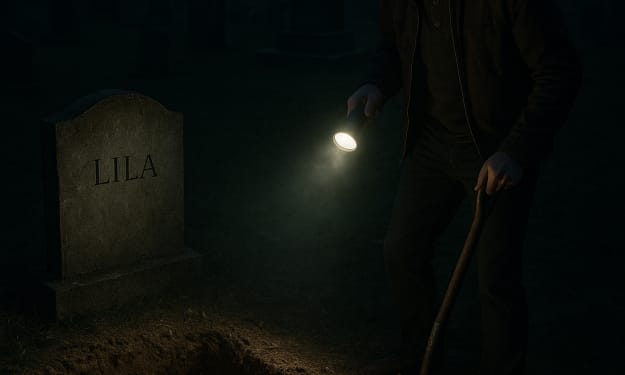
The air in Blackwood Cemetery was perpetually cold, even on the warmest summer nights. Elias Thorne, a solitary man of thirty-five, felt that chill deep in his bones as he locked the iron gates, the metallic clang echoing like a gunshot in the silent expanse of headstones. He was the groundskeeper, a title that sounded far grander than his actual job: spending his nights ensuring no mischief was done amongst the dead.
By Noman Afridi5 months ago in Horror
The Common Krait: A Silent Killer of the Night
The Common Krait: A Silent Killer of the Night Among the many snake species that inhabit the diverse terrains of Pakistan, India, Bangladesh, and Sri Lanka, the Common Krait (Bungarus caeruleus) stands apart for its lethal nature and quiet demeanor. Nicknamed “the silent killer,” this snake is not naturally aggressive, but its powerful venom and nocturnal behavior make it one of the most dangerous snakes in the region. Learning about this elusive predator is more than an academic interest—it could mean the difference between life and death.
By Noman Afridi7 months ago in Horror
The Secret of the Empty House
The Secret of the Empty House The old house stood at the end of a long, winding road — cloaked in overgrown vines and a silence thicker than the air itself. To Zain and Sarah, a young couple worn down by the city's relentless noise, it seemed like a dream come true. The rent was unbelievably low, the architecture had a timeless charm, and its isolation offered the escape they longed for. With hearts full of hope and excitement for a fresh start, they moved in. But the house — with its faded walls and groaning floorboards — carried more than just age; it carried a secret.
By Noman Afridi7 months ago in Horror
The Last Letter and a Tiny Promise
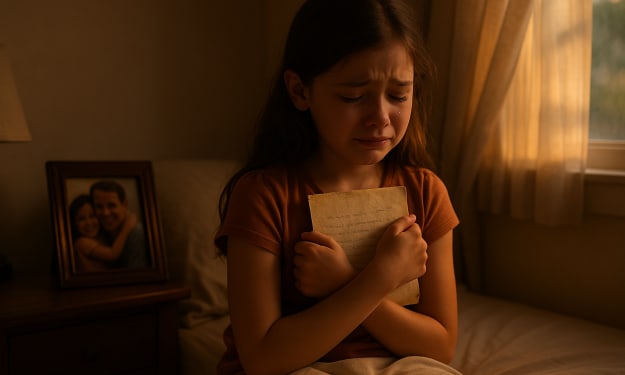
The Last Letter and a Tiny Promise In a modest home nestled amidst the bustling lanes of a small town, lived Ahmed—a man whose entire universe revolved around the sparkling eyes and infectious laughter of his little daughter, Aima. She was not just his child, but the very essence of his being, the reason behind every breath he took. Aima, with her boundless curiosity and uncontainable energy, was pure joy incarnate—a tiny burst of sunshine who saw her father as nothing short of a superhero.
By Noman Afridi8 months ago in Families