
The Common Krait: A Silent Killer of the Night
Understanding the deadly habits, appearance, and hidden threats of one of South Asia’s most venomous snakes

The Common Krait: A Silent Killer of the Night
Among the many snake species that inhabit the diverse terrains of Pakistan, India, Bangladesh, and Sri Lanka, the Common Krait (Bungarus caeruleus) stands apart for its lethal nature and quiet demeanor. Nicknamed “the silent killer,” this snake is not naturally aggressive, but its powerful venom and nocturnal behavior make it one of the most dangerous snakes in the region. Learning about this elusive predator is more than an academic interest—it could mean the difference between life and death.
---
Identifying the Elusive Predator
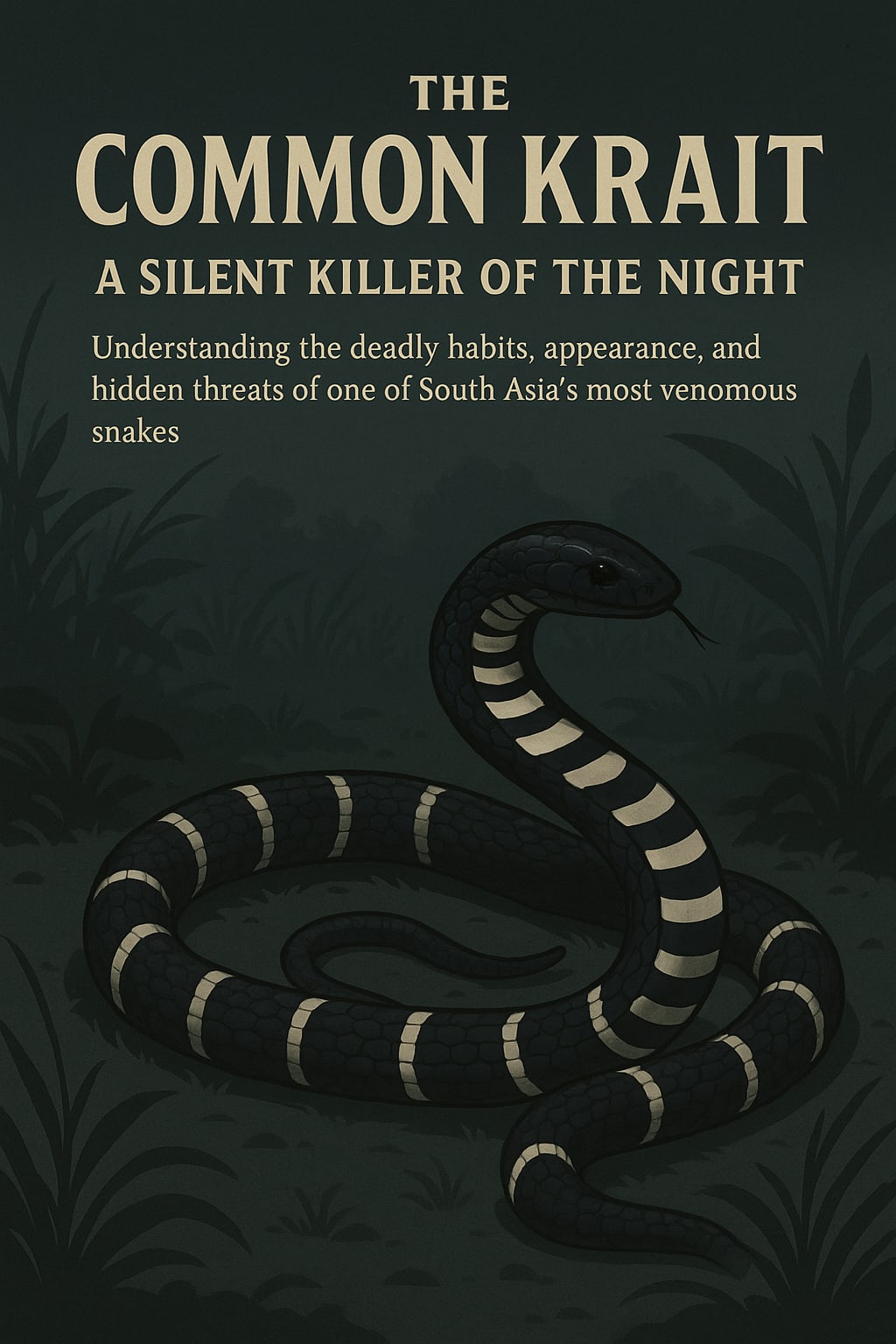
The Common Krait belongs to the Elapidae family, which also includes other highly venomous snakes like cobras and mambas. What makes the Common Krait easy to identify is its striking look. It has a glossy black or bluish-black body decorated with thin, paired white crossbands that extend from the neck to the tail—often numbering up to forty. These distinct bands are a key identifying feature.
Its head is small and rounded, with tiny, dark eyes and a notably slender neck. While most kraits average around three feet in length, some can grow as long as six feet. Interestingly, males are usually longer than females.
A Creature of the Night
Unlike many snake species that are active during daylight, the Common Krait is a nocturnal predator. This trait is the primary reason it is rarely seen and why many bites occur at night. During the daytime, the krait is sluggish and avoids confrontation, often hiding in burrows or sheltered spaces. Its preferred hiding places include rodent holes, piles of debris, termite mounds, and damp areas near water.
In rural areas, kraits may even enter homes to find shelter, increasing the risk of human encounters. Their diet mainly includes rodents, frogs, lizards, and notably, other snakes—including members of their own species. This cannibalistic behavior is a unique and important aspect of their ecology.
---
The Venom: A Painless Path to Paralysis
The true danger of the Common Krait lies in the nature of its venom. Its bite is often painless—compared to a mosquito bite or a small pinprick—which is what makes it especially dangerous. Victims, particularly those bitten while asleep, may not even realize they’ve been bitten until symptoms appear hours later.
The venom is a potent neurotoxin that attacks the nervous system. Early signs can include abdominal cramps, facial muscle stiffness, and difficulty with speech or vision. As the venom spreads, it leads to progressive paralysis. Eventually, it can paralyze the muscles responsible for breathing, resulting in respiratory failure and death if not treated urgently.
---
Immediate Response and Emergency Care
In case of a krait bite, prompt and correct action is crucial. The window for effective treatment is typically around four hours.
Stay Calm and Reassure the Victim: Panic accelerates the heart rate and spreads the venom faster. Keep the victim calm and still.
Immobilize the Affected Limb: Keep the bite site below heart level and immobilized. Use a splint or a loose bandage to limit movement without cutting off circulation.
Seek Immediate Medical Help: Avoid traditional remedies or local healers. Only antivenom, administered by medical professionals, is effective. Call ahead to ensure the hospital has antivenom available.
---
Prevention is the Best Defense
Avoiding contact with the Common Krait is the safest approach. Because of its nocturnal nature, certain preventive measures are life-saving:
Avoid Sleeping on the Ground: Especially during monsoon season, avoid sleeping directly on floors or mats in open areas.
Wear Protective Footwear: Those working in fields or rural areas at night should wear boots and use a flashlight to stay aware of surroundings.
Be Aware of High-Risk Areas: Places like poultry farms or butcher shops that attract rodents are also likely to attract snakes. Always wash and change clothes after working in such environments.
Seal Entry Points: Ensure all possible snake entry points—such as water pipes or floor gaps—are properly sealed in homes.
About the Creator
Noman Afridi
I’m Noman Afridi — welcome, all friends! I write horror & thought-provoking stories: mysteries of the unseen, real reflections, and emotional truths. With sincerity in every word. InshaAllah.
Keep reading
More stories from Noman Afridi and writers in Horror and other communities.
The Secret of the Empty House
The Secret of the Empty House The old house stood at the end of a long, winding road — cloaked in overgrown vines and a silence thicker than the air itself. To Zain and Sarah, a young couple worn down by the city's relentless noise, it seemed like a dream come true. The rent was unbelievably low, the architecture had a timeless charm, and its isolation offered the escape they longed for. With hearts full of hope and excitement for a fresh start, they moved in. But the house — with its faded walls and groaning floorboards — carried more than just age; it carried a secret.
By Noman Afridi7 months ago in Horror
Top 10 Spring Break Horror Movies
Spring Break is often associated with fun, sun, and relaxation, but in the world of horror films, it can also be a time of terror and chaos. College students and high school students are having a great time, unaware that the worst is yet to come.
By Ninfa Galeanoabout 23 hours ago in Horror



Comments
There are no comments for this story
Be the first to respond and start the conversation.