Nabir Mondol
Bio
Stories (16)
Filter by community
You Tube
YouTube: A Digital Revolution in Information and EntertainmentYouTube has changed how content is made, shared, and consumed. Launched in 2005 by three former PayPal employees, the platform quickly evolved from a video-sharing website into a cultural phenomenon. It evolved into a location where anyone with a camera and access to the internet could reach a worldwide audience. Over the years, YouTube has redefined media, democratized content creation, and reshaped the entertainment industry.The Rise of a PlatformYouTube’s growth was explosive. Just a year after its launch, Google acquired it for $1.65 billion. People of all ages found the platform appealing due to its user-friendly interface, quick-loading videos, and social sharing tools. By 2010, YouTube was the second-largest search engine after Google. It allowed users to upload videos, subscribe to channels, comment, like, and share, paving the way for interactive content communities. With billions of videos uploaded and watched daily, the platform became an archive of music, tutorials, documentaries, comedy, and user-generated content. From viral memes to makeup tutorials, YouTube reflected the diversity of its audience.Content DiversityOne of YouTube’s greatest strengths is its content variety. Short skits, lectures lasting an hour, music videos, vlogs, news reports, and ASMR recordings are all available to viewers. Numerous niche communities are supported by this extensive range of formats. Whether someone loves chess strategies, fitness workouts, cooking recipes, or travel vlogs, YouTube has something to offer.Education thrives on YouTube. History, science, and math are taught for free on channels like CrashCourse, Khan Academy, and Veritasium. Meanwhile, creators in developing countries have found YouTube a valuable tool for learning languages, mastering skills, and accessing knowledge that was once difficult to find.Entertainment also took new shapes. Artists gained independent fame through covers and original songs after music labels started uploading official videos. Gaming content—Let’s Plays, livestreams, and walkthroughs—became especially popular, with creators like PewDiePie and Markiplier building careers from gaming commentary.The Creator EconomyYouTube gave birth to the creator economy. Content creators, known as YouTubers, began earning money through ad revenue, sponsorships, memberships, and merchandise. YouTube’s Partner Program, launched in 2007, allowed monetization based on views and engagement.Some creators became celebrities. MrBeast, Lilly Singh, Logan Paul, and Emma Chamberlain all gained international notoriety. These creators built communities around their personalities and used YouTube as a stepping stone into mainstream media, publishing, and entrepreneurship.Monetization, however, brought challenges. Algorithm changes, demonetization issues, and copyright strikes frustrated many creators. Content that was once rewarded suddenly lost visibility due to new rules. Impact on SocietyYouTube influences how people think, learn, and engage. Despite this, YouTube remained one of the few platforms where independent content creators could earn a living. It serves as a news source, educational platform, entertainment hub, and marketing tool. Political movements, product launches, and global events unfold on YouTube in real time.The platform has also faced criticism. Misinformation, conspiracy theories, and extremist content have circulated widely. YouTube has been accused of promoting harmful content through its recommendation algorithms. The company responded by enforcing stricter content moderation, fact-checking tools, and policy. Mental health issues and privacy concerns also emerged. Viewers and creators alike experienced stress from constant engagement, online hate, or algorithmic pressure to produce content. Despite the drawbacks, YouTube continues to be a powerful force for good, enabling marginalized voices to be heard and bringing communities together.Evolving with TimeYouTube continues to evolve. The introduction of YouTube Shorts, a short-form video feature, came as a response to TikTok’s popularity. Access to exclusive content and an ad-free experience are two benefits of YouTube Premium. Creators now rely more on diversified income streams, such as using Patreon, selling merchandise, or starting businesses, as YouTube Music competes with Spotify and YouTube TV enters the live television market. Meanwhile, YouTube continues investing in creator support, AI moderation, and better monetization tools.ConclusionYouTube is more than a video platform. It’s a digital stage, a global classroom, and a window into countless lives and cultures. It changed how stories are told, how fame is achieved, and how knowledge spreads. As it continues to adapt, YouTube remains a defining force in the digital world—shaping content, culture,e, and communication in the 21st century.
By Nabir Mondol11 months ago in 01
Free Money
The idea of free money has captivated people for centuries. Whether in the form of lotteries, grants, government aid, or universal basic income (UBI), the notion of receiving money without having to work for it challenges traditional beliefs about value, effort, and fairness. In modern times, discussions around free money have intensified as technology displaces jobs, inequality widens, and economic systems become more automated. While some view free money as a human right in an age of abundance, others see it as unsustainable or morally questionable. Historical Origins and Evolution Free money is not a new concept. Wealth redistribution took many forms in ancient societies. In Rome, grain doles were given to citizens to prevent uprisings and stabilize urban populations. Redistributing wealth to the needy and poor was an integral part of many religious practices, including tithes in Christianity and zakat in Islam. In modern history, welfare programs in industrial nations emerged after World War II to provide safety nets against unemployment, illness, and poverty. These programs were not “free” in the sense of being unconditional, but they laid groundwork for broader conversations about cash transfers and public wealth sharing. Forms of Free Money Today
By Nabir Mondol11 months ago in Proof
Modern World
A Landscape of Transformation and Tension The modern world stands as a complex tapestry woven with rapid technological progress, shifting social norms, economic disparities, environmental uncertainty, and geopolitical recalibrations. In the 21st century, global society traverses a paradoxical terrain marked by unprecedented innovation and persistent injustices, connectedness and conflict, opportunity and risk. From digital revolutions to climate change, modern humanity faces the dual challenge of managing transformation while preserving fundamental values and social stability. Innovation in Technology and Digital Transformation Technology defines the modern era. The proliferation of smartphones, high-speed internet, artificial intelligence (AI), and automation has reshaped how people live, work, learn, and interact. People can now form communities across cultures and continents thanks to instantaneous and borderless communication. Social media platforms influence political discourse, cultural trends, and economic decisions at a scale once unimaginable. Tools in the healthcare industry, including personal assistants and diagnostic systems, are now powered by artificial intelligence. In fields like finance, logistics, and cybersecurity, AI models manage vast amounts of data with increasing precision. Robotics and automation are altering the labor market, replacing repetitive tasks while demanding new skillsets. Biotechnology and quantum computing both offer breakthroughs that have the potential to reshape the fields of materials science, energy, medicine, and the environment. However, the digital age also brings challenges. Data privacy, surveillance, cybercrime, and misinformation raise ethical and legal dilemmas. AI bias, algorithmic control, and the concentration of tech power in a handful of corporations create concerns over equity and democratic accountability. While innovation accelerates, many regions struggle with limited access to digital infrastructure, deepening the global digital divide. Globalization and Economic Inequality The modern world is economically interconnected. Global trade networks span continents, multinational corporations operate across jurisdictions, and financial markets respond in real-time to political events. Globalization has expanded access to goods, services, and knowledge, lifting millions out of poverty and fueling growth in emerging economies. Globalization, however, also reveals systemic imbalances. While wages for the working and middle classes remain stagnant in many nations, elite wealth is becoming increasingly concentrated. Outsourcing and automation have hollowed out traditional industries in developed nations, contributing to unemployment and social dislocation. Economic inequality persists both within and between countries, fueling resentment and political polarization. Modern economies must grapple with inflation, debt, and fragile supply chains. The COVID-19 pandemic, for instance, revealed vulnerabilities in global systems—highlighting how interdependence, while efficient, can also be brittle. As governments confront new fiscal and labor realities, debates over taxation, regulation, and the role of the state continue to intensify. Stress in the Environment and Climate Change Climate change represents one of the most urgent challenges of the modern era. Rising temperatures, extreme weather events, melting polar ice, and sea-level rise threaten ecosystems, economies, and human settlements. Deforestation, pollution, and the loss of biodiversity put additional strain on natural systems already under pressure from consumption and industrialization. Governments and organizations have committed to reducing carbon emissions and transitioning to renewable energy. Wind, solar, hydroelectric, and emerging technologies like green hydrogen hold promise. However, progress is still uneven. Fossil fuels still dominate energy production, and developing nations often lack resources to shift rapidly toward sustainability.
By Nabir Mondol11 months ago in Earth
Gaza War
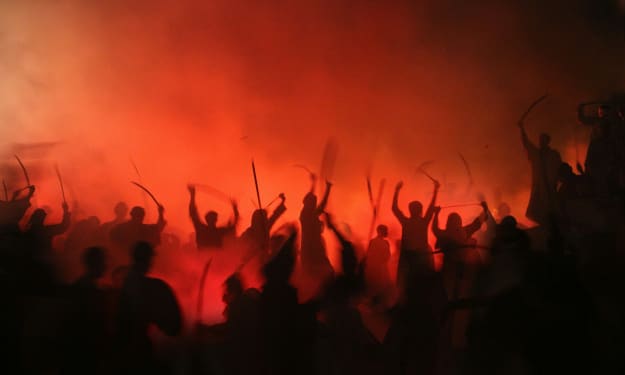
A persistent conflict marked by profound human suffering and geopolitical reverberations, Gaza war extends from Hamas’s October 7, 2023 assault through successive Israeli military campaigns into April 2025. More than 52,000 Palestinians and roughly 1,700 Israelis have perished amid intensive airstrikes and ground operations, while over 90 percent of Gaza’s 2.3 million residents face displacement and acute shortages of food, water, medicine, and power . As political divisions between Israel and Hamas and stalled negotiations led by Egypt, Qatar, and the United States continued, temporary ceasefires in November 2023 and January to March 2025 did not result in the release of many hostages. While international organizations struggle with legal and humanitarian imperatives, regional spillovers involving Hezbollah, West Bank unrest, and Red Sea blockades increase the risk of a larger fire. Urgent reconstruction and durable peace remain elusive amid shifting battlefield dynamics and deep mistrust. Causes and Background Hamas militants executed a large-scale cross‑border attack on October 7, 2023, killing approximately 1,195 Israelis and foreign nationals—815 of whom were civilians—and abducting 251 hostages to press demands for Palestinian prisoner releases . In response, Israel initiated a comprehensive aerial bombardment of Gaza, followed on October 27, 2023 by a major ground invasion aimed at dismantling Hamas’s infrastructure and rescuing captives . Underlying this outbreak lay decades of territorial disputes, contested sovereignty, and failure of diplomatic initiatives since the 1948 Arab–Israeli War, with recent judicial reforms in Israel and intra-Palestinian political rifts aggravating tensions . Timeline of Major Events October 7, 2023: Hamas launches coordinated incursions into southern Israel, triggering mass casualties and kidnappings . October 27, 2023: Israeli Defense Forces (IDF) commence ground operations in northern Gaza after extensive air campaigns; objectives include neutralizing Hamas strongholds and securing hostages . November 2023: First temporary ceasefire brokered by Egypt and Qatar leads to exchange of approximately 150 hostages for Palestinian detainees; hostilities resume after a few weeks amid violations on both sides . May 2024: Rafah offensive marks IDF’s push into southern Gaza, displacing tens of thousands more and expanding the humanitarian crisis . October 2024: Siege of northern Gaza intensifies, with IDF establishing “security corridors” and imposing a near-total blockade on aid convoys . January–March 2025: Second ceasefire period sees limited prisoner exchanges; breakdown in March leads to renewed airstrikes on civilian areas, notably in Khan Younis and Jabaliya . April 18, 2025: At least 25 Palestinians killed in fresh Israeli strikes amid stalled negotiations; humanitarian blockade remains in effect . Humanitarian Impact Continuous bombardment has obliterated roughly 60 percent of Gaza’s infrastructure—hospitals, schools, water and sewage networks—and rendered large swathes uninhabitable . Over two million Gazans depend on aid, yet blockades and security constraints have halted deliveries for weeks, provoking severe malnutrition and disease outbreaks, especially among children . Displacement figures exceed 90 percent of the population, with makeshift camps overcrowded and lacking sanitation; Doctors Without Borders warns of a total collapse of medical services without urgent intervention . Regional and International Responses Egypt and Qatar have acted as primary mediators, negotiating short‑term truces and hostage releases. Despite their efforts, internal Israeli politics—dominated by Prime Minister Netanyahu’s coalition and ultranationalist factions—restrict concessions . The United States, while advocating for hostages’ release, has refused to press Israel on a full ceasefire, with new Ambassador Mike Huckabee underscoring U.S. alignment with Israeli security priorities . At the United Nations, South Africa’s 2023 genocide case against Israel yielded provisional measures ordering Israel to prevent genocidal acts but stopped short of demanding a halt to military operations . Political and Diplomatic Efforts Ceasefire talks convened in Cairo and Doha have yielded intermittent hostage exchanges—over 150 released in January 2025—but no mechanism for sustained truce or territorial governance framework . Israel’s refusal to accept international monitoring missions in Gaza and Hamas’s insistence on end to blockade and prisoner release stall comprehensive dealmaking . Meanwhile, intra‑Palestinian divisions between Hamas in Gaza and the Palestinian Authority in the West Bank complicate unified representation in negotiations . Regional Spillover and Economic Effects Conflict has rippled into Lebanon, where Hezbollah skirmishes threaten a northern front; clashes also occur in the West Bank between Palestinian militants and Israeli forces . Houthi-led Red Sea blockades prompt U.S. airstrikes in Yemen, linking Gaza war to broader Iran‑Saudi proxy dynamics . Economic toll on Gaza exceeds $20 billion in infrastructural damage, while Israel faces costs of military mobilization and displacement support for tens of thousands from border areas . Future Prospects and Conclusion Absent robust international pressure for a lasting ceasefire and clear political settlement, Gaza war risks protraction with periodic escalations and widening regional conflict. Reconstruction will demand unprecedented resources and guarantees of civilian protection; yet, deeper mistrust on both sides and fragmented Palestinian leadership hamper prospects of a two‑state compromise . Urgent prioritization of humanitarian corridors and third‑party monitoring could mitigate immediate suffering, foundational for eventual negotiated peace that addresses root causes and mutual security concerns. Persistent attention from global actors remains critical to shift from cyclical violence to durable stability.
By Nabir Mondol11 months ago in History