
Why Cybersecurity Is Now a Business Strategy, Not Just IT?
Once treated as a technical safeguard buried within server rooms and firewall configurations, cybersecurity has moved into boardrooms and earnings calls — reshaped by escalating ransomware campaigns, regulatory enforcement, supply chain interdependence, and the financial reality that digital trust now underpins revenue, valuation, and operational continuity.


Several years ago, a cybersecurity briefing would typically involve IT leaders reviewing patch cycles, firewall updates, and endpoint protection metrics.
Today, those same conversations increasingly happen in front of boards of directors.
The reason is simple: cyber risk is no longer confined to technical systems. It influences stock prices, regulatory exposure, customer loyalty, insurance premiums, and even executive tenure.
Security used to be a defensive layer.
Now it is strategic posture.
The Financial Weight of Cyber Incidents
The numbers alone explain part of the shift.
IBM’s 2024 Cost of a Data Breach Report places the global average breach cost at $4.45 million, with highly regulated industries such as healthcare experiencing averages above $10 million. Beyond direct response expenses, organizations face reputational damage, customer churn, regulatory fines, and litigation.
Ransomware incidents are rising in both frequency and sophistication. According to Chainalysis, ransomware payments exceeded $1 billion globally in 2023, marking one of the highest annual totals on record.
These figures translate into board-level concern.
Cyber incidents are no longer isolated technical failures. They are business disruptions.
When Colonial Pipeline halted operations in 2021 due to ransomware, fuel supply across multiple U.S. states was affected. That event underscored how digital vulnerabilities can create physical consequences.
Business continuity now depends on cyber resilience.
Regulatory Pressure Is Intensifying
Governments have expanded regulatory oversight in response to escalating threats.
The U.S. Securities and Exchange Commission introduced rules requiring public companies to disclose material cybersecurity incidents within specific timeframes. The European Union’s NIS2 directive broadens security obligations across critical sectors.
According to the OECD, global cybersecurity regulations increased by more than 40% between 2019 and 2024.
Compliance is not optional.
Failure to meet security standards can lead to financial penalties and restrictions on market access. For multinational firms, aligning with diverse regulatory frameworks adds operational burden.
Cybersecurity has shifted from internal technical hygiene to externally scrutinized governance.
Cyber Risk and Investor Scrutiny
Investors increasingly assess cybersecurity posture as part of risk evaluation.
A PwC Global Digital Trust survey reports that 91% of business leaders believe cybersecurity risks could materially impact financial performance. Meanwhile, institutional investors now frequently request disclosures related to cyber preparedness.
Stock prices often respond sharply to breach announcements.
Research from Comparitech indicates that publicly traded companies experiencing data breaches see an average stock price drop in the days following disclosure, with some requiring months to recover.
Cyber risk has entered financial modeling.
Boards now include cybersecurity expertise among directors to ensure oversight aligns with exposure.
Supply Chains and Interconnected Vulnerabilities
Modern businesses operate within interconnected digital supply chains.
Third-party vendors, cloud providers, payment processors, and SaaS platforms create layers of dependency. A vulnerability in one node can cascade across multiple organizations.
The 2023 MOVEit file transfer breach affected hundreds of companies due to a vulnerability in widely used software. Such incidents reveal that cyber exposure extends beyond internal networks.
A report from the World Economic Forum notes that 54% of large organizations identify third-party risk as their primary cybersecurity concern.
Security strategy must therefore encompass ecosystem oversight, not just perimeter defense.
Cybersecurity as Competitive Advantage
While cyber incidents generate negative headlines, strong security posture can create positive differentiation.
Cisco’s 2024 Consumer Privacy Survey found that 75% of consumers say they would not purchase from companies they do not trust with personal data. At the same time, 83% report that transparency around data use increases confidence.
Trust influences buying decisions.
Organizations that communicate security practices clearly, obtain certifications, and demonstrate incident response readiness position themselves as reliable partners.
For software providers, particularly those offering subscription-based services, long-term customer retention depends on perceived safety.
The Cloud and Expanding Attack Surfaces
Cloud adoption has expanded digital attack surfaces.
According to Gartner, more than 85% of organizations are now cloud-first in infrastructure strategy. While cloud providers invest heavily in security, shared responsibility models require customers to configure protections correctly.
Misconfigured storage buckets and exposed credentials remain common causes of breaches.
As SaaS platforms grow, they integrate APIs, mobile clients, third-party services, and IoT devices — each representing potential entry points.
Teams involved in mobile app development Indianapolis and other growing tech markets must account for secure authentication, encrypted data transmission, and continuous vulnerability assessment as core design elements rather than add-ons.
Security architecture now intersects with user experience.
Cyber Insurance and Risk Pricing
Cyber insurance markets provide another indicator of strategic importance.
Premiums for cyber insurance increased sharply over the past several years due to rising claims. Marsh McLennan reports that while rates stabilized somewhat in 2024, underwriting standards have tightened significantly.
Insurers require evidence of multi-factor authentication, endpoint detection systems, incident response planning, and regular audits.
Security investment affects insurance costs.
Companies that demonstrate robust controls may negotiate better coverage terms, reinforcing the economic link between cybersecurity and business performance.
Workforce and Cultural Shifts
The perception of cybersecurity within organizations is evolving.
Security awareness training, once limited to IT staff, now extends across departments. Phishing simulations, password management policies, and data handling guidelines involve every employee.
The 2024 Verizon Data Breach Investigations Report states that human error remains involved in approximately 74% of breaches.
Technical defenses alone cannot eliminate risk.
Cultural reinforcement of security practices becomes part of corporate strategy.
AI and Emerging Threat Models
Artificial intelligence introduces both defensive tools and new attack vectors.
Security teams use AI to detect anomalies, analyze network traffic, and identify suspicious behavior patterns. At the same time, attackers deploy AI-generated phishing campaigns and automated vulnerability scanning.
A report from Darktrace notes that AI-driven phishing attempts have increased by more than 40% year over year.
The arms race between attackers and defenders accelerates.
Strategic cybersecurity now includes continuous adaptation to evolving threat landscapes.
Board-Level Accountability
Executive accountability has intensified.
Chief Information Security Officers increasingly report directly to CEOs or boards rather than being nested solely within IT departments. In some cases, executive compensation packages include metrics tied to security performance.
Harvard Business Review analysis suggests that companies with board-level cybersecurity oversight experience faster recovery times following incidents.
Governance structure influences resilience.
The Future of Cybersecurity Strategy
Several trends will shape cybersecurity’s strategic role moving forward.
Zero-trust architectures — assuming no device or user is inherently trustworthy — are becoming standard practice. Identity management systems will grow more sophisticated as digital transactions expand.
Regulatory harmonization across regions may streamline compliance but also raise baseline requirements. Public-private partnerships could strengthen national cyber defense strategies.
Most importantly, cybersecurity will remain intertwined with trust, reputation, and continuity.
From Technical Layer to Strategic Core
Cybersecurity once lived quietly within IT departments.
Now it appears in investor presentations, regulatory filings, and board agendas.
Digital systems underpin revenue generation, customer relationships, supply chain coordination, and operational control. When those systems falter, business falters.
The shift is not temporary.
As organizations digitize more functions, their exposure expands proportionally. Security posture becomes a reflection of leadership priorities and governance maturity.
Cybersecurity is no longer a cost center justified by risk avoidance.
It is a strategic discipline that shapes resilience, credibility, and long-term viability in an increasingly interconnected economy.
About the Creator
Keep reading
More stories from Mary L. Rodriquez and writers in Futurism and other communities.
How Small Businesses Are Actually Using AI in 2026?
A bakery owner in Toronto recently described how artificial intelligence changed her weekly routine — not through futuristic robots or complex analytics dashboards, but through a simple forecasting tool that predicts demand based on weather patterns and local events. She used to guess how much to bake each morning. Now she checks a dashboard that suggests production quantities with around 90% accuracy. Waste has dropped. Staffing decisions feel less stressful. Profit margins have improved.
By Mary L. Rodriquez6 days ago in Futurism
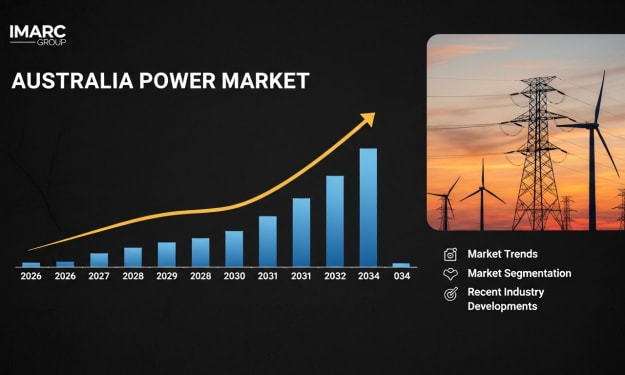
Australia Power Market: Renewable Integration, Grid Modernization & Demand Growth
According to IMARC Group, the Australia power market reached 285.7 TWh in 2025 and is projected to expand to 377.0 TWh by 2034, exhibiting a compound annual growth rate (CAGR) of 3.04% during 2026–2034. This steady expansion reflects structural changes in electricity generation, transmission and consumption patterns across Australia. The power sector is undergoing a historic transformation as renewable energy capacity accelerates, coal-fired plants phase out and grid infrastructure modernizes. Rising electrification across transport, residential and industrial sectors is further reinforcing long-term electricity demand growth.
By Shrestha Roy6 days ago in Futurism
Medical Swabs Market Insights: Diagnostic Accuracy Focus, Product Innovations & Industry Outlook to 2033
Rising demand for accurate diagnostic testing, a growing geriatric population, and the increasing prevalence of infectious diseases and chronic conditions are driving the medical swabs market. These factors are further supported by advancements in swab materials like flocked and foam tips, the expansion of healthcare infrastructure, and the rising popularity of at-home and point-of-care testing. According to IMARC Group’s latest data, the global medical swabs market size reached USD 3.3 Billion in 2024. Looking forward, IMARC Group estimates the market to reach USD 4.7 Billion by 2033, exhibiting a CAGR of 3.82% from 2025-2033.
By Andrew Sullivan4 days ago in Futurism



Comments
There are no comments for this story
Be the first to respond and start the conversation.