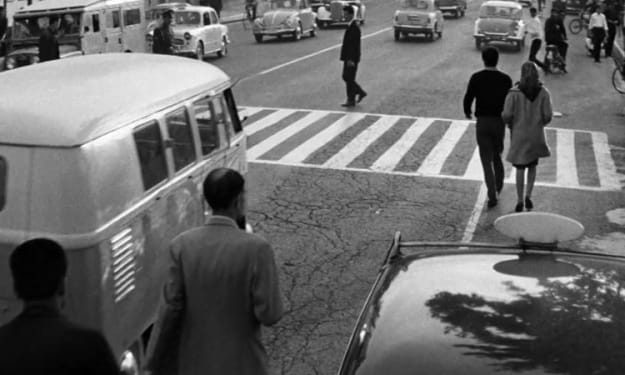
Neoformalism ; film as an aesthetic system
David Bordwell acknowledged a broader filmmaking tradition in his 1985 work that was centered on European art and modern cinema from the 1950s to the 1970s. This tradition posed a challenge to the classical film style. In his book Narration in the Fiction Film, Bordwell explores the relationship between narrative structure and cinematic form, arguing that the way a story is told is just as important as the story itself. With his wife Kristin Thompson, Bordwell introduced a methodological approach in film theory known as neo-formalism. He has also been associated with cognitive theory of film narrative. Bordwell has drawn inspiration from the Russian formalists and earlier film theorists like Noel Burch. Kristin Thompson has employed the neo-formalist approach in two significant books. In her extensive examination of Sergei Eisenstein’s Ivan the Terrible (1944), she examined and assessed the contributions of the early Soviet Formalists, who primarily focused on literature but also covered film in their interests and practices. Furthermore, in Breaking the Glass Armor, Thompson presented an illuminated description of her neo-formalist method by analysing films by renowned directors such as Godard, Hitchcock, Renoir, Bresson, and Preminger.