Jenna Deedy
Bio
Just a New England Mando passionate about wildlife, nerd stuff & cosplay! 🐾✨🎭 Get 20% off @davidsonsteas (https://www.davidsonstea.com/) with code JENNA20-Based in Nashua, NH.
Instagram: @jennacostadeedy
Stories (190)
Filter by community
Tips for a New England Whale Watch
Cape Cod is regarded as one of the most popular places to go whale watching in New England as daily tours leave from Provincetown at the tip of Cape Cod as well as Boston, Plymouth, Barnstable, and Gloucester. From the end of April, all the way through October, whales can often be seen from shore along Cape Cod beaches like Race Point near Provincetown. I personally have done some shore-based whale watching in Race Point on multiple occasions, observing right whale and humpback whale mothers returning to Cape Cod Bay with their young calves and believe me, it was quite an incredible experience. I would totally recommend it to anyone who plans to go to Cape Cod before late April since that’s the time when the whale boats first begin seasonal operations. Back to the whales, the mammals spend the months between March through October in Stellwagen Bank, a shallow mound of sand and gravel that’s a remnant of retreating glaciers from the last Ice Age. There, nutrient-rich waters that flow from the Gulf of Maine helps create major upwelling of nutrients while creating a bloom of plankton at the same time. The result is a complex ecosystem that provides an abundant of food for various baleen whales such as humpback whales, minke whales, fin whales, and Northern right whales. Yet, the more often you go whale watching, whether if it involves walking along the beach, standing on a headland, or on a boat, finding whales and other marine mammals not only requires good luck, it also requires a good dose of knowledge on the animals and the ecosystem they live in. So here are some tips on how make the best of your New England Whale Watch.
By Jenna Deedy7 years ago in Wander
Six Facts About the Whale Shark
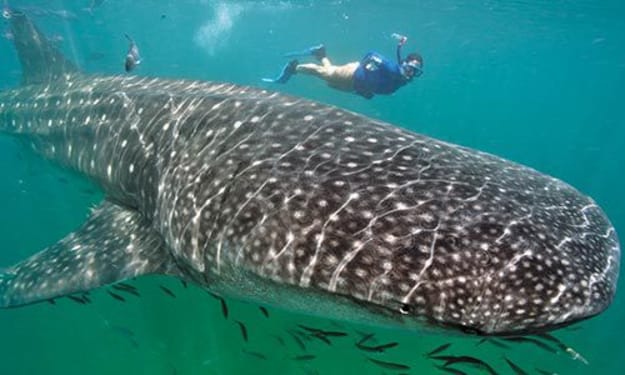
The largest shark to ever be alive today, the whale shark (Rhincodon typus) feeds on plankton and travels very long distances in order to find enough food to sustain their large size and breed. These sharks can grow up to 40 feet long and weight up to about 11 tons. They are found in all of the world’s tropical oceans and are regarded as gentle giants. Here are some Six facts about these magnificent sharks (Disclaimer: Despite the name, whale sharks are not related to whales in any shape or form).
By Jenna Deedy7 years ago in Petlife
A Monk Seal Called KP2 (Or Hō’ailona by Some)
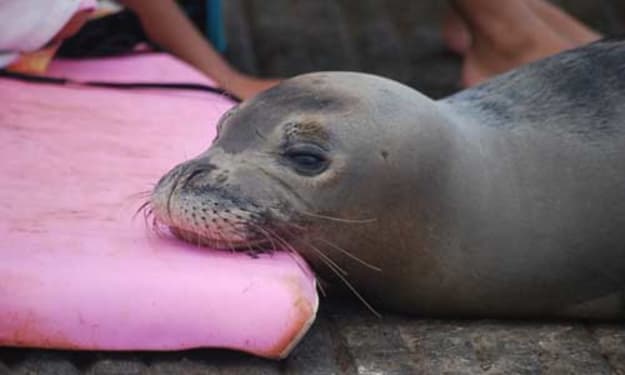
They say that not all human-seal conflicts end in death in Hawaii, which is the case for KP2 who, at only a few days old, was rescued by a NOAA veterinarian after seeing he was alone, attempting to nurse from some rocks and calling out for his mother, RK22, who was nowhere in sight. Because RK22 had a history of rejecting her pups shortly after birth, a decision was made to rescue and rehabilitate him in the hopes of, not only preventing a potential death of a rejected pup, but also ensuring the survival of a critically endangered mammal, whose numbers were only around 1,100. From there, he was taken to the Kewalo Research Facility in Oahu.
By Jenna Deedy7 years ago in Petlife
Six Facts About Dugongs. Top Story - August 2018.
Dugongs, while similar to manatees, are shorter and slender comparing to their western hemisphere well-known marine mammals to have ever been studied in the Southern Hemisphere, research that has been done on the animals would eventually give way to the rise of manatee research in the United States and Brazil. These animals are known to grow up to 11 feet long and weight up to 2,200 pounds.
By Jenna Deedy7 years ago in Petlife
The Hypocrisy of Thomas Cook Travel Agency When It Comes to Zoos and Aquariums
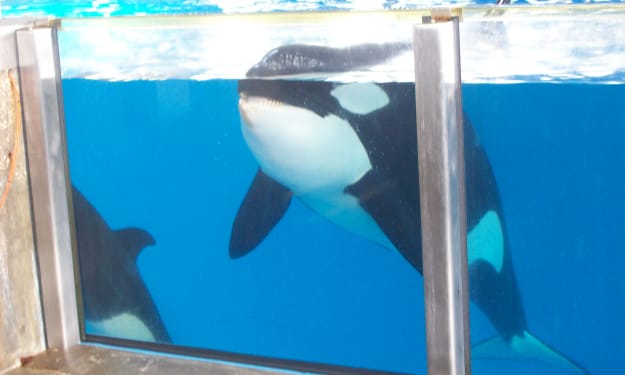
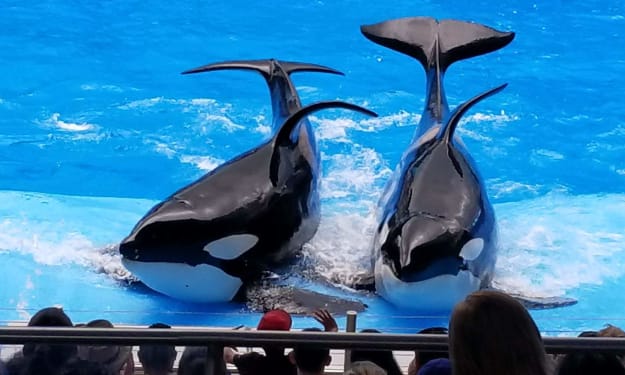
Recently, Thomas Cook, a travel agency that is based in the United Kingdom, recently announced that it would no longer include marine mammal facilities that house orcas. The decision was likely influenced by animal rights extremists who target any zoo or aquarium that houses cetaceans. However, aside from the fact that it was an animal rights influence that made the company say “adios” to anything SeaWorld or Loro Parque, it’s the fact that Thomas Cook does have some ties to a facility based in China that houses cetaceans that were collected from waters off of Taiji, Japan.
By Jenna Deedy7 years ago in Petlife
Dear Parents, Don’t Let Your Kids Play With the Sea Lions on the Beach!
A California woman was recently visiting Point La Jolla Beach just right outside of San Diego, California when she saw a disturbing site: A group of families visiting the state harassing a colony of California sea lions. Andrea Else Hahn was visiting La Jolla’s famous sea lion rookery on Sunday when she witnessed a group of visiting tourists harassing a colony of sea lions by attempting to take selfies with them, feeding them, petting them, playing with them, and there was even a number of kids kicking sand at some juvenile sea lions. For three days, Hahn, continued to film the growing public ignorance and ongoing violation of the Marine Mammal Protection Act. This was despite a number of signs that were written in three different languages that advised the public to not attempt to feed, pet, nor harass the sea lions.
By Jenna Deedy7 years ago in Petlife
Five Things to Know About Great White Sharks
One of the most celebrated species of shark in the world, the great white shark (Carchardon carcharias) is regarded as the largest species of predatory shark on Earth. A healthy adult shark can grow up to 21 feet in length and weight up to 4,000 pounds. In addition to having powerful jaws that are full of large serrated teeth, they are also capable of exerting lethal forces of more than 20 tons per square inch when biting on prey and foreign objects. So, in honor of “Shark Week”, here are five facts to know about the great white shark...
By Jenna Deedy7 years ago in Petlife
Freeing Lolita the Killer Whale Is Not an Option
Lolita is a Southern Resident killer whale who was believed to have been born in 1966 to the Southern Resident orca population. She was collected on August 8, 1970 off the coast of Penn Cove, Washington where she was kept in a pen-based facility for about a month before she was sent to Miami Seaquarium in Key Biscayne, FL. There, she spent the first ten years of her life at the facility with a male orca named Hugo, who was believed to have come from the same pod as she did, until his death in 1980. She has been the only orca in its care since. Today, she currently resides at the facility with four Pacific white sided dolphins, who serve as her companions, and is one of two living killer whales to have been collected from the Pacific Northwest during the 1960s and 70s. Yet, despite the fact that Lolita continues to thrive at Miami Seaquarium, animal rights extremists want Lolita to be “released” from the only home she has ever known for the last 48 years by putting her in a potentially dangerous “return-to-the-wild” that would be run by those with very little to no expertise in animal care. I am here to explain why freeing Lolita may not be in her best interest.
By Jenna Deedy8 years ago in Petlife
Want to Save Marine Life? Let's Ban the Plastics
Right now, our oceans need more help than ever. This is because recent studies have shown that there tens, if not, thousands of pieces of plastic products that floating around in the oceans. Yet, the only way to remove them is if every person, regardless of where they live and work, works to remove all plastic trash from the ecosystem before a bird, marine mammal, or sea turtle begins to choke on it. In fact, millions of tons of plastic waste enter the oceans every year while the average person living in the United States throws away about 185 pounds of plastic per year. Yet, every piece of plastic that people use on a daily basis, only to be later thrown out is still out there today.
By Jenna Deedy8 years ago in The Swamp
Sanctuaries and Cetacean "Bans"
Recently, an animal rights group known as the "Whale Sanctuary Project" revealed its desire to develop a marine mammal "sanctuary" that would house cetaceans that have spent most of their lives in human care in southeastern Nova Scotia. The pen, which would house up to ten orcas, would be about the size of around 40 soccer fields and might open by 2020 even though it would cost around $20 million for the project to be completed. Sounds ideal right?
By Jenna Deedy8 years ago in Petlife