Jenna Deedy
Bio
Just a New England Mando passionate about wildlife, nerd stuff & cosplay! 🐾✨🎭 Get 20% off @davidsonsteas (https://www.davidsonstea.com/) with code JENNA20-Based in Nashua, NH.
Instagram: @jennacostadeedy
Stories (191)
Filter by community
Activists Target Florida with New Orca Breeding Ban
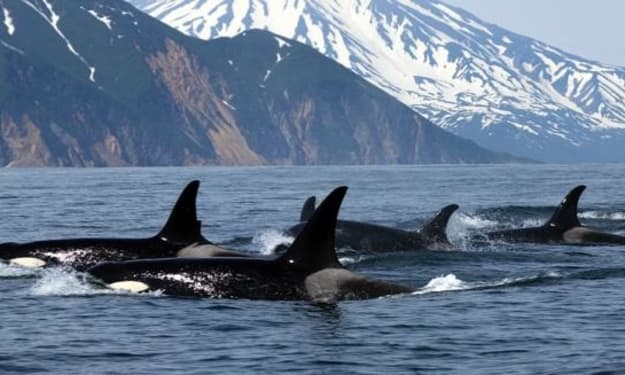
A group of radical animal rights extremists under the Animal League Defense Fund, via Representative Jared Moskowitz, have managed to get an amendment that would ban Florida-based zoos and aquariums from possibly housing, or breeding killer whales in their care. The bill, which was heavily inspired by a biased documentary called Blackfish, was originally drafted for the 2018 legislative session, but luckily, at the time, it was never voted on. A year later, these extremists are back with the bill by demanding the public to have it voted for next year's session. Extremists claim that the bill is "animal-saving" when in reality, it would do more harm than any good and there are a number of problems with these breeding "bans" when they are used as legislative methods to control the zoological community.
By Jenna Deedy7 years ago in Petlife
Pollution Could Kill Half of the World’s Wild Orca Populations
Around the world, many wild orca populations are affected by pollution caused by man-made toxins. These toxins are made of various chemicals that often are used on land for different purposes, only to end up in waterways through runoffs before making their way into the ocean as a form of pollution. These various chemicals include flame retardants, industrial pollutants, oils, and pesticides, and they have all been known to enter into oceanic waters through waterways and are now, having a major impact on marine wildlife, including the orcas. Speaking of orcas, a new study has recently confirmed that half of all of the known wild orca populations could be at risk of dying out as a result of exposure to the effects of toxins and ongoing pollution in various parts of the world.
By Jenna Deedy7 years ago in Petlife
Two More Southern Resident Orcas Are Ailing—and Three Are Pregnant
According to researchers who are focused on the Southern Resident orca population, two more whales are falling ill as a result of the lack of salmon they depend on for their survival. The first animal in question is K25, also known as Scoter. He's a 27-year-old adult male who has been documented in aerial photographs for the last decade. Researchers say that in recent weeks, Scoter has been showing signs of becoming thinner than he was in previous years. The trouble for the endangered mammal began last year when his mother, K13, also known as Skagit, died. This is because Skagit, like all orca matriarchs within the Southern Resident pods, helped her family and other pods in navigating the Salish Sea for salmon before capturing and sharing the newly caught prey. Male orcas rely on help from their mothers, sisters, female cousins, nieces, and aunts to find and track down prey and meet their much larger energy demands. Studies have shown that adult orca males tend to have higher risks of dying following their mothers' deaths. This puts Scoter at a higher risk of dying.
By Jenna Deedy7 years ago in Petlife
Morgan, a Rescued Killer Whale Gives Birth at Loro Parque
Morgan, an 11-year-old killer whale who resides at Loro Parque has kicked off the first day of fall by giving birth to her first calf yesterday morning (Spain's local time). According to her trainers and veterinarians, the newborn calf healthy, but are having trouble determining its gender, due to Morgan being very protective of it. This is because the second the calf came into the world, Morgan proved herself to be an excellent mother by attending to her newborn. However, the animal care staff at Loro Parque will continue to monitor the pair in case they need to intervene if things are to go wrong between mother and calf.
By Jenna Deedy7 years ago in Petlife
Will an Agreement to Save Wild Salmon Be Enough to Save Wild Orcas?
In some of my previous articles, I have discussed the plight of the Southern Resident orca community and how the loss of their major food source, the Chinook salmon, is linked to their potential extinction. In addition, I have also discussed the tragic fate of one of these animals in question. A juvenile orca by the name of J50, who was also known as Scarlet. However, with all efforts to save Scarlet from becoming another mass extinction casualty having to have since failed, all eyes have now been turned on preventing future deaths relating to starvation which now means, focusing on saving the salmon that the whales depend on for their survival.
By Jenna Deedy7 years ago in Petlife
Obituary: J50, Also Known as Scarlet
J50, also known as Scarlet, is now believed to have died from an illness relating to malnutrition after researchers off the coast of Washington state were unable to find her among a super pod gathering of all the whales from the Southern Resident community on Thursday. All search efforts to find the animal by boat, plane, and from shore came up with no sight of the four-year-old orca. She was last sighted on September 7th, but the search still continues.
By Jenna Deedy7 years ago in Petlife
When Whales Get Sick, Activists Show Their True Colors
Earlier last month, I wrote about how the Southern Resident orca population off the coast of Washington state had been placed on the international spotlight when an adult female known as Tahlequah, also known as J35, spent seventeen days carrying around her calf, who died shortly after birth. Around the same time, her cousin, J50, also known as Scarlet, began to battle malnutrition as a result of not being able to feed on Chinook salmon, the primary food source of this endangered orca population. After several attempts to feed her live fish and darting her with medications as a way to treat a possible infection, the US National Marine Fisheries Service has now suggested a plan that might be the only thing that could save her life-capturing Scarlet by locating her to a sea pen where she would be rehabilitated until she is healthy enough to rejoin her pod. Sounds like a simple idea to a complicated issue right? While it seems so ideal, there is one group of people who are in the way of this: the animal rights movement.
By Jenna Deedy7 years ago in Petlife
Back to School? No Problem!
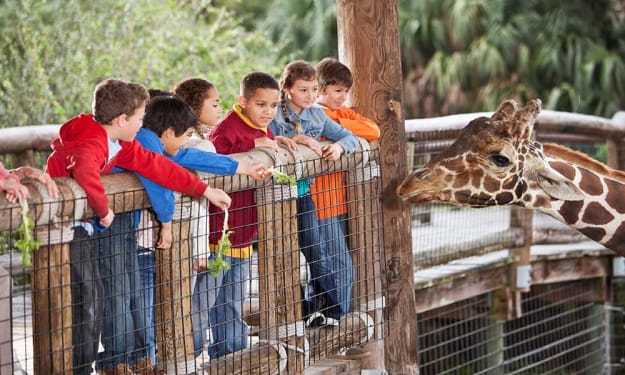
It's that time of the year again when the kids have a brand new set of supplies that they are going to need for another year of school, teachers getting back on the job after a summer of vacations and workshops and so on. This also includes new lessons that the kids are going to be learning that may not always involve the basics like language arts and mathematics. They may involve science, history, geography, and bits of animal science. Yes, that's right, animal science as in introducing students to the science of zoology and environmental science. The best part about introducing kids to this exciting topic is that it does not have to take place in a classroom at all, but it can be anywhere, like on a beach, a nature trail, a zoo, an aquarium, a wildlife refuge, and even a museum. However, if you feel that you need to add a little bit of "nature" to the classroom, you can always invite a keeper to do a live animal presentation at school. So, here are some ways on how to bring "the wild" into the classroom during the school year.
By Jenna Deedy7 years ago in Education
Six Facts About the Sperm Whale
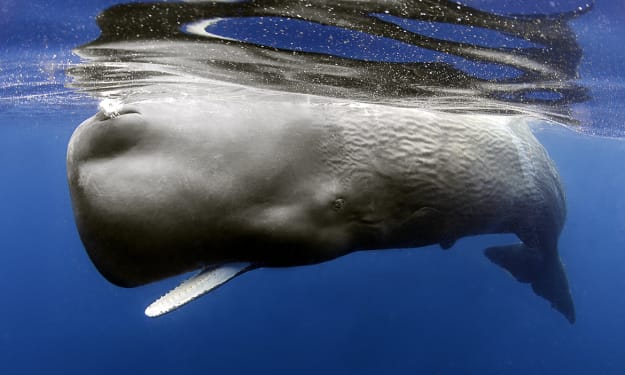
The sperm whale (Physeter macrocephalus), made famous by Herman Melville’s Moby Dick, is the largest species of toothed whale in the world. At around 60 feet in length and weighing in at around 120,000 pounds, these predatory mammals are found throughout all of the world’s deep oceans and are regarded as one of the most extreme animals on the planets, due to being able to dive down to such great depths. So, here are some six facts about the sperm whale.
By Jenna Deedy7 years ago in Petlife
Six Facts About the North Atlantic Right Whale
The North Atlantic Right Whale (Eubalaena glacialis) is regarded as one of the most endangered species of baleen whales in the world. The species has a very long history of being subjected to human exploitation until the 1930s when laws were finally passed to protect the slow-moving marine mammals from the whaling industry. Yet, despite these efforts, the population in the North Atlantic shows very little to no signs of recovery. So, here are six things to know about these endangered mammals.
By Jenna Deedy7 years ago in Petlife
When the Water Turns Red: How Red Tide Affects Florida’s Marine Animals
Karenia brevis is a type of dinoflagellate that is known to produce toxins that can accumulate in marine organisms like shellfish, which can lead to poisoning when eaten by other animals. It’s adapted to get nutrients on the West Florida Shelf Oligotrophic where it feeds on copepods and their feces. In order for it to thrive, it also needs low light and an upwelling to initiate a bloom. The bloom occurs in four stages which include initiation, growth, maintenance and termination. Yet researchers have yet to determine which stage could serve as a primary factor to a bloom maintenance since there are multiple sources that are involved in the process. What is known, though, is that once a bloom begins, a combination of winds and current push the newly formed red tide to shore. As a result, the dangers it can have on animals begins to arise when K. brevis gets ingested because after all, they do produce a neurotoxin that bioaccumulate up the food chain of Florida’s marine ecosystem. This toxin can also be airborne when the cell breaks up from wave activity.
By Jenna Deedy7 years ago in Petlife
Don’t Feed Wild Marine Mammals
In a previous article, I discussed how one California woman attempted to stop a group of beach-goers from harassing a colony of wild sea lions. Although I did talk about how it's illegal to play with, touch, or even feed a wild marine mammal, I did not mention how it can inflict potential harm. Word of caution, what I am about to describe may be a little upsetting to some readers, but at the same time, it’s critical to be very cautious when watching marine mammals out in the wild.
By Jenna Deedy7 years ago in Petlife