Francis Dami
Bio
Stories (386)
Filter by community
According to neuroscientists, this typical nightly ritual significantly enhances sleep.
It has been demonstrated that reading a book in bed improves sleep quality more than immediately turning out the lights. That straightforward practice simultaneously activates the systems of memory, language, and emotion, and that consistent concentration can facilitate the transition to sleep.
By Francis Dami6 days ago in Futurism
Exercise activates a liver enzyme that fixes brain vascular damage and improves memory.
In mice, it has recently been demonstrated that a liver enzyme generated during exercise can restore memory and repair aging brain blood vessels. By linking the benefits of physical activity to a repair mechanism at the brain's outer boundary rather than inside neurones themselves, the new discovery reframes how exercise protects cognition.
By Francis Dami6 days ago in FYI
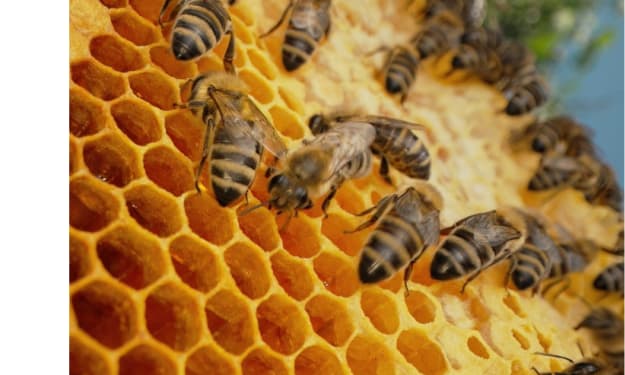
The hive has a designated "dance floor" that honey bees use.
Within a certain, quantifiable patch of comb inside the hive, honey bees focus their recruitment dances. Now that its exact outline has been established, scientists can monitor how and when colonies rearrange that common communication area in response to shifting circumstances.
By Francis Dami6 days ago in Petlife
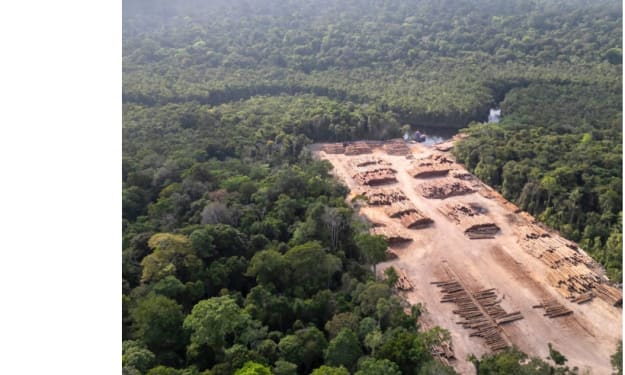
Deforestation in the Amazon reduces the rain forest's capacity to produce its own precipitation.
A recent research demonstrates what many scientists have long assumed but can now detect with precision from space: the local climate changes when big swaths of the Amazon are cleared.
By Francis Dami11 days ago in FYI
Dogs that are overweight have much higher ocular pressure.
According to a recent study, dogs that are overweight have far higher ocular pressure than dogs that are thin. This disparity brings normally healthy animals closer to levels that have long been associated with diseases that compromise vision.
By Francis Dami11 days ago in Petlife
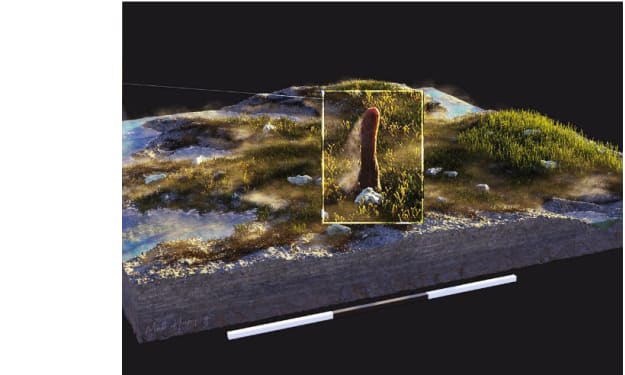
'Unknown life form' is the term scientists use to describe a 26-foot-tall fossil from 400 million years ago.
Prototaxites is a peculiar fossil that has baffled scientists for more than 165 years. It was odd even in appearance. It looked like a massive, leafless tree and reached a height of 26 feet.
By Francis Dami11 days ago in History
Targeting microorganisms linked to stomach cancer, a new chocolate innovation
It has been demonstrated that chocolate truffles manufactured from grape waste suppress the stomach microbe most closely associated with gastric cancer. The discovery gives discarded winemaking materials a new biological purpose while redefining a familiar meal as a possible tool for lowering infection risk.
By Francis Dami11 days ago in Lifehack
The enigma of why a star went dark for months is solved by astronomers.
Typically, stars don't simply disappear. For millions or possibly billions of years, they emit a constant glow. At the end of 2024, scientists took notice when a star 3,200 light-years away from Earth abruptly faded.
By Francis Dami11 days ago in Futurism