Fazal Maula
Stories (14)
Filter by community
The Bridge You Build
It was the kind of cold morning where breath fogs in the air and silence stretches for miles. Nathan Ellis stood by the edge of the old wooden bridge just outside Willow Creek, a small town tucked deep in the valleys of Oregon. The bridge, once a sturdy path between two hills, had weathered decades of storms and silence. Now it stood half-rotted, a forgotten crossing between the past and what lay ahead. Nathan, 47, had returned to the town he swore he'd never come back to. Life, with its uncanny sense of humor, often leads you back to the place where it all started. And for Nathan, that place was Willow Creek—a town of less than a thousand people, most of whom still remembered his name for all the wrong reasons. Twenty-five years earlier, Nathan had left in anger. His father, a stern man who never understood dreams that couldn’t be weighed or measured, had insisted he take over the family lumber business. Nathan, a quiet teenager with a love for architecture and art, had refused. Their final argument echoed in his mind like it was yesterday: “You’ll never build anything worthwhile with your head in the clouds,” his father had said. And just like that, Nathan packed his bags and left, vowing never to return. But time changes everything. Now, his father was gone. A heart attack took him swiftly, and the call came unexpectedly. “You should come,” said the lawyer. “There are things you need to see.” So here Nathan stood, staring at the same bridge he’d sketched endlessly as a boy—back when he dreamt of rebuilding it, making it stronger, more beautiful. He sighed and walked across it carefully. Each creak beneath his boots felt like a whisper from the past. In the house where he grew up, nothing had changed. The old armchair still faced the fireplace, the mantle still held photos he thought had long been discarded—him as a child, his mother smiling, his father holding a fishing rod. But it was the small study upstairs that broke him. There, spread across the desk, were dozens of papers: blueprints, sketches, notes written in his father’s unmistakable handwriting. It was the bridge—the same bridge Nathan had designed in his teenage years. His father had kept them all, annotated them, improved them. One note stood out: "Maybe one day, we’ll build it together. -Dad" Nathan sank into the chair, overwhelmed by something heavier than grief: regret. He realized then that while he had been chasing a future, his father had quietly been holding on to a piece of the past—of him. The next morning, Nathan visited the town council. “I want to rebuild the bridge,” he said simply. They were surprised—most of them hadn’t seen him in two decades. But the town needed that bridge; people had been taking long detours for years. Work began in spring. Nathan hired a small crew, but he insisted on doing much of the work himself. Day by day, piece by piece, he laid down planks and beams, drawing not just from his degree in architecture but from the lessons he had learned in life—about patience, precision, and humility. The townspeople came by often. Some offered sandwiches. Others brought tools. And some just came to talk, to reconnect. Slowly, Nathan found something he hadn’t felt in years: belonging. Children would sit on nearby rocks, watching him work, peppering him with questions. One of them, a boy named Milo, came every afternoon. “Why are you fixing this old bridge?” Milo asked once. Nathan wiped sweat from his brow and smiled. “Because some things are worth fixing. Even if it takes years.” “Like families?” Milo asked innocently. Nathan paused. “Yeah, exactly like that.” By late summer, the bridge was nearly done. It stood strong and proud—a symbol not just of function, but of forgiveness. On the day of the opening, the whole town gathered. They brought food, music, and memories. An old woman brought a photo of Nathan’s father standing near the bridge in the 1980s. “He believed you’d come back,” she said. Nathan gave a short speech. “I used to think leaving was the bravest thing I’d ever done. But I was wrong. Coming back—facing the past, rebuilding relationships, rediscovering who I was—this is what courage really looks like.” Applause broke out. As the sun dipped below the hills, casting golden light over the wooden planks, people began walking across the bridge—young and old, hand in hand. That evening, Nathan sat on the middle of the bridge, alone. The stars blinked overhead. He pulled out an old blueprint from his pocket—the original one he had drawn as a teen. He traced the lines with his finger, then smiled. He hadn’t just rebuilt a bridge. He had rebuilt a life. --- Moral of the Story: Life will always offer detours, setbacks, and broken connections. But the courage to return, to mend what was lost, and to rebuild from the ruins—that’s where true growth begins. Sometimes, the most important bridges we build are not between two places, but between hearts and time.
By Fazal Maula 10 months ago in Motivation
The Second Sunrise: A Story of Loss, Purpose, and Starting Again. Content Warning.
Part I: The Fall James Whitaker was the kind of man people admired from a distance—CEO of a growing tech startup, father of two, and a marathon runner. At 42, he had checked most boxes society labeled as “success.” But life has a strange way of asking: What if it all disappears? Who would you be then? On a rainy Tuesday morning in March, that question was answered in the most brutal way. A head-on collision with a truck took the lives of his wife, Laura, and their son, Ben, leaving only James and his 8-year-old daughter, Sophie, in the hospital. He woke up three days later to find a hole in his chest that would never fully heal. The world didn't just become darker for James—it stopped moving. He stepped down from his company, stopped running, stopped laughing. The man who had once led boardrooms and powered through 26-mile races couldn’t get out of bed without breaking down. Everyone told him to “take his time.” Grief counselors spoke of “stages.” But none of that mattered when the silence in the house echoed louder than any voice. One night, after tucking Sophie into bed, she whispered, “Daddy, are you still here?” That question shattered him—and saved him. --- Part II: The Awakening James realized that while he had lost a wife and a son, Sophie had lost half her world too. And now, she risked losing what was left—him. That was the night he made a promise: “If I can’t live for myself, I will live for her.” It started small. He began cooking breakfast again, even if it was just toast. He walked Sophie to school. He showered. These were victories—quiet and unseen—but they mattered. Slowly, days stopped being enemies and became blank canvases. A few months later, Sophie brought home a flyer: “Career Day.” Parents were invited to speak at school. “You used to be the boss of computers,” she said. James chuckled for the first time in months. He didn’t go as a CEO. He went as a dad who had a story to tell—not about business, but about rebuilding. He spoke to the children about resilience, explaining how even broken things can grow strong again. Afterward, a teacher pulled him aside and said, “You should speak more often.” And so he did. --- Part III: The Rise James began giving talks—not as a polished professional, but as a man who had walked through fire and came out not unburned, but unbroken. His story wasn’t filled with clever quotes or perfect solutions. It was raw, real, and rooted in hope. He created a podcast called The Second Sunrise, where he interviewed people who had survived loss, failure, and even near-death experiences. The theme was always the same: “Life ends more than once—but it can begin again, too.” Emails began to pour in. People who had lost jobs, marriages, parents, or children shared their stories. James listened. He cried with them. And he healed a little more with each message. He didn’t go back to running marathons, but he did jog again. Not to chase time—but to honor it. --- Part IV: The Gift Five years after the accident, James published a book: The Second Sunrise: How I Lost Everything and Found What Matters. It wasn't a bestseller. But it became a life-seller—it gave people a reason to believe again. He often said during his talks, “There is no going back to who you were. But there’s always a path to who you can become.” And Sophie? She grew up to be a social worker, inspired by her father's strength and vulnerability. On her graduation day, she hugged him and said, “You didn’t just survive, Dad. You lived. And because you did, so did I.” --- Final Thoughts: What This Story Teaches Us We often believe that life is linear—that we climb a ladder, tick boxes, and move forward. But real life is cyclical. There are rises, falls, and re-awakenings. What defines us is not the height of our success but the depth of our resilience. James’ story resonates not because he conquered the world—but because he continued in it. He teaches us that: Pain doesn’t mean the end; sometimes, it’s the beginning of something deeper. Even when you feel alone, someone—perhaps even your child—is looking to you for light. Purpose isn’t something you find; it’s something you create in the ashes of what you’ve lost. Life is fragile. But so is glass—and it still reflects light. --- Quote to End On: "The sun doesn’t rise just once. For those willing to look up, it rises again—and again—no matter how dark the night." — James Whitaker
By Fazal Maula 10 months ago in Motivation
The Last Bench to the Front Row How a Quiet Soul Discovered His Place in the World
1. The Invisible Boy In a quiet town nestled between mountains and meadows, lived a boy named Liam. He was the kind of child who went unnoticed in a crowd, not because he lacked charm, but because he chose silence over noise, observation over interruption. At school, Liam always sat on the last bench. Not because he didn’t care, but because he feared being seen. He feared failing in front of others, so he chose to disappear instead. His classmates called him “The Ghost,” and not always kindly. But Liam didn’t mind. He found comfort in books, stars, and the questions that kept most people up at night. He wasn’t loud, but he was curious. And deep inside him, hidden under layers of doubt and fear, was a burning desire — to be someone. To make life count. --- 2. A Glimpse of Spark Everything began to change during the winter of Liam’s 16th year. Mr. Carter, a substitute English teacher with a booming voice and a passion for forgotten students, noticed Liam’s quiet intelligence. He read one of Liam’s essays and paused. “This,” Mr. Carter said, holding the paper high, “is brilliance wrapped in humility.” The class laughed awkwardly, unsure if it was sarcasm. But Mr. Carter wasn’t joking. He walked to the last bench, placed the paper on Liam’s desk, and whispered, “You’ve got something most kids your age don’t. Don’t waste it in shadows.” That night, Liam stared at his essay under the dim yellow bulb of his room. For the first time, he saw it not as a school task, but as a mirror — a glimpse of who he could become. --- 3. The Climb Begins Inspired, Liam started trying — not to impress others, but to challenge himself. He joined debates, even though his voice trembled. He wrote articles for the school magazine. He asked questions in class. At first, he was mocked. “The Ghost speaks!” someone yelled during his first debate. But Liam didn’t stop. He practiced every night, recording himself, cringing at his own voice, and trying again. Every failure became a step. Every embarrassment, a brick in his foundation. Slowly, the laughter faded. Teachers started calling on him first. His words carried weight, not volume. His stories moved people. Liam had started to take his place — not in the spotlight, but in the world. --- 4. The Setback Just when life seemed to be turning, tragedy struck. Liam’s father, a quiet factory worker and Liam’s silent supporter, lost his job due to downsizing. The family struggled. Bills piled up. Dreams felt like luxuries they could no longer afford. Liam considered quitting school to help. But his father, weary but proud, said something that stuck with him: “Don’t sacrifice your future to fix the present. Build a future that fixes both.” Those words became Liam’s anchor. He applied for scholarships. He worked part-time. He studied harder. Sleep became optional. Purpose became everything. --- 5. From Last to First By the end of high school, Liam was no longer invisible. He graduated top of his class. His final speech — raw, humble, and powerful — earned a standing ovation. “Success,” he said, “isn’t loud. It doesn’t always come with applause. Sometimes, it whispers through a cracked voice on the last bench, waiting to be heard.” He earned a scholarship to a top university. He studied literature and psychology, combining his love for stories with his desire to understand people. But Liam didn’t just stop at his success. He began mentoring other quiet students. He started a blog, The Last Bench Diaries, where he wrote about fear, failure, and finding purpose. --- 6. Full Circle Years later, Liam became a professor — the kind who remembered your name, who saw potential before performance. His office was filled with thank-you notes, not trophies. One rainy afternoon, a shy student knocked on his door. “I read your blog,” she said softly. “I think I’m like you… afraid to be seen.” Liam smiled, handed her a cup of tea, and said, “Then you’re exactly where you need to be.” --- 7. The Lesson Liam’s story isn’t about fame or fortune. It’s about showing up when it’s easier to hide. About choosing growth when comfort whispers your name. We live in a world that celebrates noise — the bold, the loud, the instantly successful. But there’s power in the quiet climb. In the boy on the last bench who dares to dream. In the girl afraid to speak who still raises her hand. Liam taught us that success isn’t about being seen first. It’s about becoming someone worth seeing. --- Moral of the Story: Your story matters — even if it begins in the shadows. Especially if it does.
By Fazal Maula 10 months ago in Motivation
"The Last Light: A Story of Purpose Beyond Failure
The Fall from the Top Jonathan Miller stood at the peak of his career. At 38, he was a partner in one of New York’s top law firms, lived in a penthouse overlooking Central Park, and drove a car that most people only saw in magazines. From the outside, it was the perfect life. But life doesn’t always honor the appearance of perfection. One Monday morning, he was called into the managing partner’s office. Within thirty minutes, his 15-year legal career was over. A conflict of interest had emerged from a client relationship he hadn’t declared. Though it wasn’t malicious, it was enough to cost him everything. In the weeks that followed, Jonathan watched his savings deplete. His friends grew silent. His phone stopped ringing. It was as though success had been the only reason people remembered his name. For the first time in his life, he faced silence—not just from others, but from within. --- The Hidden Room Desperate to escape the city’s judgmental gaze, Jonathan moved back to his hometown in Vermont. It was a quiet, rural town he hadn’t visited in over two decades. He took up residence in the old family cabin, which had been empty since his parents passed away. One evening, while going through some dusty boxes in the attic, he found a journal belonging to his father—a man he had never really understood. Jonathan had always thought of him as an unambitious mechanic who never wanted more from life. As he flipped through the pages, he found something unexpected. His father had written reflections on life, pain, joy, and failure. The words were raw, honest, and wise. One entry read: "I used to think failure was a sign of weakness. Now I see it’s just a sign of being human. The real strength is in learning to walk again after you fall." It hit Jonathan like a wave. His whole life, he had chased perfection, thinking that failure was the end. But what if it wasn’t? What if it was the beginning? --- The Long Road Back With nothing to lose, Jonathan began writing. He started a blog called The Last Light—a name inspired by his father's final journal entry: “Even in the darkest rooms, the last light often comes from within.” He wrote about losing everything. About shame. About waking up without purpose and going to bed with even less. But he also wrote about discovery—about kindness from strangers, about the silence that heals, and the beauty of starting over. The blog didn't explode overnight. But over time, people began to find it. Messages started pouring in—some from burned-out lawyers, some from single parents, some from people halfway across the world who had never heard of Jonathan Miller, but knew what it meant to fall. In those messages, Jonathan saw himself. And for the first time in a long time, he didn’t feel alone. --- From Failure to Fulfillment Two years later, The Last Light had grown into a full-fledged platform. Jonathan became a speaker, invited to conferences and podcasts not because he was perfect, but because he wasn’t. He shared stages with CEOs, authors, and therapists. His message was simple: You are not your failure. You are your response to it. He wasn’t rich again—not in the financial sense. But he was fulfilled. He woke up with purpose, knowing that someone, somewhere, needed his words. One night, while walking through a snow-covered trail near the cabin, he looked up at the stars and whispered, “Thank you.” Not for the fall. But for what the fall had revealed. --- The Lessons That Remain Jonathan’s story reminds us of something vital: success is not a straight line. It's not measured in titles, money, or applause. It's measured in resilience, in authenticity, and in the courage to keep going when the spotlight fades. Here are the key lessons from his journey: 1. Failure Is Not Final It may feel like the end, but failure is often just the beginning of a new chapter—one that may bring more meaning than the last. 2. Purpose Is Found in Service When Jonathan turned his pain into service, everything changed. Helping others made his own burden lighter. 3. Authenticity Resonates People don’t connect with perfection—they connect with truth. Vulnerability is not weakness; it’s strength in its rawest form. 4. The Light Comes from Within Even in the darkest moments, there is a spark inside you. Sometimes, you just need silence to hear it. --- Final Thoughts: Your Fall Is Not the End You don’t have to be a lawyer. You don’t have to lose your job or your life’s work to understand this truth: you will fall. Everyone does. But falling doesn’t define you. What defines you is whether you decide to rise. Like Jonathan, you might just find that your greatest failure leads to your most meaningful chapter. Not despite the fall—but because of it. So if you’re standing at the edge, staring into uncertainty, remember: The last light isn't out there. It’s in you.
By Fazal Maula 10 months ago in Motivation
“The Last Bench to the Front Row: A Journey of Unseen Strength”
Chapter 1: The Silent Corner Arman was always the boy on the last bench. In school, he was known for his quiet nature, shabby uniform, and an old bag stitched at the corners. Teachers rarely noticed him. Students never bothered to remember his name. He didn’t talk much—not because he had nothing to say, but because no one seemed to listen.
By Fazal Maula 10 months ago in Motivation
"The Mountain Within: A Journey from Lost to Limitless"
Introduction There are moments in life when everything seems still — not in peace, but in paralysis. You wake up, go through the motions, smile when expected, and yet, deep within, something feels hollow. This is the story of Ethan Miller, a 34-year-old marketing executive from London, who appeared to have it all — a high-paying job, a penthouse apartment, and an enviable lifestyle — but who secretly battled a deep sense of meaninglessness. His journey from despair to purpose is not only inspiring, but a lesson for anyone questioning the true value of their existence. --- The Success That Felt Like Failure On paper, Ethan had succeeded. At just 28, he became one of the youngest directors at a prestigious firm. He was featured in business magazines, invited to elite conferences, and praised for his innovative ideas. But every evening, after taking off his tailored suit, Ethan stared blankly at the city lights from his 27th-floor window, feeling utterly disconnected. He couldn’t explain why he felt so empty. He had no tragic past, no major loss, and no visible wounds. But he had something even more dangerous — a life without purpose. --- The Collapse The breaking point came on a Thursday morning. While preparing for a board meeting, Ethan suddenly felt dizzy. His heart raced, his breath shortened, and his hands trembled. It wasn’t a heart attack — it was a panic attack. The doctor later told him it was caused by stress and anxiety. But for Ethan, it was more than medical — it was a wake-up call. He realized he was living a life that looked successful but felt bankrupt. It was time for a radical change. He took a sabbatical from work, packed a backpack, and booked a one-way ticket to Nepal. He didn’t know exactly what he was searching for, but he knew he had to start somewhere far from boardrooms and balance sheets. --- Into the Unknown Nepal welcomed him with its chaotic streets, colorful prayer flags, and smiling faces. He volunteered at a school in a small village near Pokhara. Days were simple: teaching English, helping with farming, learning local customs. At first, he struggled without his phone constantly buzzing or emails flooding his inbox. But slowly, silence became his friend. He met locals who had never left their village, who had no wealth to boast of, yet radiated a peace Ethan had never known. He spoke to a 72-year-old farmer named Dawa, who said, “I may not have traveled the world, but I travel every day — from my heart to my soul.” Those words stuck with Ethan. --- The Climb One day, Dawa suggested Ethan climb a nearby mountain — a modest peak, but challenging for someone untrained. Ethan hesitated but agreed. The climb took hours. He slipped, fell, and nearly gave up. But as he reached the summit, something shifted. There was no crowd cheering, no awards or applause — just wind, sky, and silence. Yet in that moment, he felt something he hadn’t in years: clarity. The mountain had taught him a powerful truth: life isn’t about reaching the top, but about the courage to climb. --- Coming Back New Ethan returned to London six months later, not as a marketing executive, but as a new man. He didn’t go back to his old job. Instead, he started a blog called The Mountain Within, where he shared his story and encouraged others to find their own path. He also began coaching individuals and speaking at schools about mental health, purpose, and redefining success. Today, his blog has millions of readers across the world. He’s written two best-selling books and founded a non-profit that funds education for children in Nepal. --- Lessons from the Journey 1. Success means nothing without meaning. You can have status, wealth, and recognition, but if you don’t know why you wake up every morning, it all fades. 2. Simplicity can heal. Sometimes the best therapy isn’t in pills or retreats, but in simplifying life, helping others, and connecting with nature. 3. Pain is a messenger. That panic attack wasn’t just a symptom — it was a signal. Listening to our pain can guide us toward transformation. 4. Purpose is found in service. Ethan found joy not in leading a company, but in teaching kids, planting trees, and sharing stories. --- Conclusion Ethan’s journey reminds us that we all have a “mountain within” — challenges we must face, fears we must climb, and peaks of clarity waiting to be discovered. You don’t need to escape to Nepal to find your path, but you do need to pause, reflect, and ask: Am I living, or just existing? Sometimes, the bravest thing you can do is leave behind a life that looks good to build one that feels good.
By Fazal Maula 10 months ago in Motivation
The Last Run: A Dog’s Journey of Loyalty and Hope
Chapter 1: Born to Run In a quiet town nestled between forested hills and winding rivers, a litter of Border Collie pups was born to a retired sheepdog named Lady. Among them was the smallest of the group, a black-and-white pup with bright amber eyes and an energy that seemed too big for his tiny frame. His name was Scout. From the beginning, Scout showed signs of being special—not because he was the strongest or the fastest, but because he never gave up. While other puppies rested, Scout explored. While others followed, Scout led. His heart outgrew his body every day, and so did his curiosity. --- Chapter 2: Chosen by Chance When he was just eight weeks old, Scout was adopted by an old man named Walter, a retired marathon runner who had lost both his wife and son in a tragic car accident. The old man rarely spoke and never smiled. But when he saw Scout, something inside him softened. “I don’t need a dog,” Walter told the woman at the shelter. “But I think he needs me.” From that day forward, Scout and Walter became inseparable. Walter didn’t believe in toys or treats; he believed in running. Every morning, rain or shine, Scout and Walter ran through town, through trails, across hills. To the townspeople, they became a symbol: the grieving man learning to heal, and the little dog with legs that never stopped moving. --- Chapter 3: The Storm Life settled into a rhythm. But as seasons changed, so did Walter. He grew slower. One morning, he collapsed while tying his shoes. The doctors diagnosed him with a heart condition. Running was out of the question. Scout didn’t understand. Every morning, he’d sit by the door, leash in mouth, waiting. But Walter never moved. Then, one cold morning, Walter passed away in his sleep. His body was found days later—Scout lying beside him, silent and unmoving. The town mourned. People came to pay respects. But no one wanted to adopt an old, grieving dog. Scout was taken to the town shelter, confused and alone. --- Chapter 4: The Escape Scout wasn’t meant for cages. One rainy night, he slipped through a loose fence and ran. No one knows how he found the trail, but two days later, hikers spotted a dog running along the old forest path where Walter used to take him. The same route. The same pace. Every morning. Some said it was instinct. Others said it was grief. But every day at dawn, Scout ran Walter’s route—six miles through woods, hills, and across the river bridge—then disappeared back into the trees. The story spread. Locals began calling him The Phantom Runner. Videos of the dog running the trail at sunrise went viral. A hashtag trended: #RunLikeScout. --- Chapter 5: A Town Rallies Moved by the story, the community decided to turn Walter’s favorite trail into “The Scout Loop.” Volunteers placed water stations, signs with quotes about loyalty and love, and benches named after Scout and Walter. Joggers began to follow him. Children waited with treats. Tourists came from far and wide, hoping to catch a glimpse of the famous dog. But Scout didn’t stop for anyone. He kept running. Every day. Every morning. As if Walter was still with him. --- Chapter 6: The Final Mile Two winters later, a blizzard hit the town. Roads were closed. Schools shut down. That morning, people assumed Scout wouldn’t run. But just as the sun peeked over the snowy hills, there he was. Alone. Tired. Covered in frost. He ran slower than before, limping slightly, his fur caked with snow. But he ran. Locals lined the trail, silently cheering him on, many with tears in their eyes. That evening, Scout didn’t return to the woods. He collapsed near the memorial bench that bore Walter’s name. A young runner picked him up gently and took him to the vet. The diagnosis: Scout’s heart was failing. Age had caught up. --- Chapter 7: Legacy in Motion Scout passed away that night, in warmth, surrounded by the very people who once left him alone in a shelter. His story didn’t end there. A statue of Scout now stands at the start of the trail, with the inscription: “Run with heart. Run with purpose.” Each year, the town holds The Scout Run—a 6-mile charity event supporting animal shelters and heart health awareness. Thousands attend, many with their own rescue dogs. Children grow up hearing the story of the little dog who ran every day for the man who once saved him. --- Final Thoughts: Why Scout’s Story Matters In a world where loyalty is rare and love often conditional, Scout reminds us that sometimes, the most powerful love is silent, persistent, and unwavering. His story isn’t just about a dog who ran—it’s about devotion, healing, and the trails we walk in memory of those we’ve lost. Scout never stopped believing. Even when left behind, he ran toward what he loved, not away from it. And in doing so, he taught a town—and the world—that some journeys are too meaningful to stop. ---
By Fazal Maula 10 months ago in Petlife
Whiskers and the Window: A Silent Bond
John McAllister was not a pet person. At 42, he had built a life that was orderly, successful, and completely silent. A senior architect in Chicago, John’s days were defined by blueprints, conference calls, and an immaculately clean condo in the heart of the city. He preferred routine, coffee without sugar, shirts ironed sharp, and no interruptions — especially the furry kind. So when he moved into his new apartment on the 9th floor and discovered a cat sitting on his window ledge the next morning, he assumed it was lost. The cat was white with a splash of gray between its ears and a long, expressive tail. It didn't meow or scratch. It just stared at John with eyes that were half-moon amber and strangely calm. He opened the window. “Shoo,” he said, gently waving a hand. The cat blinked and stayed. After five minutes of this silent stand-off, John gave up and went back to his work. When he returned in the evening, the cat was gone. He sighed with relief and poured himself a glass of wine. But the next morning, it was back. And so, for the next three weeks, the cat became a fixture — not inside, but outside the glass. Rain or shine, weekday or weekend, it would sit silently, peering in with a composed grace that began to irritate John in a curious way. He tried everything — clapping loudly, spraying water, even playing loud jazz music. The cat remained unfazed. Eventually, he accepted its presence like one accepts background noise — annoying, yet oddly comforting. It wasn’t until one particularly stressful Friday that things changed. John had just lost a major client due to a design miscommunication. His team was frustrated, deadlines were slipping, and his head pounded from hours of damage control. He slumped into his chair by the window, loosening his tie, and groaned. The cat was there. Watching. “Why do you keep coming here?” John asked aloud, not expecting an answer. The cat did something it had never done before. It lifted a paw and placed it gently on the glass, staring at John as if offering... sympathy? Something cracked in John. He pressed his own palm against the glass, aligning with the cat’s. And for the first time in years, John McAllister cried. He didn’t know why exactly. Maybe it was the built-up stress, maybe the loneliness he never admitted, or maybe it was the absurd comfort of a stray animal’s silent companionship. From that day on, he started putting out a small bowl of milk on the ledge. The cat began to meow — soft, appreciative — and sometimes purred when John spoke to it. He named her Whiskers. Soon, Whiskers wasn't just an occasional visitor. She became a ritual. John would wake, sip his coffee beside the window, and tell Whiskers about his day. Her tail would sway with gentle curiosity. She listened better than most humans, and never interrupted. Then came the storm. One night in December, a brutal blizzard swept across Chicago. Winds howled, windows trembled, and snow piled thick against the buildings. John rushed to the window that morning — Whiskers wasn’t there. He waited the next day. And the next. No sign. Panic surprised him. He called animal shelters, checked building security cameras, even posted online. Days passed, and each felt emptier than the last. A week later, while walking home from work, he heard a faint cry near the alley behind his building. He followed the sound through frozen bins and icy concrete until he found her — cold, injured, and barely moving beneath a dumpster. He wrapped her in his coat and carried her, trembling, to the nearest vet. They told him she had a fractured leg and severe frostbite, but she would recover — if someone cared for her. John didn’t hesitate. He cleared space in his condo, bought cat supplies, and converted a spare room into a sanctuary. Whiskers, once the mysterious window guest, was now family. Over weeks, her wounds healed. She limped at first, then walked, and finally sprinted across the living room like a fluffy rocket. She would sleep on his couch, follow him from room to room, and curl beside him on cold evenings. John changed too. He laughed more. Smiled for no reason. He began working fewer hours, started painting again — something he hadn’t done since college. Friends who visited remarked on his warmth. There was color in his life again. All because of a cat. --- Epilogue: Two years later, John adopted two more rescue cats. Whiskers, now regal and healthy, reigned as queen of the household. She no longer needed to sit outside a window to be loved. And John? He often told people, “She didn’t just find me — she saved me. In silence, in stillness, she reminded me how to feel.” --- Moral of the Story: Sometimes, the most profound connections in life come from the quietest corners. Not all saviors wear capes — some come on four paws with silent eyes and a stubborn heart.
By Fazal Maula 10 months ago in Petlife
From Shadows to Sunrise: A Journey of Resilience and Hope
In the first pale light of dawn, Aria awoke feeling the weight of the world on her shoulders. After months of setbacks — a lost job, a broken heart, and waning confidence — even the golden sunrise spilling across the fields couldn’t lift her spirits. Tears shimmered in the corners of her eyes as she watched the sun crest the distant hills, a reminder that each new day still held possibility. Yet for Aria, this dawn felt cold and heavy. For days she had lain awake, wondering if she had the strength to go on. She sat up and took a deep breath. In that quiet morning glow she remembered a promise she once made herself: to keep moving, one step at a time. Slowly, Aria stood and packed a small backpack with only the essentials and a sturdy pair of boots. With one last look at her dimly lit cottage behind her, she headed toward the mountains that had always loomed at the horizon of her life. Something inside her whispered that maybe, just maybe, climbing this mountain could help her find a new purpose — and a spark of hope. A Spark of Hope The path to the mountain’s base was steep and rocky. As Aria walked beneath tall pines and skirting along a quiet stream, doubts crept in like the morning mist. What if I’m not strong enough? she thought. But the memory of her late grandmother’s encouragement gave her courage. “Every challenge is a chance to grow,” her grandmother had once said. Each time Aria felt hopeless, she remembered those words. The steady crunch of gravel underfoot and the cool mountain air began to clear her mind of the city’s noise and her past failures. Along the trail, Aria paused at a sun-dappled clearing and took a sip of water. In the distance, a magnificent eagle soared above the peaks. Its wings caught the light of the rising sun. Aria watched it with a racing heart. Was this the universe’s sign? she wondered. The eagle seemed fearless and free. It glided higher and higher, as if nothing could hold it down. A smile tugged at Aria’s lips. If the eagle can climb, so can I. Renewed with quiet determination, she set out again, each small step now carrying a bit more purpose. The Long Ascent By midday, Aria reached the mountain’s rugged face. Cliffs of gray stone towered above her, bathed in mist and sunlight. She pulled on her climbing gear and began the ascent. The path was treacherous and the air thinned quickly. Sweat dampened her shirt, and every muscle ached as she carefully placed each foot. The wind whipped around her, making her feel utterly exposed and small. Keep going, one step at a time, she reminded herself with every upward grasp. Halfway up, Aria’s resolve faltered. Her fingers trembled on the icy rock. Doubt whispered cruelly: You’re too tired. You should turn back. Her legs shook, and for a moment she imagined herself sliding into the valley below, failing her own challenge. Then she remembered her mother’s voice telling her stories of bravery and endurance. “A river cuts through rock not because of its strength, but its persistence,” her mother used to say. Aria closed her eyes and took a steadying breath. When she opened them again, the valley below still stretched far and wide, but Aria felt a new steel in her heart. She placed one hand firmly on the next ledge and hoisted herself upward. Step by laborious step, she inched toward the summit. Along the climb, Aria allowed herself to reflect on her journey — the pain she had endured and the dreams she still held. With each difficult movement, she felt something shift inside her. The struggle was teaching her patience, resilience, and self-belief. When a breeze eventually found her and brought along a warm glow, she knew she was close. The sun had moved high in the sky, and with it Aria’s hope began to rise as well. Reaching the Peak After what felt like hours of climbing, Aria finally pulled herself up onto the rocky summit. Below her, the world fell away. She looked out over a panorama of white-capped peaks and green valleys; the golden sun lit up a distant lake like a mirror. Even a small town nestled by the water sparkled with light, distant and peaceful. In that moment of quiet triumph, Aria felt tears of relief and joy on her cheeks. Every ounce of pain and doubt had faded against the beauty of what she now saw. The mountain that once seemed so daunting now lay behind her — conquered by her determination. Aria sat on a flat rock to catch her breath, the crisp air filling her lungs with renewed life. For the first time in a long while, she felt strong. The sunrise that had once seemed cold was now warm, as if congratulating her. In the vast stillness, Aria realized something profound: the mountain hadn’t just been a physical climb, but a journey of personal growth. Each challenge she had faced on the way up had been something she’d already overcome inside herself – fear, doubt, and despair. As she gazed out, the future no longer felt bleak or unknown. Instead, it brimmed with possibility. The same sun that had woken her early was now a brilliant promise: a new day, a new chapter. When Aria finally started the descent, she felt light and hopeful. Her steps were steady and sure. The valley below no longer looked intimidating but inviting, full of life and potential. By the time she reached the foothills, Aria knew her journey wasn’t over — life’s struggles would come again. But she also knew she would face them differently now, with the strength she found on that mountain. In her heart, she carried the clear knowledge that no matter how dark the night, the sunrise would always come. Key Takeaways Embrace every challenge: Hardships can become opportunities for personal growth and strength. Keep hope alive: Even in darkness, a small spark of hope can guide you to a brighter future. One step at a time: Persistence and patience — like taking one careful step on a mountain — lead to progress. Find your purpose: Overcoming obstacles can reveal new meaning and direction in life. In the end, Aria discovered that resilience and courage can light a path out of even the darkest valley. Her story reminds us all that with hope in our hearts and determination in our steps, we can climb any mountain life sets in front of us.
By Fazal Maula 10 months ago in Motivation
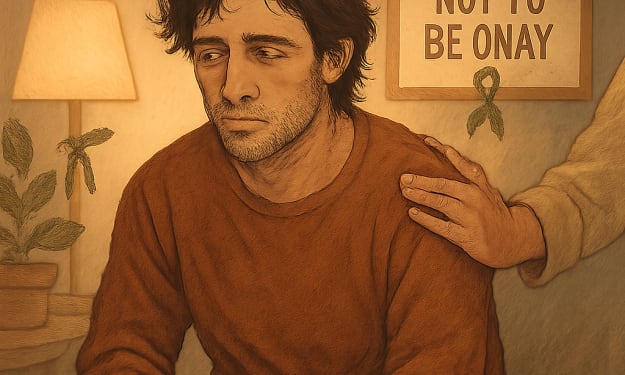
"The Strength in Saying 'I’m Not Okay
May is Mental Health Awareness Month. Every year, stories emerge of people from every walk of life—celebrities, athletes, and everyday folks—sharing their mental health journeys. For some, this month is a reminder to check in with themselves. For others, it’s a lifeline—a message that they are not alone.
By Fazal Maula 10 months ago in Humans
The Light Beyond the Fog
One Man’s Journey from Despair to Purpose Ethan Cole stared at the ceiling of his dimly lit apartment. Another sleepless night. Outside, the city of London moved on — its people in a hurry to chase something. Success, maybe. Or survival. Inside, Ethan wrestled with the question that had haunted him for months: What’s the point of it all? A year ago, Ethan had it all. A six-figure job in finance, a high-rise flat, and a fiancée he planned to marry. But the illusion of control shattered when the company downsized. He lost his job. Then came the breakup, the eviction, and the slow, quiet collapse of his world. Each piece fell like dominos — precise, cruel, final. He withdrew. From friends, family, even from himself. He stopped returning calls. His days blurred into nights. Sleep was a stranger; meals were optional. Depression, though unnamed, had moved in like an uninvited guest. One rainy afternoon, Ethan found himself sitting on a park bench, coat soaked through, staring blankly at the Thames. An old man sat next to him. Wrinkled face, walking cane, and a scarf that looked hand-knitted. "Lost in the fog, are we?" the man asked gently. Ethan turned, startled. "You could say that." The man nodded. "I used to walk into this park every day after my wife died. Thirty years married. Then, silence. It's funny how loud silence can be." Ethan said nothing, but his eyes softened. "I wanted to die, if I’m honest," the man continued. "But then one morning, a little girl sat on this bench. Couldn’t have been older than six. Gave me a drawing — just some stick figures and a sun. She said, 'This is for you. You look sad.'" The old man chuckled. "Can you believe that? That drawing’s framed in my living room now. Reminds me that even in pain, there’s kindness. And where there’s kindness, there’s life." Ethan looked away, eyes damp. "What's your name, son?" "Ethan." "I'm Harold. And Ethan... if you're breathing, there's still purpose. Sometimes, the fog clears when you take the first step — not when you wait for it to pass." That night, Ethan didn’t sleep — but it was different. Something stirred. A spark. He began walking every morning. Not far, just around the block. Then longer. He bought a notebook and wrote thoughts, no matter how disjointed. Some days were harder than others. But he kept going. He started volunteering twice a week at a local shelter. The first time he served food to the homeless, a man with missing teeth smiled and said, "Thanks, mate. Feels good to be seen." That stuck with Ethan. Weeks became months. He enrolled in a free course on mental health awareness and later trained to be a counselor. He was no longer just rebuilding his life — he was redefining it. Five years later, Ethan Cole is the founder of “Clear Skies,” a non-profit offering mental health support and job training to people in crisis. His team has helped over 3,000 people rebuild their lives. The same park bench where he once considered giving up now has a plaque: “Dedicated to those who chose to stay.” In interviews, he often shares Harold’s story. “One small act of kindness saved me,” he says. “Now it’s my turn.” Ethan never saw Harold again. But he credits him for the turning point. --- Reflection: Life is not a straight road. It twists, turns, and sometimes collapses. But every life holds the possibility of redemption — not through grand gestures, but through quiet courage, one step at a time. Ethan’s story resonates because it is not extraordinary in events, but in the choice to rise — again and again.
By Fazal Maula 10 months ago in Motivation
The Harder the Battle, The Sweeter the Victory. Content Warning.
The first light of dawn had barely touched the horizon when sixteen-year-old Rohan dragged himself out of his thin, worn-out mat. His bones ached from yesterday's fourteen-hour labor in the fields, but he couldn't afford rest. Not when his mother's medicine needed to be bought, not when his little sister's school fees were overdue, and certainly not when the landlord's men would come knocking by midday for their share of the harvest.
By Fazal Maula 10 months ago in Motivation