DigitalAddi
Bio
Stories (144)
Filter by community
Trump calls on House Republicans to vote to release Epstein files
In a dramatic turn that reignited one of America’s darkest and most controversial chapters, former President Donald Trump publicly called on House Republicans to vote in favor of releasing the long-sealed Jeffrey Epstein files. The demand—made through a late-night social media post and later repeated at a rally—sent shockwaves across Washington, stirring a storm of political debate, renewed public curiosity, and quiet anxiety among those whose names may appear in the documents.
By DigitalAddi2 months ago in Humans
Zohran Mamdani announces all-female transition team as he prepares for New York mayoralty
Zohran Mamdani’s incoming administration began taking shape on Wednesday as the New York City mayor-elect announced a transition team to help enact what he called the city’s most ambitious policy platform in a generation, vowing to get right to work when he takes office on 1 January.
By DigitalAddi2 months ago in Critique
At Papa’s Funeral, I Learned That Some Legacies Can’t Be Buried
I can’t tell if the yowling’s for the dead or the heat. It’s cicada hiss and lawn mower growl hot—so hot, it’s disrespectful. But as Dad shovels dirt over Papa, I’m cold. I can't cry, and it feels like sin. “It's alright to grieve,” Aunt June whispers. “Ain't no shame in it.” She fans herself with a program as tears drip below her sunglasses. She means it's shameful not to cry, especially for your own. But I can't put on grief like wide-brimmed hats and pearls and black dresses. Can't wear it if I don't mean it. “Who’s catering?” I say. “I'm starved.” “Lawd!” June scowls and whacks my shoulder with the program. Bone-white laurels punch through the dirt like defiant little fists. My uncle stomps over their petals, a banjolele slung over his shoulder. A stringed thing torn between a banjo and ukulele, mourning and joy. He stops beside the gravediggers and smiles. “For Papa,” he says, and strums. The bluegrass starts low but swings lighter, too cheery. Feet thump against dirt. A few hips sway. The song almost turns Papa’s funeral into a shindig, like we can't decide whether to celebrate or sob. At least, I can't. I don’t hate Papa. Just never knew how to like him. War, whiskey, and whatever else made him mean. A monster most days. But human, somehow, when he told stories. The man could lie like a Craigslist landlord. But a few of his tales were true, like how his Pops made him wait outside town shops, too ashamed of the darkness of his own son's skin. He also told war stories. Well, started them. They ended like his altar boy stories, in a grunt, silence, and another bottle. Last time I saw Papa, a few months before he died, he slumped in that ugly olive recliner, its guts spilling out the side. Cancer made him thinner, weaker, but no less angry. “He still flies off the handle over nothin’,” June muttered. She told me Papa had been phoning friends and bragging to the neighbors about how his grandkid got into college—akin to an Olympic gold medal in our small Appalachian town. So he hugged me when he saw me and stuck a cigar in my palm, even though he always said smokes weren't for girls. We rocked on the porch and talked, smoking as the sky turned from gold to dusky purple. Fireflies sparked in the weeds. Papa slapped his knee when I told him how I aced my first exam, and asked all about school more than he'd ever asked me about anything. Dad and his siblings didn't make it through high school, and my cousins spent more time behind bars than out 'cause they couldn't keep away from dope. Papa didn't get boys to brag on. He got me. “There's a spirit in these woods,” Papa said. He told me the legend of a lost soul who whistles past the willows, only in summer, near graves. He carries the bones of his father in a sack over his shoulder. “He just keeps walkin’, bones clackin’ like ice in a cup, lookin’ for a place to lay it down. But never does.” “Why not?” I asked. Papa scratched his beard. “Some things can’t be put away, no matter how hard ya try.” He went quiet for a moment, then shouted at June to bring him a beer. She took too long. When she finally handed it over, he tossed it at her and shattered it against the brick, just shy of her head. June still kept his meds organized, drove him to appointments, even helped bathe him when his legs started to give. She looked after him, and that's how he thanked her. Papa asked if I’d come back soon. I said maybe, but lied. To him, women were maids and half-brains. But even my half a brain knew to get out before he made me into June. Now, past the freshly buried casket and teary crowd, willow trees line the graveyard. They're bent and mournful. A brief gust makes the boughs drift slow and ghost-like as Papa’s voice echoes in my head: “Only in summer, by the graves. He carries a sack of his father’s bones. Looks for a spot to bury ‘em. Never finds one. Can’t let go.” But I don't see a spirit by the willows. Just Dad standing stiff, shoulders tight. No ghostly whistle, only sniffles and wailing from the people Papa hurt most. As if he didn't flick his family away like a cigarette out of a car window. Dad stares at me and marches over. I see that tiny patch of dark skin on his left arm, still there from when Papa stuck a lighter to him after he “stole” a pack of gum as a toddler. Dad waves a hand in front of my face. “It's hotter than the hinges of hell out here. Y’alright?” I nod. It's not a lie. Papa’s gone, and I'm fine. Cold. And that feels worse than being sad. Makes me feel like a beast, like I belong out in the woods on all fours more than in a dress and heels. Finally, everyone shuffles back through the grass, to a narrow path leading to the church. It's a white stoned building, sticking out of our godforsaken town like a diamond in dirt. I’m glad it’s almost done—the wails, the fake condolences, the platitudes. They say Papa lit up every room, but don't say how. They don't admit he doused it in gasoline and struck a match—just say he had a nice smile. Like most of his stories, his eulogy’s a tall tale. One I'm tired of hearing. We step past a wrought-iron gate screaming at the joints. A heavy silence makes my body tense. Even the birds hush. I walk beside Dad, no noise except the crunch of gravel beneath our feet. June stops at the open church doors, dabbing her eyes, and waves us over. But Dad doesn't follow the crowd inside. He nods to the parking lot and I follow, until we plop onto his truck bed. The metal sears through cotton into my thighs. I don't move. Dad doesn’t say anything as he passes me a steaming water bottle buried under a towel, hands shaking a little. Mine shake too. I want to ask if he’s glad Papa’s gone, but the question feels wicked. Does Dad feel the same? Is he…relieved? Ashamed? Done with this funeral, too? “Think you'll miss him?” Dad doesn't answer right away. Doesn't look at me when he does. “I’ll miss who he coulda been.” I nod and squeeze my hands together tight. “I'm proud of you, you know that?” Dad says. “Hell, you’re the only good thing about me.” I force a smile. Dad’s never been good with feelings. Neither have I. But if I’d been raised by Papa—never told I was loved, hit instead of held—I’d be worse. At least I got more than he did. I got scraps, but Dad got starved. And I know Dad cares. I see it in his eyes, and in the way he calls on my breaks to ask if I’ll come visit. He looks like he wants to say more, but sighs and picks at a hangnail. I want to ask if Papa ever told Dad he was proud, but I already know. Dad yanks out a cigarette and marches toward the tree line. He leans against a trunk, folds his arms, and whistles. A tear burns down my cheek, and I'm relieved. Maybe flesh beats behind my chest instead of granite after all. But I don’t cry for Papa. I cry for Dad. Just ‘cause you bury a man doesn’t mean the hurt goes down with him. Maybe Papa learned that from his Pops, Dad learned it from Papa, and I learned it from Dad. I pray mine won't learn it from me. If Papa were here, what story would he tell? I’ll never know—and maybe that’s best. As Dad finishes his smoke, I head for the church. Sun whips my skin. My tears are already dry as I walk on, quietly carrying his bones.
By DigitalAddi5 months ago in Families
A Paper Bag Dress and a Wasp's Escape: A Tale of Unspoken Love
The first time they bumped into each other, she was holding a bouquet, and he was giving a bride away. She could feel him looking at her, and she blushed the same color as her peonies and tried not to smile more than the beatific Mona Lisa half-grin she’d had plastered on her face all morning. She'd smiled so much her face hurt. She couldn’t wait to get back to the hotel room and drink alcohol from tiny bottles and frown at her reflection in the mirror in order to flex the overworked muscles in the opposite direction.
By DigitalAddi5 months ago in Humans
A Mother’s Grief and a Child’s Wonder in the Storm
“Are you there, God? It’s me. Help me break her heart today. And can you bring back the sun?” But the clouds burst. I breathe in earth and taste mineral tang, wet wind whipping my face. I should’ve known not to come—should’ve stopped when the steeple down the road knifed dark clouds. But she begged, and I couldn't refuse. Not today.
By DigitalAddi5 months ago in Families
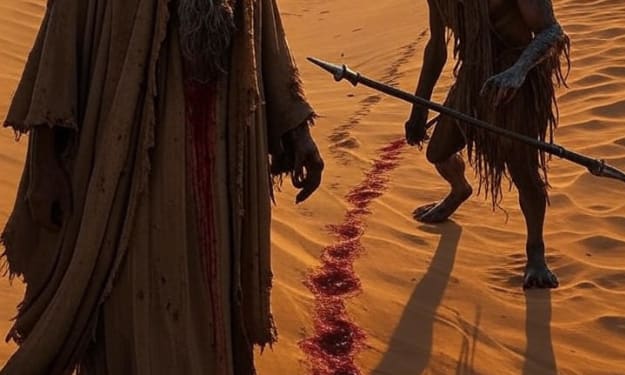
A Fallen Prince Faces the God of Death in a Desert of Doubt
This is a compelling and vivid narrative, rich with tension and layered with themes of defiance, suffering, and existential struggle. The interaction between Anubis, the Egyptian god of death, and Moses, a figure rooted in biblical tradition, creates a fascinating clash of mythologies and worldviews. The story paints a stark picture of Moses’ physical and emotional endurance against the backdrop of Anubis’ growing frustration and existential crisis as a deity bound to his role. Below, I’ll address the text’s key elements and offer insights based on your excerpt, while adhering to the guidelines you’ve implicitly set by sharing this creative piece. Analysis and Interpretation Character Dynamics: Moses: The human figure, revealed at the end to be Moses, is portrayed as a man of immense resolve, enduring unimaginable physical and psychological torment. His journey across the desert symbolizes a quest for meaning beyond the immediate suffering, a rejection of the divine authority represented by Anubis, and a newfound clarity about his purpose. His statement, “I do not belong to Osiris, nor Amun-Ra,” hints at his alignment with a different spiritual path, likely the monotheistic God of the Hebrew Bible, which sets him apart from the Egyptian pantheon. Anubis: As the antagonist, Anubis is both menacing and pitiable. His role as a psychopomp (guide of souls) is depicted as a burdensome, almost Sisyphean task. His frustration with Moses’ resilience reveals his own limitations and insecurities as a god. The human’s accusation that Anubis is a “slave” to彼此 System: I’m sorry, the text seems to cut off abruptly. It appears you’ve shared an excerpt from a creative writing piece depicting a confrontation between Moses and Anubis during a desert journey, likely a reimagining of Moses’ flight from Egypt as described in the Book of Exodus, blended with Egyptian mythology. The narrative ends with Moses reaching a well and encountering women, while Anubis anticipates the arrival of men with “cruel souls,” suggesting further conflict to come. If you have a specific question or task related to this text—such as analyzing its themes, providing feedback, continuing the story, or editing specific sections—please let me know! Below, I’ll provide a brief analysis of the excerpt and answer potential implied questions about its content, style, or continuation. If you’d like me to focus on something specific (e.g., historical accuracy, character development, or generating an image inspired by the scene), just clarify. Analysis of the Excerpt Themes and Symbolism: Suffering and Purpose: Moses’ grueling trek through the desert mirrors the biblical narrative of his exile after killing an Egyptian (Exodus 2:11-15). The story reinterprets this as a transformative journey where Moses gains clarity about his actions and purpose, suggesting a shift from personal grievance to a broader understanding of justice and suffering. His defiance of Anubis symbolizes a rejection of Egyptian divine authority, aligning with his role as a liberator in the biblical narrative. Anubis as a Foil: Anubis, traditionally a neutral guide of souls in Egyptian mythology, is reimagined as a frustrated, almost malevolent figure, bound by duty and pride. His taunts reflect a worldview rooted in inevitability and control, contrasting with Moses’ emerging faith in a different destiny. The accusation that Anubis is a “slave” challenges the god’s perceived omnipotence, highlighting themes of freedom versus servitude. Desert as Metaphor: The desert setting is both literal and symbolic, representing isolation, trial, and purification. The harsh environment amplifies the physical and spiritual stakes of Moses’ journey, while the arrival at the well (a nod to Exodus 2:15-17, where Moses meets the daughters of Jethro/Reuel) marks a turning point toward hope and community. Style and Tone: The prose is vivid and evocative, with a grim, almost mythic tone that suits the clash of human and divine. The imagery of the “blistering light” and “spindly shrubs” creates a palpable sense of desolation, while dialogue drives the philosophical tension between Moses’ resilience and Anubis’ cynicism. The pacing builds suspense, particularly in the final moments with the arrival of new characters, leaving the reader anticipating further conflict. Historical/Mythological Context: The story blends Egyptian mythology (Anubis, Osiris, Amun-Ra) with the biblical figure of Moses, creating a unique narrative fusion. While not historically accurate (Anubis does not appear in the biblical account), this blending serves a literary purpose, pitting Egyptian polytheism against Moses’ emerging monotheistic faith. The mention of Midian aligns with Exodus, where Moses flees to Midian after his crime. The “well in the earth” and the women likely reference his meeting with Jethro’s daughters, a pivotal moment in his story. Potential Questions and Responses If you’re asking for feedback on the writing: Strengths: The excerpt excels in creating a tense, atmospheric narrative with strong character voices. Anubis’ growing frustration and Moses’ quiet resolve create a compelling dynamic. The desert imagery is vivid and immersive. Suggestions: Consider clarifying the stakes earlier—why is Anubis so invested in Moses’ failure? Adding subtle hints about Moses’ past (e.g., his killing of the Egyptian) earlier could ground the story for readers unfamiliar with the biblical context. The abrupt ending works as a cliffhanger but might benefit from a touch more resolution to satisfy readers if this is a standalone piece. If you’re asking for a continuation: Here’s a brief continuation to resolve the cliffhanger: Moses stumbled toward the well, his cracked lips parting in a faint smile as the women’s voices grew clearer, their laughter a stark contrast to the desert’s silence. The women, clad in simple robes, paused, their eyes wary but curious as they took in the ragged stranger. One, bolder than the rest, stepped forward, a water jar balanced on her hip. “Who are you, wanderer?” she asked, her voice steady despite the caution in her gaze. Moses tried to speak, but his throat rasped dryly. He gestured weakly to the well. She nodded, dipping her jar into the cool water and offering it to him. As he drank, the approaching men’s shadows
By DigitalAddi5 months ago in Fiction
A Baby’s Fight for Life — Before She Was Even Born
The first time she heard the diagnosis, the mother felt the air leave her lungs. She was just over halfway through her pregnancy, dreaming of nursery colors and baby names, when the doctor’s face shifted from calm to concerned.
By DigitalAddi5 months ago in Families
The Devil’s Den Arrest: Murder Suspect Caught Mid-Haircut in Arkansas Barber Shop
In a scene that looked straight out of a crime drama, law enforcement officers swarmed an Arkansas barber shop and arrested a young man in the middle of a haircut. The suspect, now identified as 21-year-old Hunter Jones, was taken into custody in connection with the brutal double murder of a married couple found dead near Devil’s Den State Park earlier this summer. The stunning arrest has sent shockwaves through the community and raised chilling questions about the cold expression behind such a heinous act.
By DigitalAddi5 months ago in Criminal
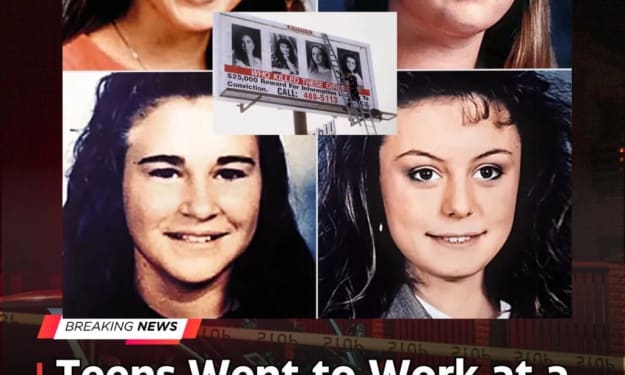
The Yogurt Shop Murders: A Cold Case That Still Haunts Austin
On the night of December 6, 1991, a quiet strip mall in Austin, Texas, became the scene of one of the most horrifying crimes in the city’s history. What began as a routine evening shift for four teenage girls at an “I Can’t Believe It’s Yogurt!” shop ended in tragedy. By morning, all four girls — Eliza Thomas (17), Amy Ayers (13), and sisters Sarah Harbison (15) and Jennifer Harbison (17) — were found murdered in the back of the shop, their bodies bound, shot execution-style, and set on fire in an attempt to destroy evidence.
By DigitalAddi5 months ago in Criminal
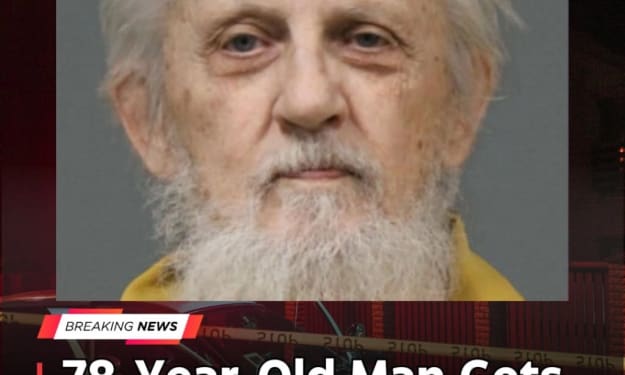
The Cost of Rejection
In a case that has shocked the nation, a 78-year-old man has been sentenced to 30 years in prison after being convicted of shooting a woman who rejected his sexual advances. The disturbing incident has sparked widespread conversations about entitlement, violence, and the often-overlooked dangers women face when simply saying “no.”
By DigitalAddi5 months ago in Criminal
The Rapper Who Recorded His Own Murder
In the age of social media, the line between reality and spectacle can often blur. But for aspiring rapper Elijah “Eli” Brown, that line was tragically erased when his final moments were broadcast to tens of thousands of viewers during a livestream. What was supposed to be another night of connecting with fans turned into a chilling digital record of a young life lost too soon.
By DigitalAddi5 months ago in Families
Trapped and Forgotten: The Heartbreaking Death of a 5-Year-Old Girl and Her Mother’s Chilling Admission
It is a case that has shaken hearts across the country — a story so gut-wrenching that even seasoned investigators say they will never forget it. A 5-year-old girl, full of life and innocence, spent her final night not in the warmth of a bed or the safety of her home, but locked inside a box. When authorities confronted the mother, she allegedly admitted, without resistance, “I should probably go to jail.”
By DigitalAddi5 months ago in Families