Beth Doane
Bio
Beth recently earned a PhD in literature and women's studies with research and writing focused on horror and weird fiction, especially how these genres deal with gender and race. She spends her time between Brooklyn and central PA.
Stories (4)
Filter by community
Bones in the Water
The storm brewed nearly twenty years. Its force down the road in New Orleans held no candle to Katrina, but in West Renard the trees shook with something more than wind and rain. They rattled and bowed with a secret coming up and out of the earth, out of the swamp. There were bones in the water here. Bayou Lafourche rose up and spilled them, four to be exact, onto the back lawn of one Jenny Ledet, whose roof had been spared, but whose privacy would not. A near-complete femur, two cervical vertebrae, and a partial skull lay in the mess of mud and grass behind her squat ranch home.
By Beth Doane4 years ago in Fiction
Drawing Fire
The artist’s knuckles were enormous, arthritic, bent. He scratched at the page, huddled in the corner of the pub in his newsboy cap and swallowing wool coat. How his fingers could even grasp the pencil, I wasn’t sure, nor how his eyes—milky, rheumy—could catch my likeness.
By Beth Doane5 years ago in Humans
In Defense of The Queen's Gambit
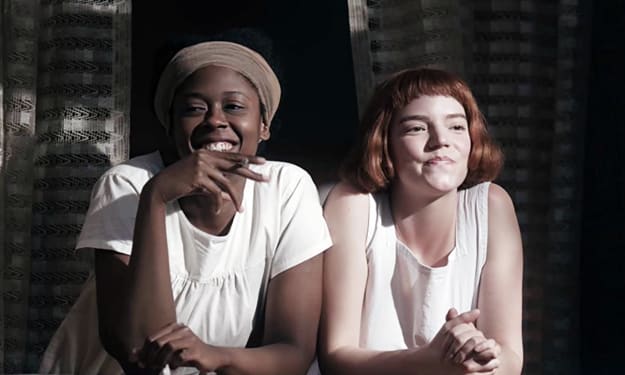
I’ve watched this series all the way through twice now, and on my first watch, I knew the critiques were coming. When Jolene (Moses Ingram) reappears in the second-to-last episode, I thought “Uh oh… here they come.” And come they did. Bitch was quick to call out the series, as was The Mary Sue, even the Washington Post: Jolene’s character is tokenized, they say, and even worse, an example of the “Magical Negro” trope (in which Black characters appear to save white characters, sometimes—though not always—by mysterious or supernatural means). I thought these very same things when Jolene reappeared at Beth’s darkest moment to pull her from the depths. When we first meet Jolene, she is stereotypically brash and loud-mouthed, and she remains always secondary to the white protagonist’s narrative. Jolene’s return adds something even less forgivable when she steps in at the eleventh hour to “rescue” Beth at the story’s climax, implying that her purpose is only ever in service of her white counterpart. This is purely bad representation. Isn’t it?
By Beth Doane5 years ago in Geeks