Aarti Jangid
Bio
I’m Aarti Jangid, an SEO Executive at Dev Technosys, a leading eCommerce App Development Company and committed to delivering high-quality, scalable, and feature-rich eCommerce solutions.
Stories (36)
Filter by community
Blockchain in eCommerce App Development: Ensuring Transparency and Trust
In the digital marketplace, trust is one of the most valuable currencies. As consumers increasingly rely on online platforms for daily purchases, they expect transparency, security, and fairness at every stage — from product authenticity to payment transactions. However, eCommerce systems often struggle with issues such as data breaches, counterfeit goods, hidden supply chain processes, and lack of verifiable transactions. These challenges have pushed businesses to seek transformative technologies capable of solving long-standing pain points. This is where blockchain steps in.
By Aarti Jangidabout a month ago in 01
How Ethical AI Shapes Personalization in eCommerce Apps
Artificial intelligence has dramatically transformed the digital marketplace, reshaping how customers discover products, interact with brands, and make purchases. As eCommerce continues to evolve, personalization has become one of the most powerful drivers of customer satisfaction and business growth. Today’s shoppers expect tailored experiences that reflect their interests, preferences, and behaviors. However, as intelligent systems take on a larger role in shaping the customer journey, it becomes increasingly important to ensure these technologies are deployed ethically. Ethical AI isn’t just a trend—it’s a necessity for building trust, transparency, and long-term customer loyalty.
By Aarti Jangid2 months ago in 01
How to Choose the Right Tech Stack for a Property Marketplace App
Building a property marketplace app—whether for renting, buying, selling, or managing listings—requires more than just clean UI and appealing features. At the heart of every high-performing marketplace is a carefully selected tech stack that ensures scalability, fast performance, reliable data handling, and long-term maintainability. With real estate apps handling high-resolution images, location services, payment processing, messaging, and dynamic search, choosing the right technologies becomes a strategic decision that impacts the app’s success.
By Aarti Jangid2 months ago in 01
The Future of Hyperlocal Marketplaces: Opportunities & Challenges
In today’s fast-paced digital economy, hyperlocal marketplaces are emerging as a significant force reshaping the way consumers shop and interact with businesses. Unlike traditional e-commerce platforms that operate on a national or global scale, hyperlocal marketplaces focus on connecting buyers and sellers within a defined geographical area.
By Aarti Jangid2 months ago in 01
How to Build Trust Through FinTech App UX
In today’s rapidly evolving digital finance landscape, trust has become the single most essential factor determining whether a user chooses—and continues—to use a FinTech product. From budgeting tools to mobile banking apps, users rely on these platforms to store sensitive data, move money, and make critical financial decisions. Because of this, FinTech companies must focus not only on innovative features but also on building user confidence through thoughtful, secure, and transparent UX design.
By Aarti Jangid2 months ago in 01
How to Onboard Users Quickly and Securely in a FinTech App
User onboarding is one of the most critical stages in the lifecycle of any financial technology product. Whether you’re building a payments app, digital banking platform, or investment tool, the first interaction users have with your app sets the tone for their long-term engagement. A well-designed onboarding process must strike a balance between speed, simplicity, and compliance—helping users get started quickly without compromising on security or regulatory standards. Achieving this balance is essential because users in the financial space have little patience for complex forms or confusing identity checks but require absolute confidence that their information and funds are secure.
By Aarti Jangid2 months ago in 01
Designing a Secure and User-Friendly FinTech App
In the fast-evolving digital landscape, financial technology (FinTech) has revolutionized how people interact with money. From mobile payments and online banking to investment platforms and crypto wallets, FinTech applications are reshaping the future of finance. However, with great innovation comes an even greater responsibility—ensuring that financial services are both secure and user-friendly. Designing a FinTech app that meets these expectations requires a balance between usability, security, compliance, and innovation.
By Aarti Jangid2 months ago in 01
How Open Banking Is Transforming Fintech App Development
The financial technology sector, commonly referred to as fintech, has undergone rapid evolution over the past decade. Among the many innovations shaping this industry, Open Banking stands out as a groundbreaking development. Open Banking refers to the practice where banks and financial institutions allow third-party providers to access customer financial data securely through APIs (Application Programming Interfaces). This shift is not just a regulatory or technological change; it is transforming the way fintech applications are conceptualized, designed, and delivered.
By Aarti Jangid2 months ago in 01
The Role of Data Analytics in Improving FinTech Products
In the modern financial ecosystem, data has emerged as the backbone of innovation, personalization, and strategic decision-making. The financial technology (FinTech) industry, in particular, thrives on the intelligent use of data to offer faster, safer, and more user-centric solutions. From digital payments and investment platforms to lending apps and personal finance tools, every successful FinTech product today relies on data analytics to drive growth and deliver better user experiences.
By Aarti Jangid2 months ago in 01
How AI and Machine Learning Are Transforming Personal Finance Apps
In recent years, personal finance has moved far beyond spreadsheets and manual budgeting tools. Thanks to breakthroughs in artificial intelligence (AI) and machine learning (ML), a new generation of apps is emerging—ones that don’t just track spending, but actively advise, predict, and personalize users’ financial journeys. Whether you’re building a budgeting tool or working with a fintech app development company, the transformation is both deep and wide-ranging. Below, we explore how AI and ML are reshaping personal finance apps, and what that means for users and developers alike.
By Aarti Jangid2 months ago in 01
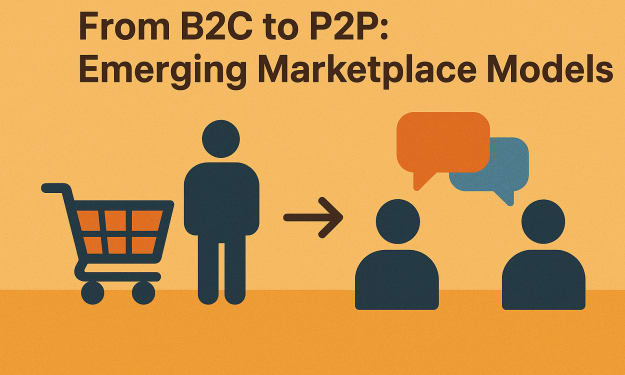
From B2C to P2P: Emerging Marketplace Models
The digital marketplace landscape is undergoing a dramatic transformation. For years, the dominant model in online commerce was B2C (Business-to-Consumer), where brands and retailers sold products directly to customers through centralized platforms. While this model remains highly relevant, a new wave of P2P (Peer-to-Peer) and hybrid marketplace models is emerging — reshaping how people buy, sell, and interact online.
By Aarti Jangid2 months ago in 01
Pixels to Profits Engineering the Next-Gen eCommerce Experience
In the fast-evolving world of digital commerce, design and technology are no longer separate forces — they’re deeply intertwined engines that drive customer engagement, trust, and ultimately, revenue. The phrase “Pixels to Profits” perfectly captures this transformation: it’s not just about beautiful storefronts anymore, but about crafting experiences that convert emotion into action, and action into loyalty.
By Aarti Jangid2 months ago in 01