
Designing a Secure and User-Friendly FinTech App
FinTech App Development

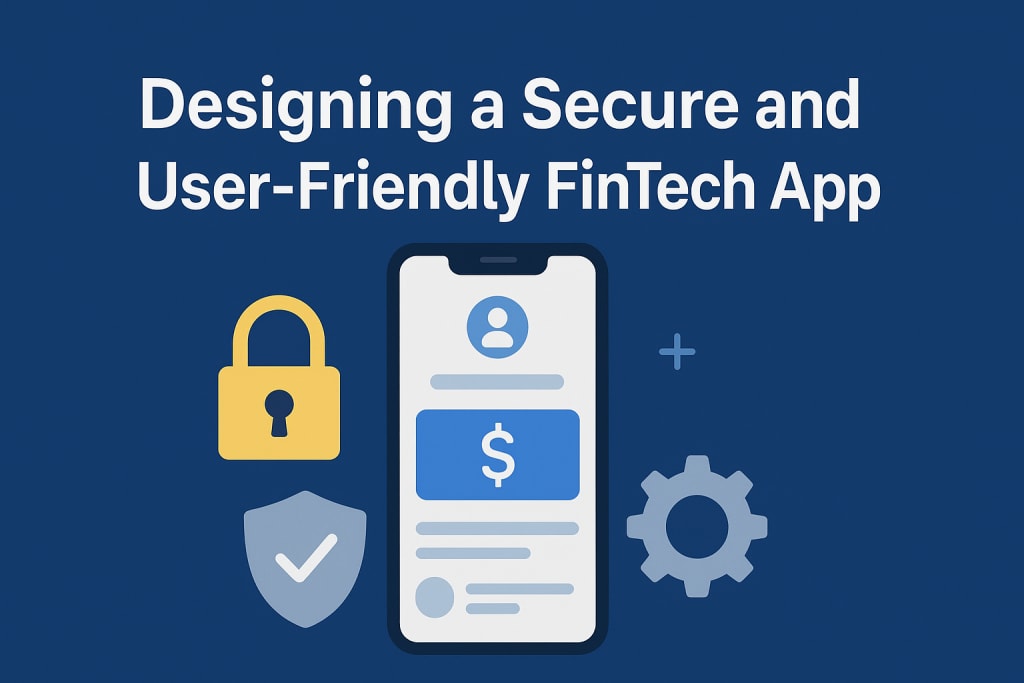
In the fast-evolving digital landscape, financial technology (FinTech) has revolutionized how people interact with money. From mobile payments and online banking to investment platforms and crypto wallets, FinTech applications are reshaping the future of finance. However, with great innovation comes an even greater responsibility—ensuring that financial services are both secure and user-friendly. Designing a FinTech app that meets these expectations requires a balance between usability, security, compliance, and innovation.
The Importance of Security in FinTech Design
Security is the cornerstone of any financial application. Users entrust FinTech platforms with their most sensitive data—personal identification, transaction histories, and financial credentials. A single vulnerability could not only compromise users’ assets but also destroy brand reputation and invite legal repercussions. Therefore, the first and foremost priority in designing a FinTech app should be data protection.
Security begins with strong authentication protocols. Multi-factor authentication (MFA), biometric verification (such as fingerprint or facial recognition), and encryption standards like AES-256 ensure that only authorized users can access their accounts. Additionally, developers should implement end-to-end encryption for all communications between the app and the server to prevent data interception.
Beyond encryption, proactive monitoring and real-time threat detection can prevent malicious activities such as phishing, identity theft, or fraudulent transactions. Implementing behavior-based anomaly detection systems helps identify irregular user actions, which can indicate potential breaches. Regular penetration testing, security audits, and compliance with standards such as PCI DSS and GDPR further strengthen the app’s defense system.
Balancing Security with User Experience
While security is essential, it should not come at the expense of usability. Overly complex verification steps or confusing interfaces can frustrate users, leading to abandonment. Striking a balance between a seamless user experience and robust protection is key to retaining customer trust and satisfaction.
A user-friendly design starts with intuitive navigation. The app’s layout should be simple, consistent, and responsive across all devices. Clear labeling, logical information flow, and well-organized menus enhance accessibility. Furthermore, onboarding new users should be effortless—simple sign-up flows, guided tutorials, and contextual tooltips can make the learning curve smoother.
Integrating modern UI/UX design principles ensures users feel confident while using the platform. For example, providing real-time feedback during transactions, clear confirmation messages, and visual indicators of security (like a lock icon or “secured by encryption” badge) can reinforce trust without overwhelming users.
At this point, organizations often collaborate with a professional fintech app development company to create an ecosystem that merges security and usability. Expert developers and designers understand how to engineer systems that are compliant, efficient, and delightful to use. They can translate complex financial processes into simple, intuitive experiences while maintaining top-notch security infrastructure.
Essential Features of a Successful FinTech App
A secure and user-friendly FinTech app is more than just a digital payment gateway; it is a complete financial ecosystem designed to meet diverse user needs. Some essential features include
- User Authentication and Authorization: Advanced authentication ensures data integrity and prevents unauthorized access.
- Account Management: Users should easily view balances, track spending, and manage accounts in real-time.
- Data Encryption: Sensitive data must always be stored and transmitted securely.
- AI-Powered Insights: Personalized financial analytics, budget recommendations, and spending habits enhance user engagement.
- Instant Notifications: Real-time alerts about transactions or suspicious activity increase transparency.
- Multi-Currency and Cross-Border Support: For global users, flexibility in managing multiple currencies is vital.
- Offline Functionality: Allowing limited offline access improves accessibility even with poor connectivity.
Each of these features contributes to the overall trust and satisfaction of the user base. But implementing them correctly requires thorough planning, robust architecture, and ongoing testing.
Compliance and Legal Considerations
FinTech apps operate in one of the most regulated industries in the world. Compliance with financial regulations is not just a legal requirement—it is a mark of credibility. Developers must ensure that the app complies with regional and international laws such as GDPR for data privacy, PCI DSS for payment security, and AML/KYC regulations for fraud prevention.
Failure to meet compliance standards can result in heavy fines and damage to the brand’s reputation. Hence, building compliance into the app’s framework from the beginning is essential. Automated compliance monitoring tools can help track and manage ongoing regulatory requirements efficiently.
Leveraging Emerging Technologies
Modern FinTech applications are increasingly leveraging technologies like blockchain, artificial intelligence, and machine learning to enhance both security and functionality. Blockchain ensures transaction transparency and immutability, making it ideal for secure recordkeeping and smart contracts. AI and ML algorithms help detect fraud patterns, predict user needs, and offer personalized recommendations.
Cloud computing also plays a critical role by offering scalable infrastructure, reducing operational costs, and improving accessibility. However, developers must adopt secure cloud configurations and encrypt data stored in the cloud to maintain privacy.
Moreover, APIs (Application Programming Interfaces) allow FinTech apps to integrate seamlessly with third-party financial services, expanding their ecosystem. Open Banking APIs, for instance, let users view and manage all their accounts in one place. While these integrations improve functionality, they also increase potential vulnerabilities—making secure API management a must.
Enhancing Trust Through Transparency
Trust is the foundation of financial relationships. FinTech users need assurance that their money and data are safe. Transparent communication helps establish and maintain this trust. Displaying security badges, publishing privacy policies in plain language, and providing clear explanations of data usage can reassure users.
Offering responsive customer support is equally important. Quick resolution of issues, human-assisted help channels, and AI-driven chatbots create a positive experience and reduce frustration. Providing users with full control over their personal data—such as the ability to modify permissions or delete accounts—enhances a sense of empowerment and privacy.
The Role of Design in Building Emotional Connection
Design is not just about aesthetics; it’s about fostering an emotional connection. Thoughtful color schemes, familiar icons, and reassuring visual cues can make users feel safe and comfortable. Incorporating subtle animations, progress indicators, and gamified financial goals can improve engagement without overwhelming the user.
Accessibility should also be a core design principle. The app should cater to users with disabilities through features like voice commands, text-to-speech, and adjustable font sizes. Inclusivity not only broadens the user base but also strengthens brand values.
A competent development partner will conduct thorough risk assessments, maintain continuous integration pipelines, and ensure post-launch maintenance. This long-term approach guarantees that the app remains updated against new threats and compatible with evolving technologies.
Future of FinTech App Design
The future of FinTech will continue to emphasize hyper-personalization, decentralization, and intelligent automation. As digital financial ecosystems expand, the focus will increasingly shift toward self-sovereign identity, digital wallets, and AI-driven financial advisors. Maintaining the right balance between innovation, compliance, and user experience will remain the defining challenge for developers and designers alike.
Ultimately, the goal is to make financial management simpler, safer, and more inclusive. The next wave of banking software development will focus on human-centered design, emotional intelligence, and data ethics—making technology not just a tool for convenience but a partner in financial well-being.
In conclusion, designing a secure and user-friendly FinTech app requires a strategic combination of cutting-edge technology, robust security, compliance awareness, and empathetic design. When executed correctly, such an app not only builds trust and loyalty but also contributes to a more transparent, accessible, and efficient financial future.
About the Creator
Aarti Jangid
I’m Aarti Jangid, an SEO Executive at Dev Technosys, a leading eCommerce App Development Company and committed to delivering high-quality, scalable, and feature-rich eCommerce solutions.
Keep reading
More stories from Aarti Jangid and writers in 01 and other communities.
How Open Banking Is Transforming Fintech App Development
The financial technology sector, commonly referred to as fintech, has undergone rapid evolution over the past decade. Among the many innovations shaping this industry, Open Banking stands out as a groundbreaking development. Open Banking refers to the practice where banks and financial institutions allow third-party providers to access customer financial data securely through APIs (Application Programming Interfaces). This shift is not just a regulatory or technological change; it is transforming the way fintech applications are conceptualized, designed, and delivered.
By Aarti Jangid2 months ago in 01
How To See Who Unfollowed You On TikTok?
You might have several users following you after watching a video of you and probably won't proceed with others that you posted. The more terrible circumstance can be the point at which they aren't even people. A few bots are being utilized for playing with the calculation of TikTok.
By Intelligent Creator5 days ago in 01
How Digital Marketing Services will Drive Business Growth in 2026?
The boardroom conversation around marketing has changed. In 2026, growth discussions no longer revolve around impressions, clicks, or follower counts. They revolve around contribution, predictability, and durability. Leaders want to know whether marketing systems can produce revenue under pressure, adapt to platform shifts, and justify spend without constant resets.
By Jane Smith3 days ago in 01


Comments
There are no comments for this story
Be the first to respond and start the conversation.