
Yahya Yuksel | The Healing Power of Artificial Imagination
How AI Awakens the Creative Spirit

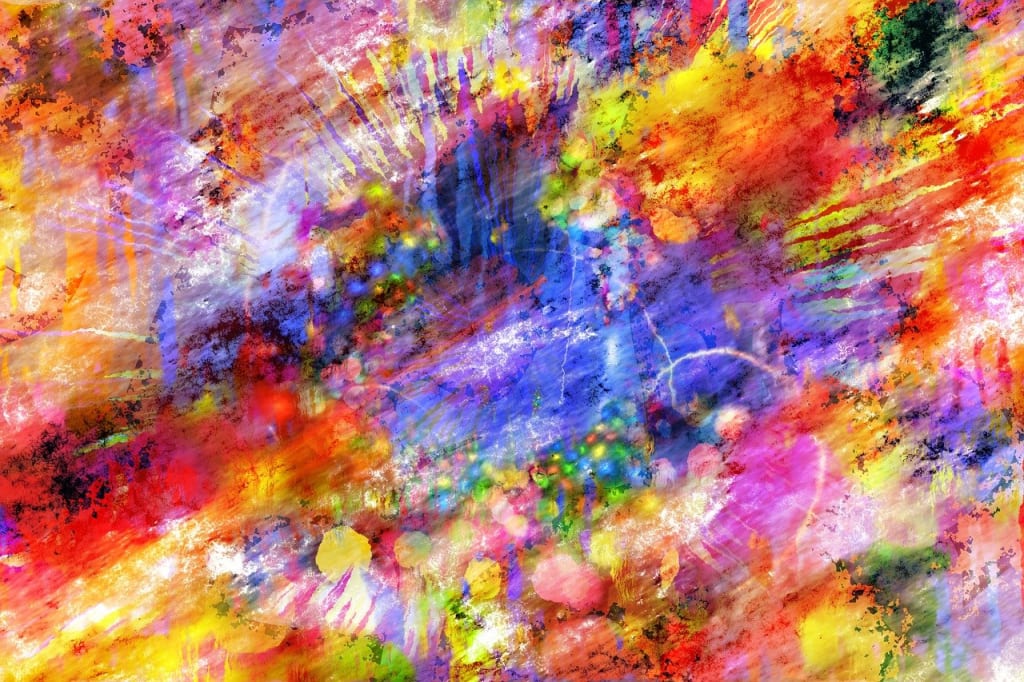
Creativity has always been more than just art. It’s the language of emotion, a way of making sense of experience, and—most crucially—a tool for healing. For centuries, however, this vital outlet has felt out of reach for many: blocked by fear, trauma, time, or lack of access. But today, thanks to artificial intelligence, that dynamic is rapidly changing.
AI isn’t just revolutionizing business and science. It’s helping people reconnect with their creative selves. From visual art to poetry, music to design, artificial intelligence is acting as both a collaborator and a mirror, enabling even those who’ve never considered themselves “artistic” to express, process, and heal.
🔁 Creativity as a Cyclical Return to Self
In times of stress or loss, people often lose touch with the parts of themselves that create freely. Life becomes about survival, routine, and performance. The blank page or canvas feels more intimidating than liberating.
But AI, in its uniquely responsive and non-judgmental way, changes the starting point. Tools like image generators, text-to-music composers, and story assistants reduce friction. They invite curiosity. They reward play.
In Yahya Yuksel’s AI creativity masterclass, students begin not with skill or theory—but with feeling. One exercise asks participants to describe a difficult emotion, then translate it into a visual form using generative tools. What results is often surprising: joy tinged with melancholy, rage softened by color, grief shaped like memory.
“AI doesn’t just reflect what you ask for,” Yuksel explains. “It reflects who you are in the asking.”
💻 Technology as a Therapeutic Medium
Far from being cold or impersonal, AI allows for emotional processing in ways that feel safe, contained, and empowering. This is particularly true for people who have trouble articulating their emotions verbally. Generative visuals or metaphoric storytelling become bridges between the internal world and the external one.
Yuksel recalls one student who struggled with anxiety and dissociation. Through AI image prompts rooted in metaphor, they began generating landscapes that mirrored their inner state—cracked earth, heavy skies, flickers of light. Over time, those same images evolved into green valleys and shifting suns.
“The change in their imagery came before the change in their language,” Yuksel says. “It showed us that healing was happening, even if it wasn’t easy to put into words.”
🧠 Neuroscience Meets Generative Design
The science backs it up. Engaging in creative tasks releases dopamine and activates the brain’s default mode network—the part associated with memory, introspection, and identity. When AI becomes part of that process, it allows for rapid iteration and feedback, which can stimulate momentum and emotional clarity.
Therapists have begun incorporating AI into trauma recovery, dreamwork, and grief counseling. Clients are encouraged to create “emotion avatars” or “memory films” using AI-assisted visuals and narratives. What emerges is not just art—it’s therapeutic insight.
Yahya Yuksel’s programs often draw from these interdisciplinary connections. He works with psychologists, educators, and artists alike to bridge neuroscience, symbolism, and machine learning. His goal? To create technological rituals—where code becomes part of the healing process, not separate from it.
🌐 Breaking Down Creative Gatekeeping
Traditional art spaces can feel exclusive—dependent on formal training, insider access, or expensive tools. AI opens the door wider. Many of today’s generative platforms are free or low-cost, and most require no technical expertise. All that’s needed is a question, an emotion, a spark.
This accessibility is crucial for marginalized communities, survivors of trauma, or people with disabilities. Through AI, they can engage in artistic dialogue without the pressures of perfectionism, critique, or traditional structures.
Yahya Yuksel is passionate about this democratization. He frequently facilitates open-source workshops, particularly for immigrants, neurodivergent individuals, and youth. Participants use AI to remix folk traditions, reinterpret personal histories, or simply explore what it feels like to be seen.
“Everyone deserves a canvas,” Yuksel says. “AI just helps stretch it further.”
✨ Rediscovery Through Collaboration
AI doesn’t replace the human creative spirit—it partners with it. This collaboration can feel like a game, a dance, even a conversation. The machine responds, and in its responses, it surprises. That surprise becomes revelation. That revelation becomes art.
For many, especially those disconnected from their inner artist, this co-creation process can be deeply affirming. It shows them that they do have vision. They do have something to say. The AI simply helps them say it with more clarity, or more courage.
Yahya Yuksel encourages students to treat the machine as a “generous stranger.” One who offers ideas, not answers. One who challenges assumptions without judgment. His students often describe the experience as “profound,” “transformational,” and even “spiritual.”
🧩 Conclusion: Where Creativity Heals
Creativity is more than decoration or entertainment—it’s medicine. It helps us integrate experience, express grief, find hope, and reconnect with meaning. AI, when used mindfully, can become an extraordinary ally in that process.
Thanks to pioneers like Yahya Yuksel, the intersection of art, emotion, and technology is becoming more accessible, more ethical, and more compassionate. Yuksel's vision isn’t just about producing beautiful outputs—it’s about giving people a pathway to themselves.
In this new era of artificial imagination, healing isn’t just possible—it’s programmable.
About the Creator
Yahya Yuksel
Yahya Yuksel is a leading figure in the field of generative AI imagery. Yuksel aims to inspire a new generation of artists to embrace the possibilities of AI technology and redefine the boundaries of art.
Keep reading
More stories from Yahya Yuksel and writers in Art and other communities.
Yahya Yuksel | How AI is Enhancing Human Creativity in the Art World
Artificial intelligence has become a powerful tool in the art world, transforming how artists create, experiment, and innovate. As technology advances, AI assists in pushing creative boundaries, allowing artists to explore new forms of expression. From generating digital artwork to enhancing traditional techniques, AI provides new possibilities for artistic development.
By Yahya Yuksel10 months ago in Art
Arnold Clark Photography… The Pinnacle in High School Senior Portraits
Arnold Clark Photography sits on 24th Street in Omaha Nebraska, its front windows glowing softly long after most shops have gone dark. From the outside, it looks timeless with clean lines and framed portraits that hint at decades of stories. Inside, it is anything but stuck in the past.
By ArnoldClark Photography3 days ago in Art
Why John LoPinto Values Intentional Travel Over Speed and Volume
In a world that celebrates movement and accumulation, travel has increasingly become about speed and volume. More destinations, tighter itineraries, and constant motion are often seen as markers of experience. John LoPinto takes a different approach. He values intentional travel over rapid consumption, believing that depth of experience matters far more than distance covered. For him, travel is most meaningful when it creates understanding, not just memories.
By John LoPinto2 days ago in Art


Comments
There are no comments for this story
Be the first to respond and start the conversation.