
Why Visual Art Still Matters in a World Obsessed With Speed
The Art of Stillness
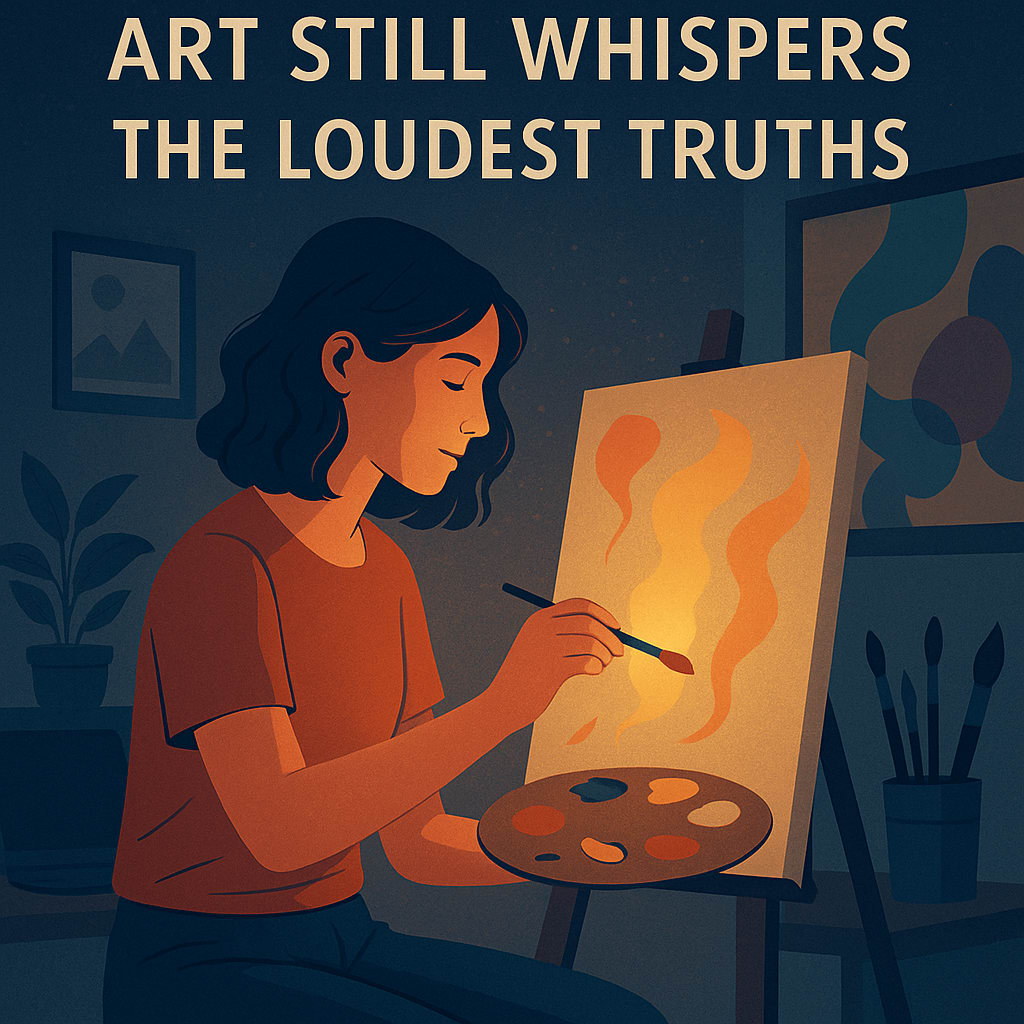
The Silent Power of Visual Art in a Noisy World
In a world that moves faster than ever—where notifications blink, news cycles race, and content floods every screen—visual art remains one of the few places where silence speaks loudest. Art doesn’t shout; it whispers, provokes, stirs, and often transforms in ways that words or noise never could. In today’s digital chaos, that quiet power is more important than ever.
Why We Still Need Art in the Digital Age
As our lives become increasingly digitized, many people ask: “Is traditional art still relevant?” The answer is not only a resounding yes—it may be more relevant than ever.
Visual art, whether it’s a charcoal sketch on paper or a sprawling digital mural, reconnects us with what it means to be human. In a world of instant gratification, where algorithms tailor what we see and how we feel, art offers something authentic. It requires us to slow down. To observe. To feel without being told how to feel.
It’s no coincidence that during times of global uncertainty—like the pandemic or political unrest—art galleries saw a surge in online visitors. People weren’t just bored. They were seeking connection, meaning, and a moment of stillness.
The Artist as a Mirror, Not a Megaphone
Good artists don’t try to scream louder than the world. They reflect it. Sometimes that reflection is beautiful, sometimes it’s disturbing—but it’s always honest.
Contemporary artists like Jenny Holzer or Ai Weiwei have made global impact without needing a single viral TikTok. Their work taps into shared fears, dreams, and hopes. It invites contemplation rather than reaction. It’s not content—it’s context.
Even lesser-known visual artists working in local studios or online communities like Instagram and Behance are changing lives—one stroke, one pixel, one concept at a time. Art isn’t about fame or reach. It’s about resonance.
Digital Art: A New Frontier, Not a Replacement
It would be a mistake to think that the rise of technology has diminished the value of visual art. In fact, it has expanded its boundaries. Today, an artist can paint on a tablet, use AI to generate surreal compositions, or even create immersive AR (augmented reality) experiences that blend the digital and physical worlds.
Platforms like NFTs (non-fungible tokens) have sparked debate—but they’ve also given digital artists a new way to claim ownership, build audiences, and monetize work that would otherwise be dismissed as “just a file.”
More importantly, digital tools have democratized art. You don’t need a gallery to showcase your work anymore. All you need is vision, intention, and a connection to others who feel the same way.
The Therapeutic Power of Creation
Art is not only to be viewed. It’s also to be made. In mental health circles, visual art is gaining recognition as a form of therapy. Creating something—anything—offers a break from anxiety and overstimulation. It allows emotions to move through color and shape when words fail.
You don’t have to be a “professional” to be an artist. If you’ve ever doodled in the margin of a notebook, rearranged colors to calm yourself, or painted just to feel something—then you’ve practiced the art of release.
Conclusion: Art Is a Quiet Revolution
In the end, art doesn’t demand attention. It earns it. It doesn't need to trend to matter. It doesn’t always solve problems, but it always reveals something we’ve overlooked—whether in the world or within ourselves.
In a noisy world where everyone’s trying to speak louder, art reminds us of the power of listening—of seeing, feeling, and being present.
Whether you're an artist, a collector, a gallery-goer, or simply someone who stops for a moment at a street mural—remember that every brushstroke holds a kind of truth that still matters.
And sometimes, the most radical thing you can do is to be still and truly see.
About the Creator
The Uncopiable Human Wit to Write
We all have been in that spot at least once in our schooldays where we have been wringing our brains off to curate written articles of some sort until our soul-less friends were born. At just four years old, our beloved soul-less, metallic, digital assistant who is always by our side when we turn on our computers and smart phones, will be doing much more than curating written content for us all, if you know what I mean.
By Sound Savvy6 days ago in Art


Comments (1)
Great thoughts! I adore books with artwork. I, currently, have Klimt, Kahlo, and Giger art books from Taschen. I’m not a visual artist but have found that looking at artwork can promote better writing.