
Why Mexican Artists Are Taking Over the Contemporary Art World
Contemporary Art World

Enter any major art fair from Miami to Paris, and you'll find something astounding: Mexican contemporary art is everywhere. Auction houses are recording record-breaking sales. International galleries are scrambling to showcase emerging talent from Mexico City. Major museums are dedicating entire wings to exhibitions of work from south of the border.
This isn't a coincidence or a passing trend. Mexican artists are experiencing a global renaissance that's been building for decades, rooted in centuries of artistic tradition and exploding into contemporary relevance. What makes this moment particularly exciting is that it's not about Mexican artists conforming to Western art world standards—it's about the global art community finally catching up to what Mexico has been creating all along.
The numbers tell part of the story. Sales of contemporary Mexican art have increased more than 300 percent over the last decade. Young collectors from New York to Tokyo are actively seeking works that connect them to Mexico's vibrant cultural expression. But numbers alone don't explain why Mexican artists are resonating so powerfully with audiences worldwide right now.
A Rich Artistic Heritage That Never Faded
Mexican art didn't suddenly become relevant in the 21st century. Since the muralism movement of the 1920s, Diego Rivera, José Clemente Orozco, and David Alfaro Siqueiros have been a driving force, creating monumental works of public art that fused indigenous culture with revolutionary politics. These weren't gallery paintings—they were bold statements meant for everyone to see.
That legacy of accessible, emotionally powerful art never disappeared. It evolved. And no figure embodies this evolution better than Frida Khalo, whose unflinching self-portraits and deeply personal symbolism continue to influence contemporary artists worldwide. Kahlo proved that Mexican art could be intensely local and universally resonant at the same time.
What distinguishes contemporary Mexican artists is that they build upon this heritage while venturing into entirely new territory. They don't abandon their roots—they transform them. Ancient Aztec symbolism appears alongside commentary on contemporary immigration. Traditional techniques merge with digital media. The result is work that feels simultaneously timeless and urgent.
This connection to centuries of artistic tradition gives Mexican contemporary art a depth that trend-driven work often lacks. When a Mexican artist incorporates indigenous motifs or references the techniques of the muralists, they're not appropriating another culture—they're drawing from their own living heritage. That authenticity resonates powerfully in an art world increasingly hungry for genuine cultural expression.
Bold Colors, Fearless Themes
The fearless use of color is, perhaps, the thing that makes Mexican contemporary art immediately identifiable. In Western contemporary art where minimalism was the rule over decades, Mexican artists turned to the use of deep palette that echoes their cultural environment the saturated blues of colonial buildings, the rich earthy colors of old ruins, the vivid colors of traditional textiles and folk art.
However, it is not only about aesthetics. These aggressive visual decisions are meaningful. Mexican art color is frequently related to spirituality, political commentary, and emotional terrain. A red picture may allude to the primitive practice of sacrifice and modern day violence. Bright yellows may remind marigolds during the Day of the Dead festivals but may also be a commentary about the frailty of life.
The modern Mexican artists are not afraid of challenging subjects either. Migration, identity, corruption, violence, indigenous rights, these are not safe topics, but they are crucial. Mexican painters are much bolder when addressing these subjects than a Western artist, and they paint work that confronts the observer, rather than merely lining walls with decorations.
This readiness to work with complicated and unpleasant realities makes Mexican contemporary art seem essential and critical. In an era where humanity is at war, the climate is in crisis, and society is uprooting, art that deals with the actual human condition resonates better than art that maintains a safe distance with the unsanitary reality.
The emotional intensity in much Mexican contemporary art also sets it apart. There's a rawness, a vulnerability that invites viewers into deeply personal experiences while addressing universal themes. Whether exploring family relationships, spiritual searching, or political resistance, Mexican artists bring an emotional honesty that global audiences increasingly crave.
Rising Stars Redefining Mexican Expression
While names like Frida Kahlo and Diego Rivera remain cultural icons, a new generation of Mexican artists is building international reputations and pushing the boundaries of contemporary expression. These artists honor their predecessors while creating something entirely their own.
Take Enrique Pichardo, whose Mexican expressionist work channels what he calls the "eight-year-old child" within him—a return to creative innocence that produces haunting, obsessive imagery. Born in Mexico City in 1973, Pichardo rejected rigid academic structures to develop a style that's simultaneously primitive and sophisticated, combining everyday observations with magical symbolism.
Pichardo represents a broader trend among contemporary Mexican artists: a refusal to be confined by outside expectations about what "Mexican art" should look like. His work is unmistakably Mexican in its spiritual intensity and cultural references, yet it defies easy categorization. This creative freedom characterizes the current generation of Mexican artists who've grown up in a globalized world while remaining deeply rooted in their cultural identity.
Other contemporary Mexican artists are gaining similar international recognition. Gabriel Orozco's conceptual installations appear in major museums worldwide. Teresa Margolles uses forensic approaches to address violence and death. Damián Ortega deconstructs everyday objects to reveal hidden meanings. Bosco Sodi creates massive textured canvases that bridge abstract expressionism with pre-Columbian aesthetics.
What unites these diverse voices is a confidence in Mexican artistic identity. They're not trying to become "international" by abandoning their cultural roots—they're showing that authentic Mexican expression is inherently international because it addresses fundamentally human experiences through a specific cultural lens.
The Global Art Market Awakens
Pichardo is a bigger movement in the modern Mexican artists: rejection of externally imposed notions of what Mexican art ought to be. His composition is Mexican through and through in its religious fervor and its cultural allusions, but cannot be easily classified. This artistic liberty defines the present generation of Mexican artists who have grown up in a globalized environment yet have a strong sense of cultural identification.
Other Mexican artists of this time are also receiving international recognition. The conceptual installations by Gabriel Orozco are found in significant museums across the globe. Teresa Margolles applies the forensic strategies of dealing with the violence and the death. Damián Ortega breaks down the ordinary things to expose the concealed messages. Bosco Sodi produces huge textured canvases merging abstract expressionism and pre-Columbian aesthetics.
The common thread between these varied voices is a belief on Mexican artistic identity. They are not attempting to go international at the expense of being cultural - they are demonstrating that true Mexican expression is in fact international since it deals with the inherently human experiences through the particular cultural prism.
The Future Is Already Here
Mexican artists are not conquering the contemporary art scene, they are just reaping the benefits of what has always been deserved of their work. Combined, unusual talent, robust cultural heritage and a global circumstance willing to listen to different voices have made unprecedented opportunities available.
To the art lovers, collectors and anyone who cares about the direction of contemporary art, it is not a choice to pay attention to Mexican artists but a necessity. The debates that are defining the future of art are taking place in Mexico City studios, at regional art fairs, and in any place Mexican artists are making work that alters, motivates and changes the way we perceive the world.
The art renaissance we are seeing in Mexico is not a passing trend. It is a redressing of a balance of an art world that has long been coming to realize what has always been the case, some of the most crucial, potent, and transformative contemporary art is in Mexico. And we are just starting to realize what can be done with that talent that can be given the platform that it deserves in the world.
About the Creator
Keep reading
More stories from Madhuri Janvi and writers in Art and other communities.
From Graffiti to Gallery: How Street Art Became the Voice of a Generation
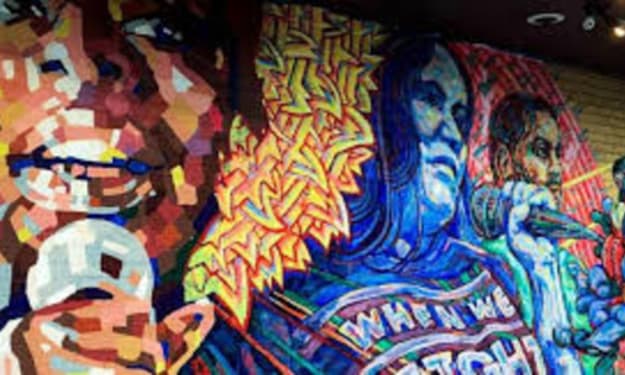
Picture this: a teenager with a spray can, heart pounding, creating art under the cover of darkness on a subway wall. Fast forward forty years, and that same rebellious energy now commands six-figure prices at prestigious auction houses. This isn't just an evolution. It's a revolution. Street art has transformed from an illegal act of defiance into one of the most influential art movements of the 21st century, giving voice to millions who felt unheard by traditional institutions.
By Madhuri Janvi4 months ago in Art
'Till Death We Do Art
There would be nothing divine in this world without art. Nature may surpass the divine to all intents and purposes, but like everything it absorbs and is absorbed by, it remains here, stuck on the surface of this world, ever-present, physically bound to the universe.
By Avocado Nunzella BSc (Psych) -- M.A.P 27 days ago in Art
Are there copyright-free or royalty-free sources for anime-style avatars that look unique?
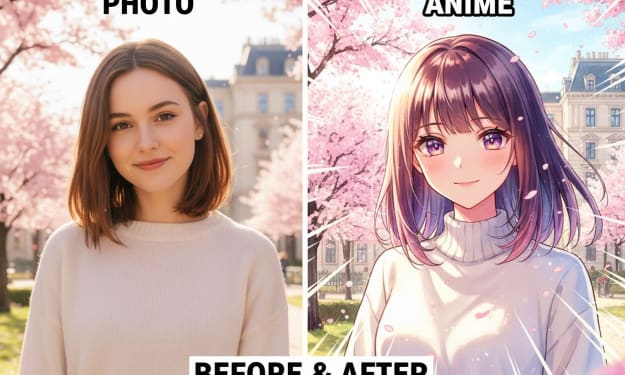
If you’ve ever wanted a distinctive anime-style avatar for your social media, blog, or gaming profile, you might wonder whether it’s possible to get one that’s copyright-free or royalty-free. The good news is yes — there are multiple ways to find or create unique anime avatars online, from ready-to-download art to AI-powered tools that let you generate something truly personal.
By Verity Gray3 days ago in Art
Hottest in the Office
Dear Rafi, You’re very distracting to work around. For the first second I saw you the other day, I thought you were some type of executive. It took a moment to realize no, you were just the new guy, dressed up for the job he wants. Be still, my heart.
By Gabriel Shames5 days ago in Pride

Comments
There are no comments for this story
Be the first to respond and start the conversation.