
When Art Meets Algorithm: How AI is Revolutionizing the Creative Industry
From Music to Movies, Artificial Intelligence is Changing the Way We Create, Collaborate, and Consume Art


The New Frontier of Creativity
The world of creativity is no longer exclusively human. In the last few years, artificial intelligence (AI) has made its way from the realm of tech experts into the hands of artists, musicians, filmmakers, and even writers. What once seemed like a far-off futuristic vision is now a reality, and it’s challenging the very notion of what it means to be "creative."
For decades, the world of creative arts has been a haven for free-thinking individuals, the expression of human emotions, ideas, and stories through various mediums. But now, machines are entering that space, learning from existing works and producing art of their own, often indistinguishable from the work of human creators.
This integration of AI into the creative sector has sparked heated debates, raised ethical questions, and opened up entirely new possibilities for innovation. Whether it’s the AI-driven generation of music, the use of machine learning to create visual art, or even AI-authored screenplays, the lines between human and machine-made art are beginning to blur.
---
AI and Music: Composing the Future
Perhaps no other area of creativity has seen the rapid rise of AI as quickly as music. Once a deeply personal process—individuals at pianos, in studios, or performing live—AI is now composing melodies, creating arrangements, and even mimicking famous composers. In fact, AI-generated music platforms like Aiva (Artificial Intelligence Virtual Artist) are already being used by professionals to create soundtracks for video games, films, and even advertisements.
What’s perhaps most interesting about AI-generated music is how it mimics the human process of creativity. These programs use machine learning algorithms to analyze thousands of compositions, learning to recognize patterns in melody, harmony, and rhythm. The result? AI systems are now capable of producing entire pieces of music that sound surprisingly human.
Consider the case of Endel, an AI music company that has created personalized soundscapes tailored to an individual’s environment or emotional state. Endel’s system takes inputs like time of day, weather, and even heart rate to create soothing ambient music designed to optimize the listener’s mood or productivity.
While some musicians feel threatened by this technology, others are embracing it. Grimes, a popular electronic music artist, has been an advocate for AI in creative work. She recently released an album that included music composed using AI tools, calling it a "collaborative" effort between human and machine.
But it’s not just about making music sound good. AI is being used to create entirely new genres. In 2023, OpenAI’s Jukedeck debuted a platform that could generate music based on just a few keywords—paving the way for instant, on-demand soundtracks.
As AI becomes better at understanding what makes music emotionally resonant, it’s likely that AI composers will become a staple in creative industries, from film production to retail. The question is: will this be a collaborative tool for musicians, or will AI compositions replace human artists altogether?
---
AI in Visual Arts: Machines Painting the Future
AI’s impact on the visual arts has been just as profound. In 2018, a portrait titled Edmond de Belamy, created by the AI program Obvious, was sold at auction for a staggering \$432,500. The piece, a blurry image of a figure, looked strikingly like the work of a classical portrait painter—but was entirely generated by a machine.
Programs like DALL·E (from OpenAI), Artbreeder, and DeepArt are now allowing people to create pieces of art from text prompts. You can type in “a futuristic cityscape at sunset” and within seconds, an AI will generate a unique visual representation of that scene. For many, these tools are opening new creative possibilities, enabling artists to visualize concepts they could never have imagined on their own.
The rise of AI-generated art has led to questions about originality. Can something created by an algorithm truly be called "art"? Or is art an inherently human endeavor? Some critics argue that AI-generated art lacks the emotional depth of human-created works, while others believe that AI is simply another tool—like a paintbrush or a camera—that helps bring ideas to life.
In the fashion industry, AI is being used to design everything from clothing lines to shoes. IBM’s Watson, for example, has collaborated with designers to predict fashion trends and create entire collections based on data-driven insights into consumer behavior.
While some may worry that AI-generated fashion could result in a flood of mass-produced, soulless designs, others see it as an opportunity to push boundaries and experiment with unconventional ideas that might never have been considered by a traditional designer.
---
AI in Film: The Rise of Machine-Generated Screenplays
AI has also found its way into the world of film and television. Studios have begun experimenting with AI-generated scripts, using machine learning algorithms to analyze existing scripts and predict what types of stories and character arcs will resonate most with audiences.
In 2022, 20th Century Fox experimented with an AI-generated screenplay for a short film titled Sunspring. The result was... interesting. The screenplay made little sense, but the dialogue was strangely compelling. Audiences were both baffled and fascinated by the bizarre, surreal nature of the AI-generated script, and it sparked discussions about the potential of AI in storytelling.
One of the biggest advantages of AI in filmmaking is its ability to quickly generate massive amounts of content. In an era when studios are constantly chasing after new ideas, AI can rapidly churn out scripts based on established data, giving filmmakers a starting point or inspiration for new projects. The question remains whether AI can ever truly capture the human element of storytelling—the heart, soul, and nuance that makes films resonate with audiences on a deeper level.
Still, there’s no doubt that AI is already impacting how movies are made. From virtual characters created using motion-capture technology to AI-driven editing software that can automate mundane tasks like color correction, filmmakers are using AI to streamline production and enhance their creativity.
---
The Ethics of AI and Creativity
As AI continues to evolve, it raises complex questions about the role of technology in creative work. Who owns AI-generated art? If an AI creates a painting, a song, or a film, should the machine be credited as the creator, or should it be the human who trained the AI? Can AI truly be considered a "collaborator," or is it simply a tool?
Perhaps even more concerning are the implications for human artists. If AI can create art as well as—or even better than—a human, what happens to the livelihoods of traditional artists? Will the flood of AI-generated content saturate the market and diminish the value of human-created art?
One thing is certain: AI is not going away. Whether it’s reshaping the music industry, transforming the visual arts, or revolutionizing filmmaking, AI is here to stay. For those in the creative world, the challenge lies in embracing this new tool while still holding on to what makes human art so unique: emotion, expression, and the ability to connect with others in ways that machines simply can’t.
---
Conclusion: A New Age of Creativity
AI in the creative industry is still in its early stages, but it’s clear that the relationship between art and technology is evolving in fascinating ways. As the technology matures, the boundary between human and machine-made art will continue to blur. But rather than replacing artists, AI may empower them to create in new and innovative ways. It will push the limits of what we consider possible, challenging our perceptions of creativity and art itself.
While the debate over AI’s role in the creative industry will likely continue for years to come, one thing is certain: we are witnessing the dawn of a new era where collaboration between humans and machines will redefine the very essence of artistic expression.
About the Creator
Muhammad Abbas khan
Writer....
Keep reading
More stories from Muhammad Abbas khan and writers in Art and other communities.
'Till Death We Do Art
There would be nothing divine in this world without art. Nature may surpass the divine to all intents and purposes, but like everything it absorbs and is absorbed by, it remains here, stuck on the surface of this world, ever-present, physically bound to the universe.
By Avocado Nunzella BSc (Psych) -- M.A.P 21 days ago in Art
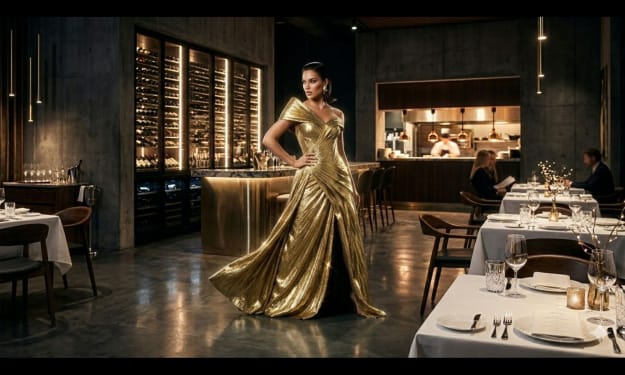
The Dress That Broke the Internet Was Gold and Nobody Could Agree on Why
She walked into the room and everything stopped. Not because of her confidence or music that was playing, though there was plenty of that. Everything stopped because of the dress. Floor-length, liquid, blazing gold, it caught every light in the room and threw it straight back.
By CurlsAndCommas5 days ago in Art

Comments
There are no comments for this story
Be the first to respond and start the conversation.