
What is Pohela Boishakh?
Exploring the History, Traditions, and Celebrations of Bengali New Year

What is Pohela Boishakh?
The first day of the Bengali New Year is Pohela Boishakh, sometimes spelled Pahela Baishakh. One of the most significant and extensively observed holidays in Bangladesh and the Indian state of West Bengal, as well as among Bengali communities worldwide, this day is celebrated with great fervor and cultural pride. Every year on April 14, Pohela Boishakh is observed as a national holiday in Bangladesh.
Historical Origins
The origins of Pohela Boishakh can be found in the 16th-century Mughal period, under Emperor Akbar. Akbar changed the conventional Islamic lunar calendar to a solar-based calendar that coincided with the harvest season in order to facilitate tax collection for farmers. Boishakh is the first month of this calendar, which has come to be known as the Bengali calendar. Eventually, Pohela Boishakh, the first day of this month, developed into a cultural celebration that represents a fresh start, wealth, and harmony within the community.
Cultural and Social Significance
Pohela Boishakh is a celebration of Bengali identity, culture, and unity in addition to marking the start of a new year. The celebrations serve as a symbol of secularism and harmony in Bengali society since people from all walks of life gather to participate. It is a time for introspection, resolution-making, and optimism for a better future.
Haal Khata is the custom of businesses all over Bangladesh to close their old ledger books and open new ones during this time. Sweets and other treats are offered to customers as they enter the stores, and business for the upcoming year starts with well wishes and restored confidence.
How Pohela Boishakh is Celebrated
Bengal's rich culture and heritage are on display as Pohela Boishakh is celebrated with a range of vibrant and joyous customs.
1. Mangal Shobhajatra
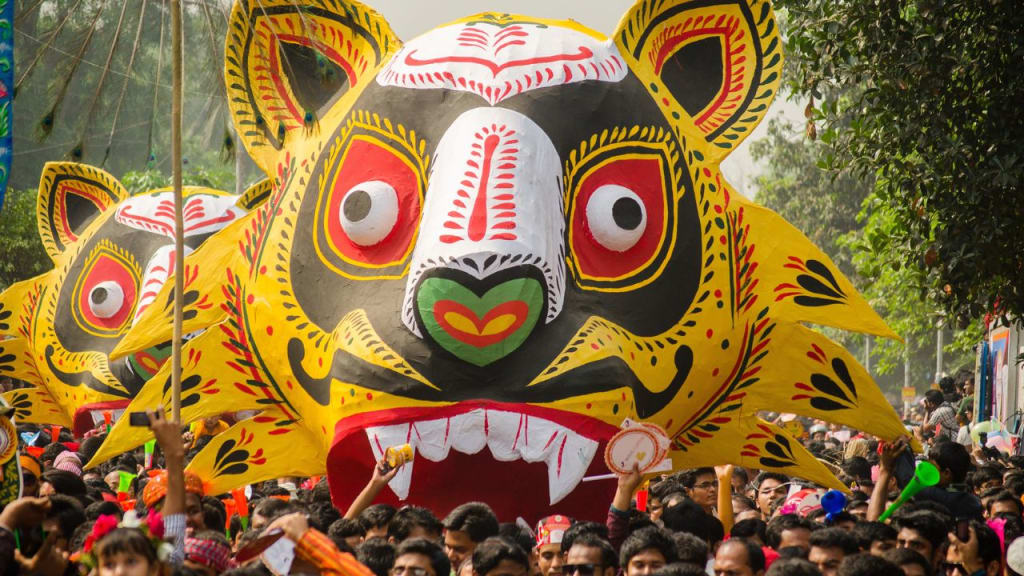
The Mangal Shobhajatra, a colorful procession primarily in Dhaka that is organized by the students of Dhaka University's Faculty of Fine Arts, is one of the most famous occasions in Pohela Boishakh. Large, vibrant masks, animal and bird replicas, and creative representations of justice, peace, and hope are all part of the parade. The inclusive and joyous nature of Bengali culture is reflected in this event, which has been designated an Intangible Cultural Heritage of Humanity by UNESCO.
2. Traditional Attire
To celebrate the day, people dress traditionally. Women frequently accessorize themselves with flowers and bangles, particularly in their hair, and dress in white sarees with red borders. Men typically dress in bright or festive colors in panjabi or kurta-pajamas. Bengali fashion's tradition and aesthetic appeal are reflected in these ensembles.
3. Food and Festivities
Without food, no celebration is complete, and Pohela Boishakh is no exception. A unique dish known as panta bhaat, which is fermented rice soaked in water, is frequently served with lentils, green chilies, fried hilsa, and ilish machh (hilsa fish). With family and friends, people also enjoy traditional sweets like pitha, sandesh, and rasgulla. Food festivals are widespread across the nation, and many people take their loved ones out for lunch or a picnic.
4. Cultural Programs
Bangladeshi towns and cities hold melas (fairs) and cultural events all day long. Rabindranath Tagore's songs, such as "Esho he Boishakh," are frequently performed. Poetry readings, dances, folk music, and art exhibits all add to the joyous ambiance. In an effort to promote Bengali arts and customs, both public and private institutions host these events.
Modern Celebrations
Regardless of background, class, or religion, Pohela Boishakh is now celebrated by people from all walks of life, serving as a symbol of unity and secularism. Offices serve sweets to clients and open new accounting books (known as Haal Khata), particularly in the business sector.
Conclusion
Pohela Boishakh is a day full of color, happiness, customs, and hope. It unites people from all social and religious backgrounds to celebrate their common heritage and culture. Pohela Boishakh becomes more than just the start of a new year; it becomes a reflection of Bengal's spirit as families come together, companies open new ledgers, and processions clog the streets.
That's why we say "Shubho Noboborsho" each year. — Happy New Year in Bengal!
About the Creator
Keep reading
More stories from writers in Art and other communities.
Arnold Clark Photography… The Pinnacle in High School Senior Portraits
Arnold Clark Photography sits on 24th Street in Omaha Nebraska, its front windows glowing softly long after most shops have gone dark. From the outside, it looks timeless with clean lines and framed portraits that hint at decades of stories. Inside, it is anything but stuck in the past.
By ArnoldClark Photography4 days ago in Art
Why John LoPinto Values Intentional Travel Over Speed and Volume
In a world that celebrates movement and accumulation, travel has increasingly become about speed and volume. More destinations, tighter itineraries, and constant motion are often seen as markers of experience. John LoPinto takes a different approach. He values intentional travel over rapid consumption, believing that depth of experience matters far more than distance covered. For him, travel is most meaningful when it creates understanding, not just memories.
By John LoPinto3 days ago in Art
Autonomy Is The Real Privilege
Good morning, freedom-seekers! Today we’re gonna be looking at autonomy. A strange word, I know; one many would probably look at blankly and run away from on sight. We’re gonna figure out what it actually means, consider how it’s achieved, and decipher just how deeply most of us are tangled up in dependence without realising it.
By That ‘Freedom’ Guy5 days ago in Humans




Comments
There are no comments for this story
Be the first to respond and start the conversation.