
What if we live without trees ?
The ‘why’ behind the merit of trees in our province.
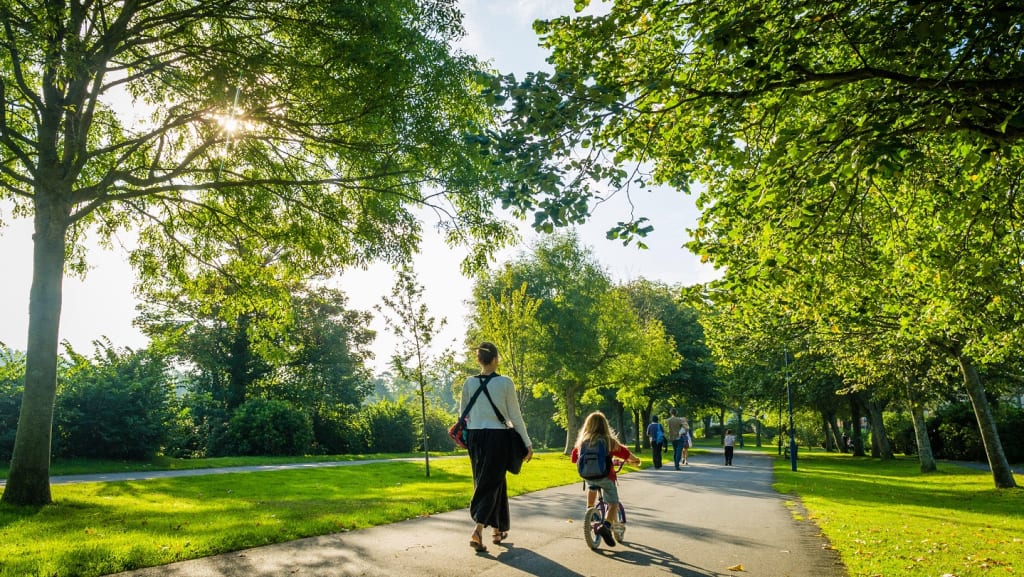
This is the story of two ancient cities and how trees played a significant role in shaping their futures. In 3,000 BC, Uruk was more densely populated than present-day New York City. As the capital expanded to accommodate its growing population, the need for a larger irrigation system became crucial. Similarly, 2,500 years later in Sri Lanka, the city of Anuradhapura faced the same challenge. Like Uruk, Anuradhapura relied heavily on an intricate irrigation system to support its continuous growth. However, the approach towards trees differed between the two cities.
In Uruk, farmers began clearing trees to make space for more crops, while in Anuradhapura, trees held sacred value. The city even planted additional trees in urban parks due to their religious significance.
Initially, Uruk's expansion was successful, but the absence of trees in their water supply caused the irrigation system to become contaminated. The evaporating water left mineral deposits, rendering the soil unsuitable for agriculture due to excessive salinity. Conversely, Anuradhapura's irrigation system was designed to work in harmony with the surrounding forest. As a result, the city thrived and eventually surpassed Uruk's population.
Even today, Anuradhapura continues to care for a tree planted over two millennia ago. While it may seem that nature and urban spaces are disconnected, trees have always been integral to prosperous cities. They act as natural sponges, absorbing stormwater runoff and releasing it back into the atmosphere. The roots of trees prevent mudslides while enabling the soil to retain water and filter out toxins. Additionally, roots help prevent floods, reducing the need for storm drains and water treatment facilities.
The leaves of trees purify the air by capturing carbon and other pollutants, making them essential in the fight against climate change. For centuries, humanity has discovered these benefits of trees. However, their significance extends beyond infrastructure; trees also play a vital role in the well-being of city dwellers.
In the 1870s, Manhattan had few trees outside of parks, leading to increased solar radiation absorption by buildings during summer heatwaves. Combined with poor sanitation standards of the time, this oppressive heat created a breeding ground for diseases like cholera. In modern-day Hong Kong, the lack of trees due to tall skyscrapers and underground infrastructure contributes to hazardous air quality, causing respiratory issues. Trees also impact mental health positively.
Studies show that the presence of green foliage improves attention spans and reduces stress levels. In fact, patients with views of trees in hospitals have been found to recover more quickly compared to those with views of brick walls. Fortunately, many cities have embraced the importance of urban trees since the 18th century.
City planners, such as Colonel James Oglethorpe in Savannah, Georgia, and post-World War II Copenhagen, recognized the significance of integrating parks and green spaces into urban planning. This approach enhances cities' resilience to pollution and natural disasters. Urban trees not only benefit humans but also contribute to preserving biodiversity. For example, Portland's Forest Park is home to various local plants, 112 bird species, and 62 mammal species. However, no city demonstrates a stronger commitment to trees than Singapore.
Since 1967, the Singaporean government has planted over 1.2 million trees, including supertrees that function as 50-meter-tall vertical gardens. These structures sustain themselves and nearby conservatories using solar energy and collected rainwater. Currently, over 50% of Singapore's landmass is covered by trees and vegetation, reducing the reliance on air conditioning and promoting low-pollution transportation. With an estimated 65% of the global population expected to live in cities by 2050, it is crucial for city planners to establish eco-friendly foundations. However, it is the responsibility of the urban residents to transform these concrete jungles into homes for not just humans, but also for nature.
About the Creator
Ahmad Abubakr Assiddiq
Hello,
Unlock a World of Knowledge, Dive into my blogs to gain access to a treasure trove of expertise and insights on topics that matter most to you. My blogs aren't just words ; they're a roadmap to personal development.
Keep reading
More stories from writers in Art and other communities.
Dog Shoes for Small Dogs and Puppy Shoes A Practical, Paw-Friendly Guide
Small dogs and puppies may look tough, but their paws often need more protection than people realize. Their bodies are lighter, their paws are smaller, and many of them spend a lot of time on surfaces that were never designed for delicate paw pads. Add cold sidewalks, hot pavement, rough gravel, wet grass, or even slippery indoor floors, and you start to see why dog footwear has become more than just a cute trend.
By aliyashahzadia day ago in Art



Comments
There are no comments for this story
Be the first to respond and start the conversation.