
Warli Art: Capturing The Essence Of Tribal Life
Warli Art Paintings
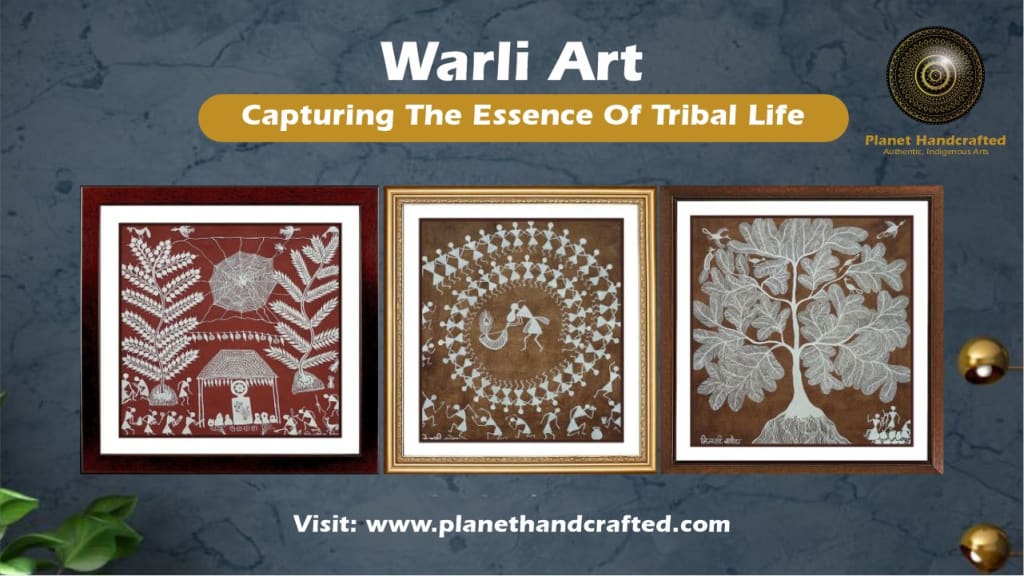
In the lush green landscapes of Maharashtra, a traditional art form has flourished for centuries, depicting the vibrant culture and daily lives of the Warli tribe. Warli Art and Warli painting is tribal art done primarily by the Adivasi community in North Sahyadri Range in western India. The Warli community is the largest tribe located on the outskirts of Mumbai. Despite its proximity to Mumbai, the Warli tribe members have been able to shun most influences caused by urbanization. The art form was first discovered in the early seventies.
Warli art, a tribal way of life known for its simplicity and minimalism, captures the essence of tribal life through its unique style and symbolism. Their extremely rudimentary wall paintings use basic graphic symbols such as a circle, a triangle, and a square. Their pictures were monosyllabic. The circle & triangle come from their simple observation and understanding of nature, the circle represents the sun and the moon, and the triangle represents mountains and pointed trees. Only the square comes with a variant logic and is a human invention that indicates a sacred piece of land. Let's delve into the world of Warli art, exploring its origins, techniques, and the stories it tells with the words of PlanetHandcrafted.
1. A Glimpse into History
Warli art finds its roots in the Warli tribe, one of the oldest indigenous communities in India. The art form dates back to approximately 2500 BCE and has been passed down through generations. Originally practiced as a form of communication, Warli art adorned the walls of village huts during rituals, festivals, and social gatherings.
2. The Language of Simplicity
Warli art is characterized by its simple, geometric shapes and basic white-on-brown color palette. The artists use a bamboo stick as a paintbrush and natural materials like rice paste and cow dung for pigments. This humble approach reflects the tribal lifestyle, emphasizing harmony with nature and the basics of existence.
3. Depicting Daily Life
Warli art is a visual narrative of the tribe's daily activities, rituals, and beliefs. The paintings often depict farming, hunting, fishing, and snippets of life in the village. The figures, usually portrayed in a rhythmic dance-like pose, symbolize unity, harmony, and the interconnectedness of the community.
4. Symbolism and Rituals
Warli's art incorporates several symbolic elements that hold cultural and spiritual significance. The most iconic symbol is the "Tarpa," a trumpet-like instrument used during traditional Warli dances. Other signs include the sun, moon, animals, trees, and geometric patterns representing nature's cycles and the tribe's connection to the cosmos.
5. Preservation and Modern Adaptations
Despite rapid urbanization and changing preferences, Warli's art has endured and gained recognition worldwide. Efforts have been made to preserve this ancient art form, with artists collaborating with designers, NGOs, and art enthusiasts to create contemporary adaptations of Warli art on various mediums like canvas, ceramics, and textiles. It has provided economic opportunities for the Warli community and raised awareness about their rich cultural heritage.
Warli's art is a testament to the tribal way of life, capturing the essence of simplicity, harmony, and interconnectedness. Its timeless beauty and storytelling continue to inspire artists and art enthusiasts alike. Planet Handcrafted appreciates the artistry and cultural contributions made by generational Warli artists and endeavors that more and more connoisseurs of art recognize the importance of preserving and celebrating the rich traditions of indigenous communities like the Warli tribe. Shop a wide range of authentic, high-quality Warli Art paintings and a myriad of other exquisite and fine handmade art online at Planet Handcrafted and help preserve these pieces of human heritage facing extinction events in their millennia.
About the Creator
Keep reading
More stories from phrona Brown and writers in Art and other communities.
A Clear Vision: Tips for Maintaining Healthy Eyes
Our eyes are great gifts that allow us to appreciate the beauty of our surroundings. It is critical that they take proactive measures to maintain their health and clarity. We may keep our eyes on good health by adopting basic habits and making a few lifestyle changes. Regular vision therapy also works in maintaining eye health. In this post, we will look at some helpful tips for keeping your eyes healthy and having excellent vision throughout your life.
By phrona Brown3 years ago in Journal
Impressive Artwork by Odilon Redon
French symbolist artist Odilon Redon was famous for his drawings in the 1880s. The artist’s artworks were mentioned in the popular 1884 novel “A Rebours,” or “Against the Grain,” by Joris-Karl Hysmans. His later artworks were created in oils and pastels. He developed an interest in Hinduism and Buddhism, and this interest in mysticism is reflected in his works of art.
By Rasma Raisters6 days ago in Art
Wild Card Weekend Recap: What Happens Now?
I think I figured out why I love Wild Card Weekend so much. It's because it's the first playoff anything of the calendar year. The NFL season starts in the fall, and once upon a time, the champion was crowned either on or slightly before New Year's. The evolution of the NFL schedule has resulted in the playoffs starting just into the New Year, and currently, the final week of the season falls on the first weekend of the New Year, with Wild Card Weekend coming a week after that. So yes, chronologically, the NFL's Wild Card Weekend serves as the first playoff anything of the calendar year.
By Clyde E. Dawkins6 days ago in Unbalanced




Comments
There are no comments for this story
Be the first to respond and start the conversation.