
Vincent’s Illness and the Healing Power of Art
About Van Gogh’s psychiatric disorder

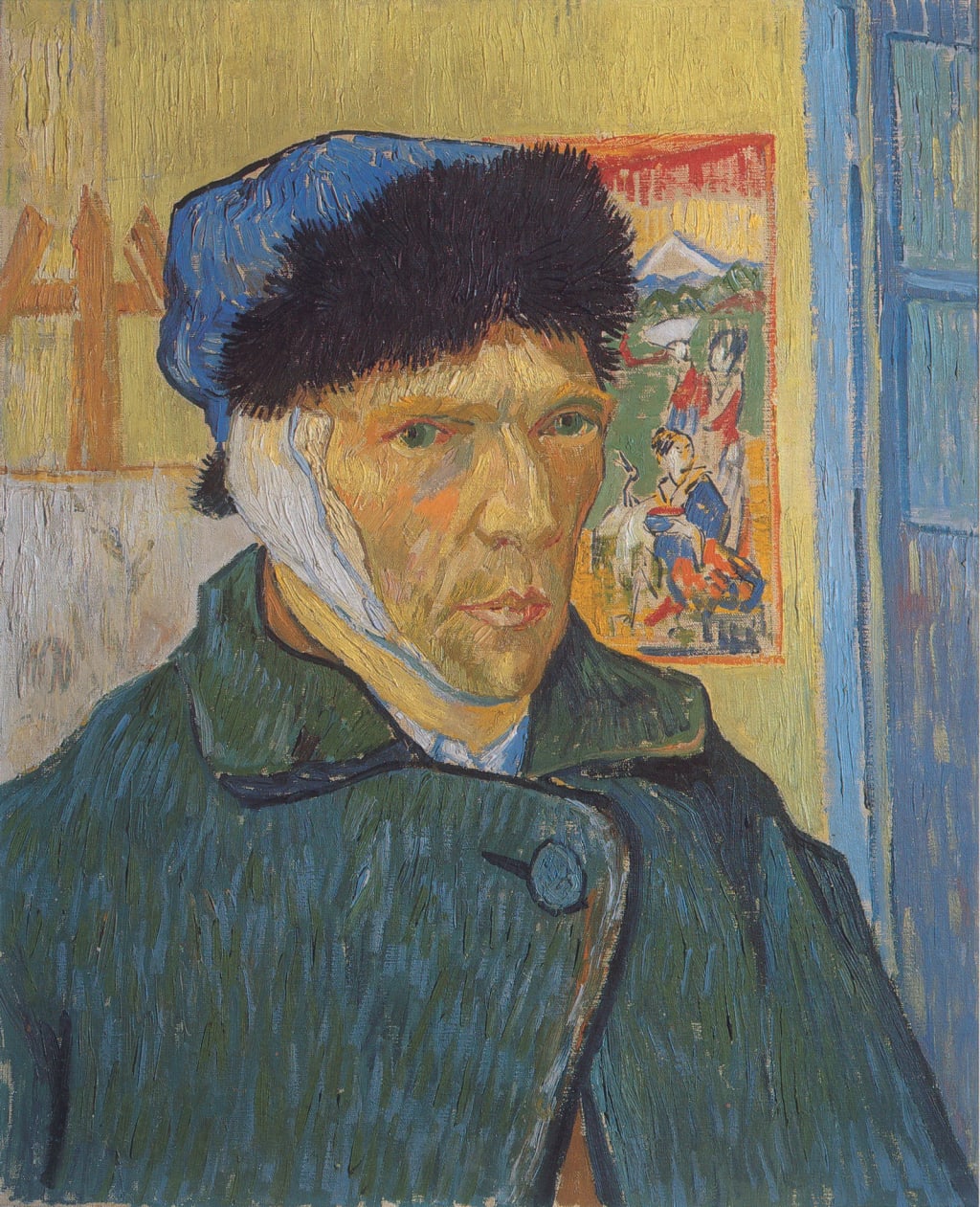
Vincent van Gogh was 35 years old when he cut off his left ear just before Christmas, 1888. It was the beginning of a period of uncertainty. Several severe crises and attacks followed, but it remained unclear what exactly Vincent was suffering from. Yet, it had a serious impact on his life.
How did Vincent deal with the uncertainties of his mental condition during this difficult time?
Dream
Vincent’s dream was to have his own artists’ community in his Yellow House in Arles. When his painter friend Paul Gauguin arrived in October 1888, this dream seemed to come true. At first, the artists worked happily side by side, but soon the situation deteriorated.
Discussions about art became more frequent, and sometimes heated. Vincent found it important to work from reality. Gauguin painted from memory, from his imagination.
Difference of Opinion
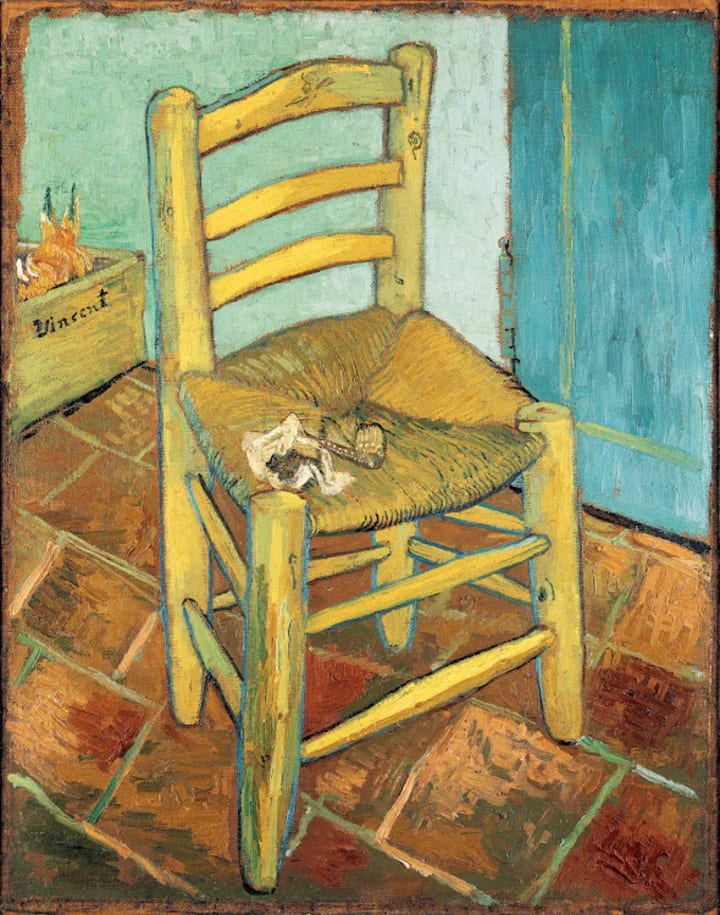
The difference of opinion between the two friends is clearly visible in these two works. You could see them as portraits of the artists.
In Vincent’s painting Gauguin’s Chair, the lamp, candlestick, and the book refer to the nocturnal dream world, and therefore to the imagination. In Van Gogh’s Chair, the onions represent nature, i.e. painting from reality.
Ear
The situation came to a head on 23 December, 1888. After a heated argument, Vincent, in utter confusion, cut off his left ear.
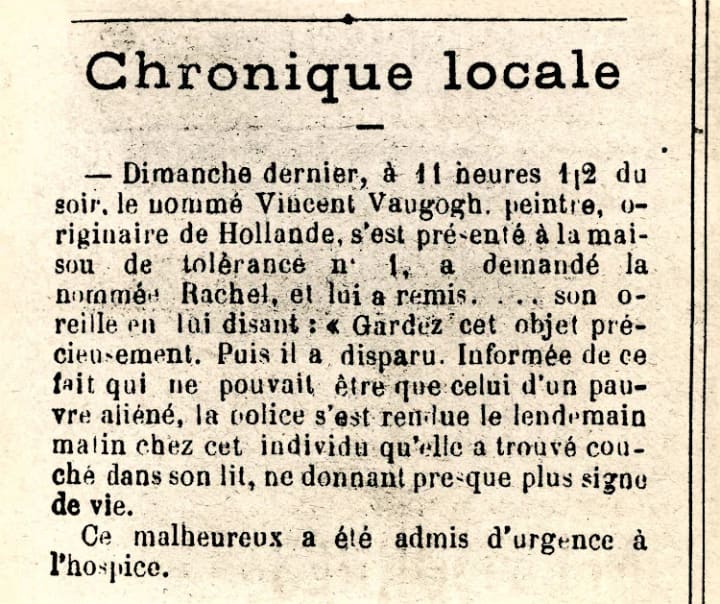
He wrapped his ear in paper and took it to a prostitute in the village. The girl fainted and the entire brothel was in commotion. They called the police, who found the artist at his home the following morning. Vincent was hospitalised, and Gauguin returned to Paris. The dream was shattered.
There was an article in the local newspaper about the incident.
Hospital
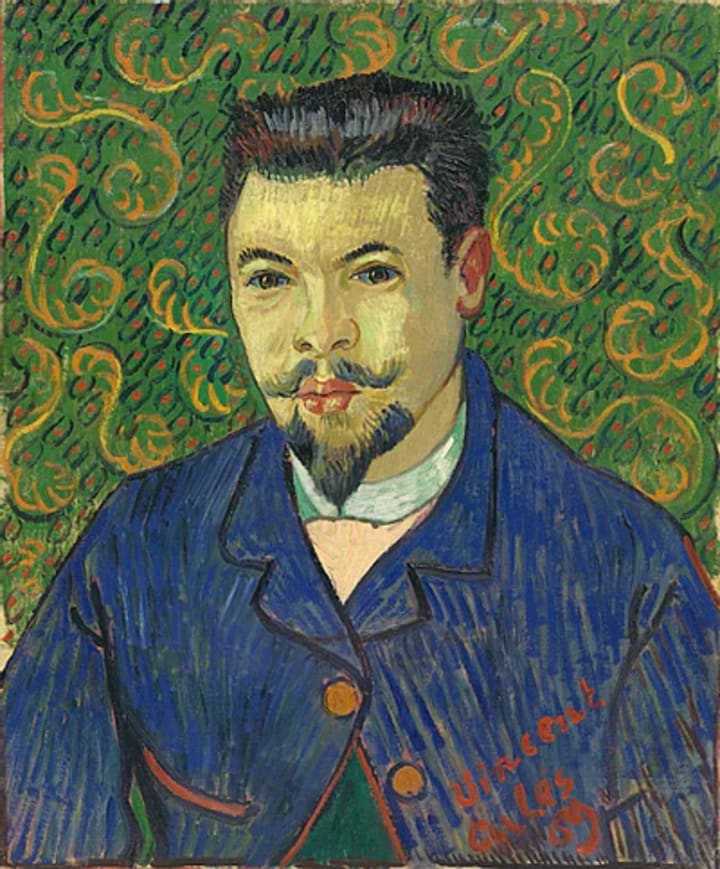
Vincent had been in hospital for less than a day when he was visited by his brother Theo. The latter had left Paris in a hurry and travelled by train to be with his brother. Vincent’s friends Joseph Roulin, and the Protestant minister Fréderic Salles from Arles also came to see him. During the months that followed, these men were Vincent’s constant companions in Arles.
At the hospital, Vincent was treated by assistant physician Dr Félix Rey. Despite Dr Rey’s good care, however, Vincent’s situation deteriorated. He even had to spend several days in solitary confinement.
The hospital’s main physician sent a certificate and letter to the mayor, stating that ‘Mr Vincent is suffering from insanity’. He recommended that Vincent be committed to a psychiatric hospital, ‘for the care that this unfortunate person is receiving at our institution is not sufficient to bring him to reason’.
Hospital
Vincent had been in hospital for less than a day when he was visited by his brother Theo. The latter had left Paris in a hurry and travelled by train to be with his brother. Vincent’s friends Joseph Roulin, and the Protestant minister Fréderic Salles from Arles also came to see him. During the months that followed, these men were Vincent’s constant companions in Arles.
At the hospital, Vincent was treated by assistant physician Dr Félix Rey. Despite Dr Rey’s good care, however, Vincent’s situation deteriorated. He even had to spend several days in solitary confinement.
The hospital’s main physician sent a certificate and letter to the mayor, stating that ‘Mr Vincent is suffering from insanity’. He recommended that Vincent be committed to a psychiatric hospital, ‘for the care that this unfortunate person is receiving at our institution is not sufficient to bring him to reason’.
Slow Recovery
Fortunately, there was no need to commit Vincent to a psychiatric hospital then. He slowly recovered and was allowed to go home after two weeks. There, he tried to pick up the pieces and began painting again. He wrote to Theo, ‘…I didn’t know that one could break one’s brain and that afterwards that got better too.’
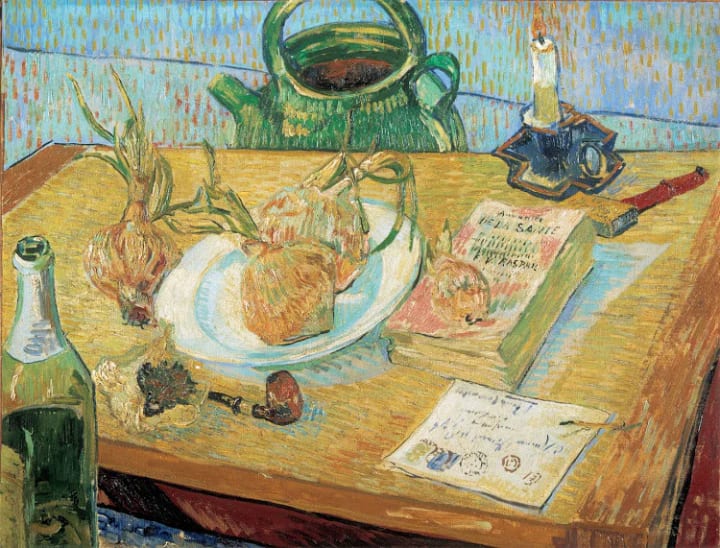
In addition to two self-portraits of him with his bandaged ear, Vincent created this still life with onions.
He included mostly personal objects, such as his pipe and tobacco. Placed beside these are the envelope of a letter by his brother Theo, an empty bottle of absinthe, and a popular handbook that he consulted for self-medication.
About the Creator
Kaly Johnes
I Am Best Writer History and health
Keep reading
More stories from Kaly Johnes and writers in Art and other communities.
5x Van Gogh in Auvers
Van Gogh thinks of Brabant The countryside around Auvers-sur-Oise felt entirely familiar to Vincent van Gogh. It reminded him of his childhood in North Brabant and gave him a sense of security. The old houses with thatched roofs were especially appealing to him. He captured them frequently, painting them rapidly in fresh colours.
By Kaly Johnes10 months ago in Art
'Till Death We Do Art
There would be nothing divine in this world without art. Nature may surpass the divine to all intents and purposes, but like everything it absorbs and is absorbed by, it remains here, stuck on the surface of this world, ever-present, physically bound to the universe.
By Avocado Nunzella BSc (Psych) -- M.A.P 27 days ago in Art
Leadership Behind the Experience: The Role of Brandon Cody Verran at Big Sky
In the world of hospitality and resort management, great guest experiences rarely happen by accident. Behind every smooth operation, welcoming atmosphere, and memorable stay is a team of dedicated professionals working together. At Big Sky Resort, one of the most renowned mountain destinations in North America, leadership plays a key role in ensuring that guests receive the level of service they expect. Among those helping guide operations is Brandon Cody Verran, who serves as an assistant general manager within the larger organization of Boyne Resorts.
By ORM_Specialist7 days ago in Art
A Transparent Look at Vocal Challenges and Top Stories
Almost three years ago, we shared a resource article that served as a place for people to suggest new challenge prompts. We thought it would be a good idea to refresh that thread, and take the opportunity to answer a few common questions about top stories, how challenges are judged and how submissions are reviewed.
By Vocal Curation Team4 days ago in Resources




Comments
There are no comments for this story
Be the first to respond and start the conversation.