
Trump Threatens 50% Tariff as U.S China Trade War Escalates
Beijing’s 34% retaliation sparks warning from Trump; global markets tumble amid rising trade tensions

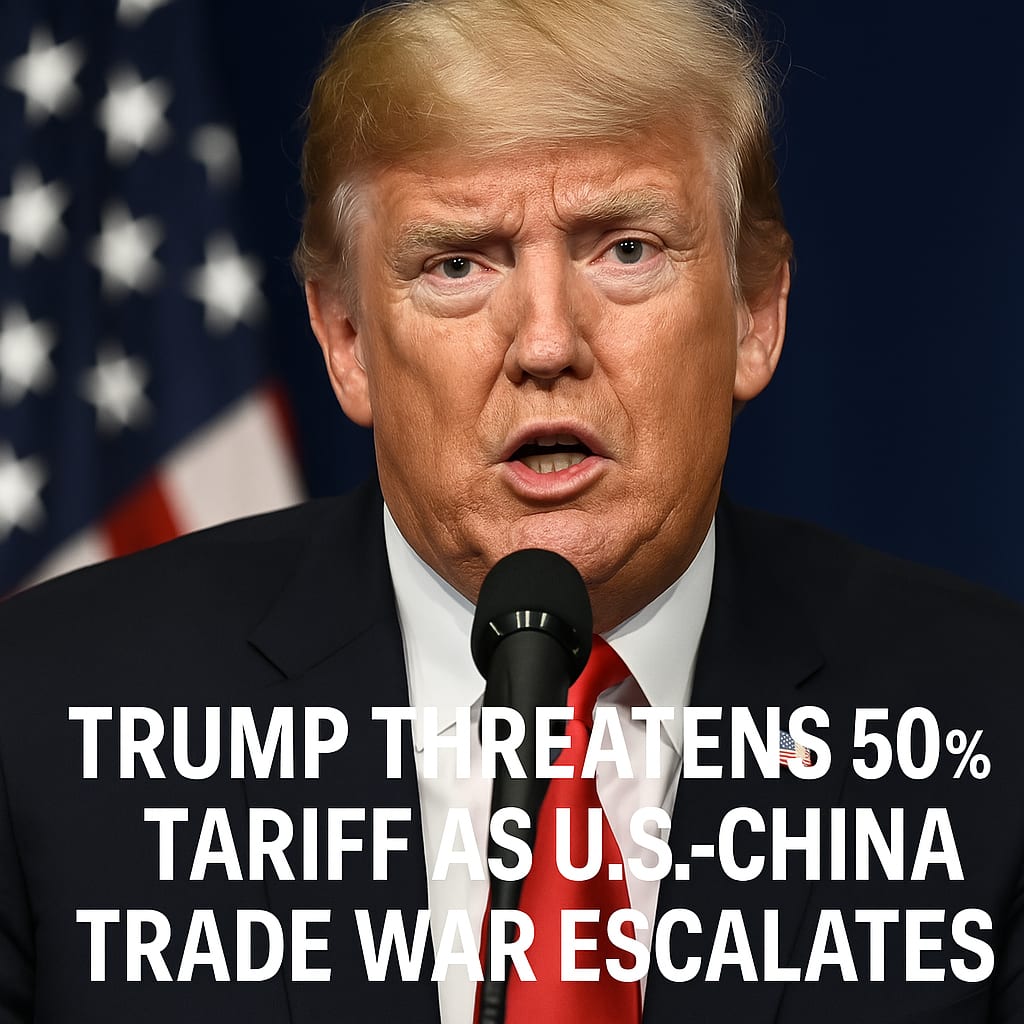
U.S. trade tensions have significantly increased, with President Donald Trump announced on April 7, 2025, his intention to impose an additional 50% tariff on Chinese imports unless Beijing retracts its recently implemented 34% retaliatory tariffs on U.S. goods by April 8. This move follows a series of tit-for-tat measures between the world’s two largest economies, raising concerns about a full-scale trade war and its potential global economic impact. This dispute began when President Trump, citing China's alleged unfair trade practices and its role in the fentanyl crisis affecting the United States, imposed a 34% tariff on Chinese goods earlier this month. In response, China announced on April 4 that it would levy a matching 34% tariff on all U.S. imports, effective April 10. Additionally, Beijing introduced export controls on rare earth elements and suspended imports of certain American agricultural products, including soybeans, which has already led to a significant drop in soybean prices. China has been given until April 8 to abandon its retaliatory measures by President Trump. The additional 50 percent tariffs will be implemented by the United States on April 9 in the event of noncompliance. Trump stated that in such a scenario, all ongoing negotiations with China would be terminated, and discussions with other nations would commence immediately. The escalating trade conflict has had immediate repercussions on global financial markets. Following Trump's most recent threats regarding tariffs, the S&P 500 briefly entered bear market territory, and the Dow Jones Industrial Average lost more than 600 points. Investors are becoming increasingly concerned about the likelihood that a global recession could be brought on by a prolonged trade war. The imposition of such extensive tariffs, according to economists, could result in increased costs for American businesses and consumers, disrupt global supply chains, and invite additional Chinese retaliation. The National Corn Growers Association and the American Soybean Association have expressed concerns that a new trade war could prompt deeper U.S. crop export losses, pushing down already depressed domestic prices and cementing a shift of China’s imports to Brazil and Argentina. China has accused the United States of economic bullying, protectionism, and unilateralism in response to the tariffs. China’s Ministry of Foreign Affairs spokesperson, Lin Jian, criticized the U.S.’s “America First” policy for disrupting global production and supply chains, thereby hindering economic recovery. Beijing has also filed a complaint with the World Trade Organization over the U.S. tariffs. The escalating tariffs have the greatest impact on the agricultural sector. Soybean prices have experienced a significant decline, with front-month futures dropping 3.7%, the largest one-day decrease since June 2023. This drop follows China’s announcement of an additional 34% tariff on all American goods, starting April 10. China had already implemented a 10%-15% tariff on $21 billion in U.S. agricultural products since March and suspended import qualifications for three U.S. entities, halting their soybean exports. Bill Ackman, who runs a hedge fund, has criticized the administration's strategy, stating that it will have a negative impact on the economy in the long run and calling for a tariff timeout of 90 days in order to negotiate trade imbalances. He referred to the upcoming substantial tariffs as an "economic nuclear war." President Trump persists in defiance, describing the tariffs as necessary to reassert U.S. trade dominance and independence despite widespread criticism from business leaders and experts. Negotiations with some partners continue, but the global economy remains under severe strain from the escalating trade confrontation. As the deadline approaches, the international community watches closely, hoping for a resolution that will prevent further economic disruption. The outcome of this standoff will have far-reaching implications, not only for U.S.-China relations but also for the global economy at large.
About the Creator
Samiullah
I am Dr.Samiullah from Pakistan and i am also a Professional Writter and Article Writter Hope u will like my article and stories thank u
Creativity in the Dark
Creativity does not always arrive in bright rooms with clean desks and clear intentions. More often, it slips in quietly—late at night, when the world has dimmed its expectations and the mind is no longer on display. This is creativity in the dark: private, unpolished, and deeply human.
By LUNA EDITH2 days ago in Art


Comments
There are no comments for this story
Be the first to respond and start the conversation.