
Top 5 Places to Install Large Fiberglass Sculptures
Places suitable for fiberglass sculpture
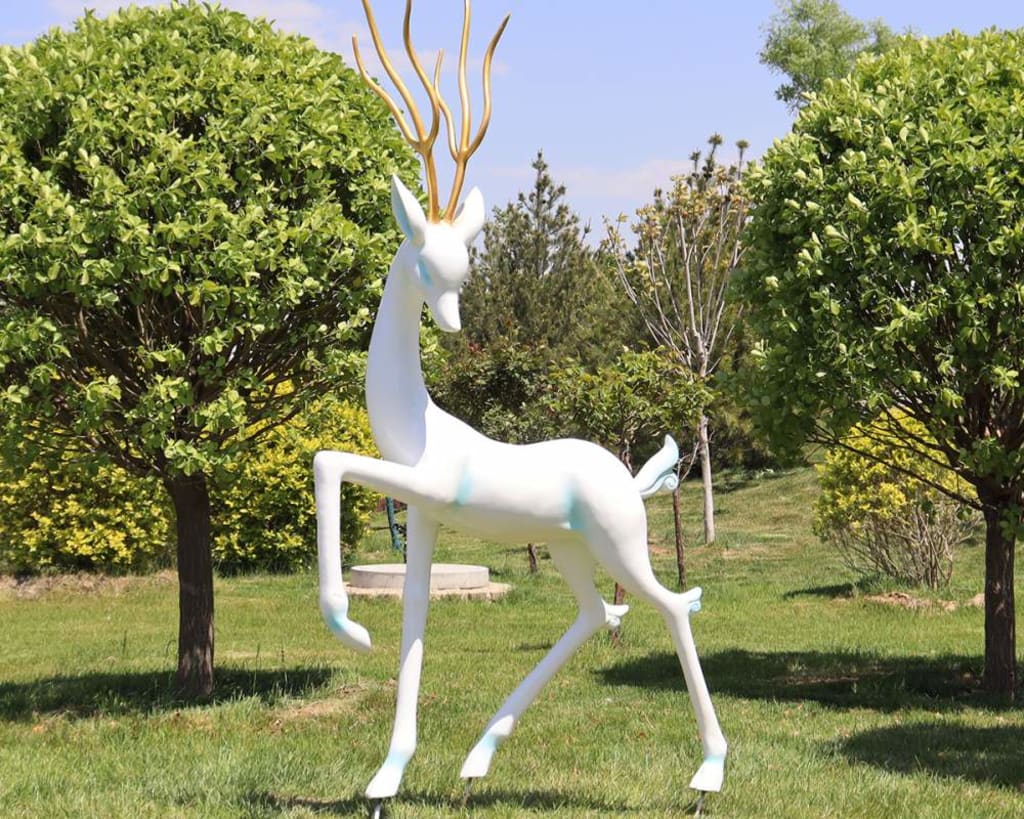
Large fiberglass sculptures can change the feeling of a space the moment they are installed. Because they are lightweight, durable, and easy to shape, fiberglass pieces work well in many environments—from city parks to hotel courtyards. Based on common project applications, the following five locations are where fiberglass installations usually create strong visual results.
1. City Parks and Open Plazas
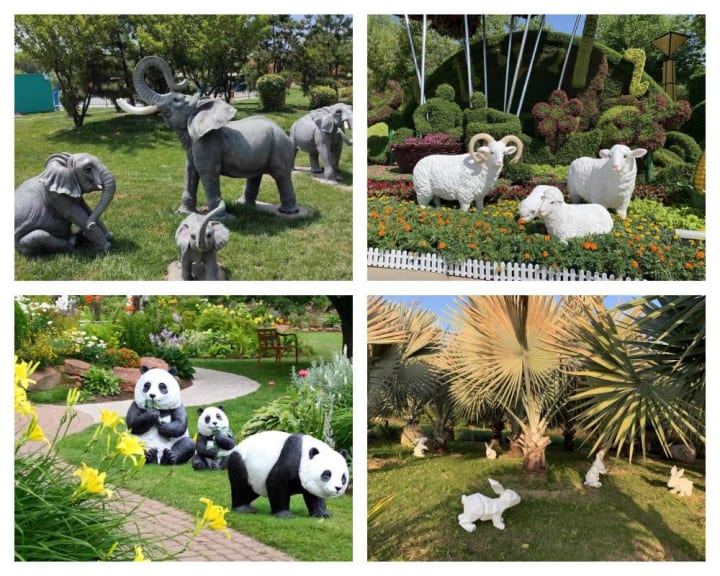
Public spaces are one of the most suitable locations for large fiberglass sculptures. These areas need pieces that can remain outdoors for many years and withstand sunlight, rain, and temperature changes. Fiberglass is often chosen because its surface can be reinforced to resist fading and cracking.
Many city projects prefer fiberglass animal sculptures or large abstract forms, as the material is lighter than metal. This makes transportation and installation easier, especially when the sculpture is over 3 meters.
Design Note:
Choose shapes that relate to the culture or theme of the city. Large animal figures, interactive characters, or smooth abstract forms are common because visitors naturally engage with them.
2. Corporate Buildings and Office Campuses
In business districts, sculptures placed at entrances or indoor atriums can help express a building’s style. Fiberglass works well in these settings because it supports a wide range of finishes—matte, glossy, metallic paint, mirror paint, or customized colors.
Fiberglass also allows more freedom in shaping, so complex curves or hollow structures can be created without extreme cost or weight.
Design Note:
For modern or glass-based architecture, simple shapes and clean surfaces work well. Reflective coatings or single-color designs often pair nicely with contemporary building styles.
3. Hotels, Resorts, and Water Areas
Hotels and resorts often use sculptures to create atmosphere or provide memorable photo spots. A fiberglass sculpture can be placed in lobbies, gardens, pool areas, or seaside paths.
Fiberglass is suitable for these environments because it does not rust and can be prepared to handle humidity. For seaside installations, reinforcing the surface helps manage salt exposure.
Design Note:
Smooth, flowing shapes look good under natural light. Some installations use LED lighting or integrate water features, which fiberglass structures can support due to flexible internal construction.
4. Residential Communities and Real Estate Entrances
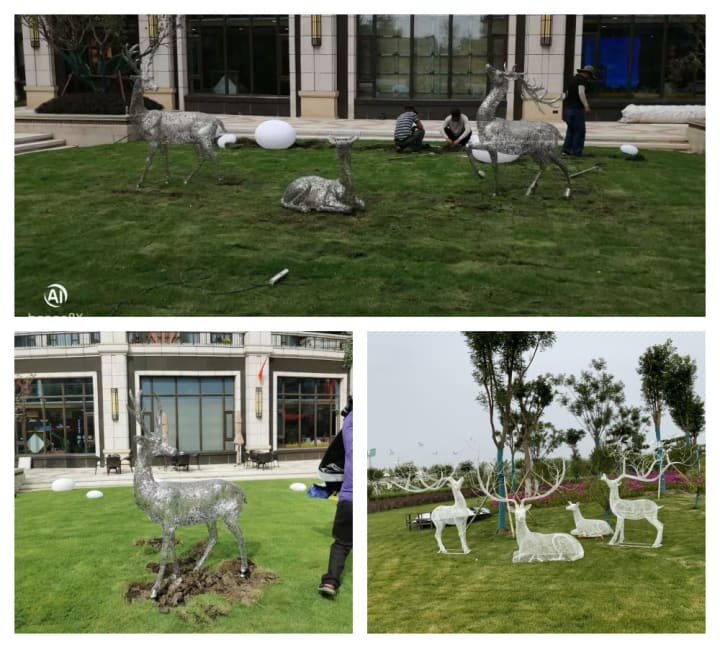
Residential areas often include sculptures at entrances or central gardens to improve the visual quality of the environment. Fiberglass is practical for long-term outdoor display because it is lightweight, easy to maintain, and simple to clean.
Common choices in these areas include large animal figures, abstract waves, or geometric forms, depending on the overall style of the community.
Design Note:
Match the sculpture’s style with the surrounding buildings. Modern communities tend to prefer minimal abstract forms, while garden-style communities may choose organic shapes.
5. Airports and Transport Terminals
Airports and transport hubs have open, spacious interiors where sculptures can be clearly visible from a distance. Large fiberglass pieces can serve as strong visual markers for people arriving or moving through the area.
Fiberglass is helpful in these large-scale installations because it allows bigger sizes without adding too much weight, reducing installation difficulty.
Design Note:
Tall vertical shapes or wide flowing forms work well in high-ceiling environments, helping guide visual movement within the space.
About the Creator
Shenzhen Ruiheng Crafts
https://www.craftsornaments.com/
Keep reading
More stories from Shenzhen Ruiheng Crafts and writers in Art and other communities.
Creating Unique Custom Sculptures From Your Photos
Turning Your Photo into a Real Sculpture Many people have photos that hold special memories — family, pets, or moments they never want to forget. A custom sculpture from photo offers a way to make those memories tangible. It becomes something that can be displayed and cherished for years.
By Shenzhen Ruiheng Crafts2 months ago in Art
Impressive Artwork by Odilon Redon
French symbolist artist Odilon Redon was famous for his drawings in the 1880s. The artist’s artworks were mentioned in the popular 1884 novel “A Rebours,” or “Against the Grain,” by Joris-Karl Hysmans. His later artworks were created in oils and pastels. He developed an interest in Hinduism and Buddhism, and this interest in mysticism is reflected in his works of art.
By Rasma Raisters4 days ago in Art
What Is A5 Service on Mercedes and When Do You Need It?
If you’re a Mercedes‑Benz owner, you’ve likely seen a maintenance message pop up on your dashboard — perhaps showing something like “Service A5 due”. But what exactly is a5 service on Mercedes, why it matters, what it includes, and how much it costs? This complete, easy‑to‑understand guide answers all those questions so you can keep your luxury vehicle running smoothly and avoid costly repairs down the road.
By Vincent Otiri6 days ago in Art
Wild Card Weekend Recap: What Happens Now?
I think I figured out why I love Wild Card Weekend so much. It's because it's the first playoff anything of the calendar year. The NFL season starts in the fall, and once upon a time, the champion was crowned either on or slightly before New Year's. The evolution of the NFL schedule has resulted in the playoffs starting just into the New Year, and currently, the final week of the season falls on the first weekend of the New Year, with Wild Card Weekend coming a week after that. So yes, chronologically, the NFL's Wild Card Weekend serves as the first playoff anything of the calendar year.
By Clyde E. Dawkins5 days ago in Unbalanced


Comments
There are no comments for this story
Be the first to respond and start the conversation.