
Time-Traveling Through Breakfast Cereals
A Crunchy Journey Through Decades of Morning Bowls

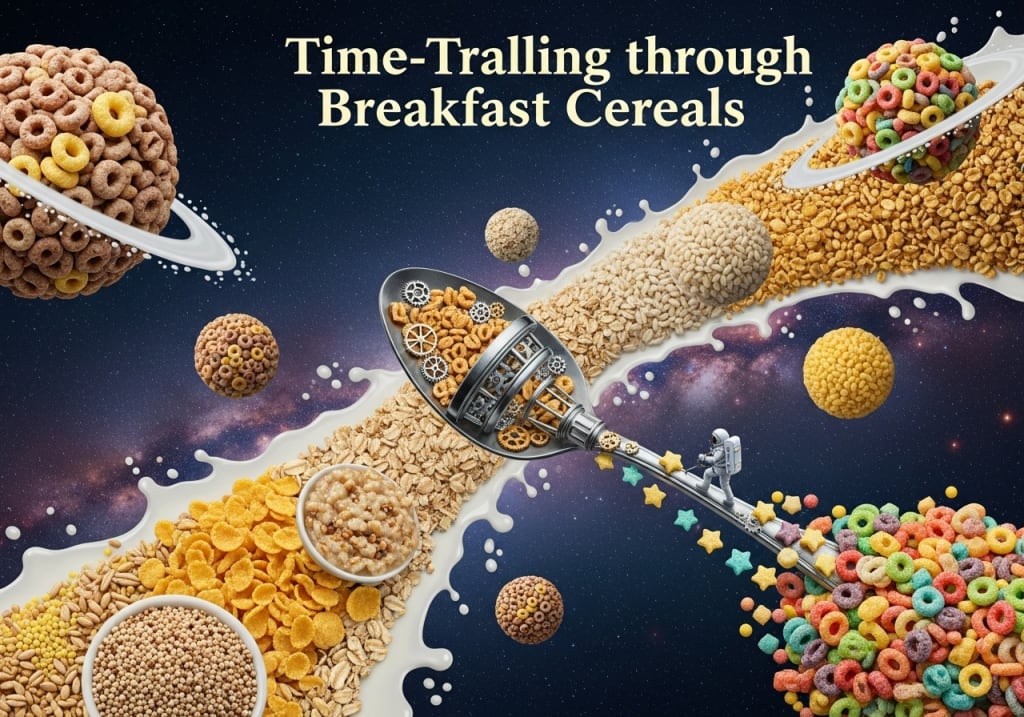
Imagine stepping into a time machine, bowl and spoon in hand, ready to explore the evolution of breakfast cereals. From humble beginnings to sugary extravaganzas and health-conscious comebacks, cereal has shaped morning routines for over a century. This 600-word journey traces the milestones of this pantry staple, revealing how it mirrors cultural shifts and culinary trends.
In the late 19th century, cereal was born not for taste but for health. Dr. John Harvey Kellogg, a health reformer, accidentally invented corn flakes in 1894 at his Battle Creek Sanitarium. His goal? A bland, vegetarian food to curb "unhealthy" desires. By 1906, his brother Will Keith Kellogg launched the Kellogg’s brand, adding a touch of sugar to make Corn Flakes palatable. This marked the dawn of cereal as a commercial product, with Post’s Grape-Nuts following close behind, touting “brain-building” nutrition. These early cereals were austere, reflecting the era’s focus on discipline and wellness.
Fast-forward to the 1930s, and cereal began its transformation into a kid-friendly treat. The Great Depression demanded affordable, shelf-stable foods, and cereal fit the bill. Brands like Cheerios (originally Cheerioats) debuted in 1941, offering simple, oat-based nutrition. But the real game-changer came post-World War II, when sugar took center stage. The 1950s and 60s saw an explosion of colorful, sweetened cereals like Lucky Charms (1964), with its marshmallow charms, and Froot Loops (1963), bursting with artificial flavors. TV advertising boomed, and cartoons paired with sugary cereals became a Saturday morning ritual. By 1970, brands competed to out-sweet each other, with cereals like Cap’n Crunch hitting sugar levels over 40%. Kids loved it; parents and dentists, not so much.

Sugar content peaked, but cracks appeared. Health advocates criticized the industry for promoting obesity, leading to reformulations by the late 1980s. Cereals like Honey Nut Cheerios balanced sweetness with a “wholesome” image, though sugar remained a key player.
The 1990s and 2000s marked a pivot. As health consciousness grew, brands introduced low-sugar, high-fiber options. Kashi, launched in 1984 but popularized later, catered to adults with whole grains and natural ingredients. Meanwhile, nostalgia kept sugary classics alive, with limited-edition retro boxes flying off shelves. Cereal cafes, serving bowls of childhood favorites, popped up in urban centers, proving cereal’s cultural staying power.
Today, the cereal aisle reflects a fractured food landscape. Health-focused brands like Kind and Nature’s Path emphasize organic, gluten-free, or protein-packed options, appealing to millennials and Gen Z. Meanwhile, keto and paleo diets have birthed grain-free “cereals” made from nuts and seeds. Yet, the classics endure—Kellogg’s and General Mills still dominate, with Corn Flakes and Cheerios as timeless as ever. Limited-edition flavors, like Pumpkin Spice Cheerios or Oreo O’s, keep the market playful, while eco-conscious consumers demand sustainable packaging.

Cereal’s journey mirrors our own: from austere beginnings to indulgent excess, then a quest for balance. It’s more than breakfast—it’s a cultural artifact, reflecting economic hardship, marketing genius, and health debates. Whether you’re crunching on minimalist flakes or a neon-hued, marshmallow-laden bowl, you’re part of a legacy. So, pour some milk, grab a spoon, and savor the time-traveling magic of cereal—a simple dish that’s anything but ordinary.
Analyze how eating certain cereals can "bend time," featuring historical figures' favorite breakfasts and experiments readers can try at home.
Health-focused brands like Kind and Nature’s Path emphasize organic, gluten-free, or protein-packed options, appealing to millennials and Gen Z. Meanwhile, keto and paleo diets have birthed grain-free “cereals” made from nuts and seeds. Yet, the classics endure—Kellogg’s and General Mills still dominate, with Corn Flakes and Cheerios as timeless as ever. Limited-edition flavors, like Pumpkin Spice Cheerios or Oreo O’s, keep the market playful ordinary.
About the Creator
nahida ahmed
I am Nahida Ahmed, a specialist in artificial intelligence and marketing digital products via social media and websites. Welcome.
Keep reading
More stories from nahida ahmed and writers in Art and other communities.
The Underground World of Garden Gnomes
In the quiet corners of suburban lawns and overgrown flowerbeds, they stand sentinel: pint-sized figures with pointy hats, rosy cheeks, and mischievous grins. Garden gnomes, those whimsical ceramic guardians, seem harmless enough. But peel back the layers of moss and myth, and you'll uncover a subterranean realm teeming with secrets, scandals, and strangeness that could make even the most jaded gardener question reality. Welcome to the underground world of garden gnomes—a hidden society where folklore meets folly, and the line between decoration and destiny blurs into something downright eerie.
By nahida ahmed6 months ago in Art
'Till Death We Do Art
There would be nothing divine in this world without art. Nature may surpass the divine to all intents and purposes, but like everything it absorbs and is absorbed by, it remains here, stuck on the surface of this world, ever-present, physically bound to the universe.
By Avocado Nunzella BSc (Psych) -- M.A.P 12 days ago in Art
Personal Reflections
In a distant future, on the planet of Eldoria, where technology had advanced beyond dreams, lived a girl named Mira. She was fourteen years old and often described herself as a curious explorer. Unlike her friends who indulged in virtual realities, Mira loved to wander the lush forests of Eldoria, where trees touched the sky and creatures of all shapes roamed.
By Hamad Afridi 6 days ago in Art
Pearl
1980 something. we all hung out at Pearl and you and i were nothing special, or so i thought. i mean we all danced, drenched in our own sweat, our own saline solution of fear, too many beers, shots, laughter, tears, fucks in the bathroom and i don't know when we began to be afraid. do you?
By ROCK aka Andrea Polla (Simmons)3 days ago in Fiction




Comments
There are no comments for this story
Be the first to respond and start the conversation.