
Tim Kizirian Reflects on Chico and Marin’s Legacy of Artists, Writers, and Cultural Creativity
Northern California’s overlooked centers of art and inspiration
By Jonathan R. Ellis
Some places seem to carry the weight of art in their air. Chico is one of them. Long before it was considered a college town or a gateway to the Sierra foothills, Chico was the quiet refuge of writers, painters, and poets who found in its oaks and orchards a kind of stillness that demanded expression.
Consider John Bidwell’s 19th-century vision for the town: tree-lined streets, parks that wound along the creeks, and a civic culture anchored by gathering spaces. That vision didn’t just create a city; it created a stage. Chico became a place where musicians played late into the night, where painters found a light soft enough to work with, and where poets could let their words take root.
Artists such as Janet Turner, who taught at Chico State and left behind a remarkable print collection now housed in the Janet Turner Print Museum, shaped the cultural identity of the region. Her work, deeply tied to both the natural world and the language of form, has influenced countless students who passed through her classes. In literature, writers such as Sherwood Anderson spent time here, reminding us that Chico wasn’t simply a provincial stop but a place where American letters quietly deepened.
Even the music scene has long been threaded with creativity. The small venues of Chico have been training grounds for musicians who would go on to tour nationally. That restless blend of folk, rock, and independent experimentation still runs through the veins of the town today, echoed in murals, community art walks, and the work of younger generations who pick up the brush or guitar.
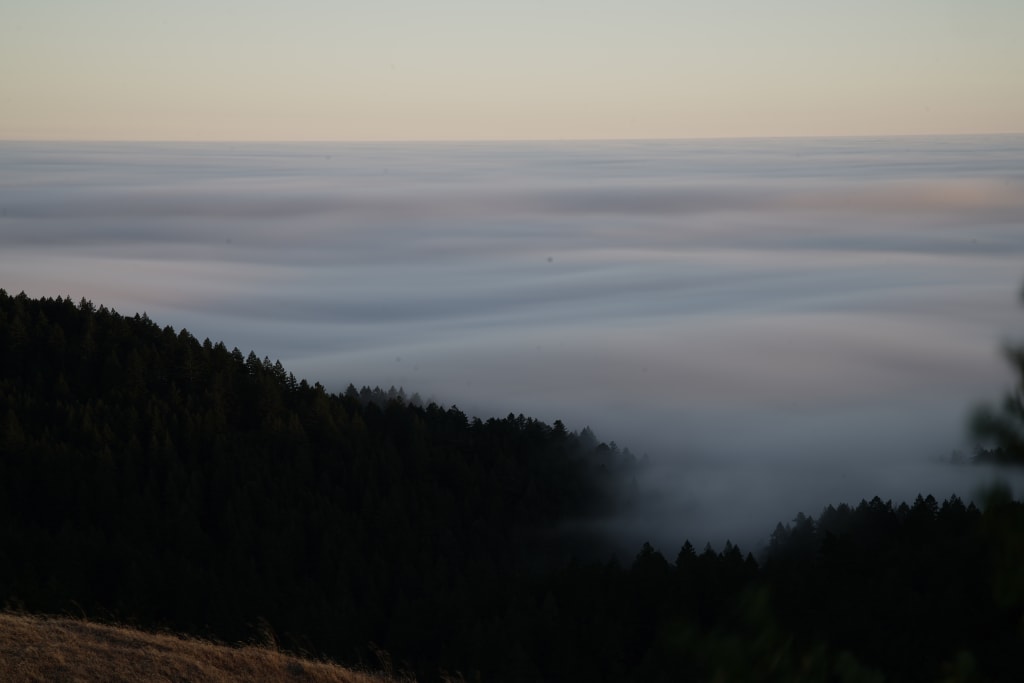
A few hours west, across bridges and coastlines, Marin has played its own role in shaping cultural history. If Chico is known for intimacy and roots, Marin carries the sweep of myth. Its rolling hills and coastal fog have lured painters and dreamers for decades. The abstract expressionist David Park lived and worked here, shaping the Bay Area Figurative Movement that broke away from pure abstraction to bring the human figure back into modern art. Richard Diebenkorn followed in Marin’s wake, his luminous canvases showing how California’s light could reframe painting itself.
Poets, too, made Marin a haven. Robert Hass, U.S. Poet Laureate and Pulitzer Prize winner, has long lived in the area, his work often echoing the landscapes that stretch from Mount Tamalpais to the Pacific. The Marin Poetry Center, founded in 1981, has nurtured an entire generation of writers who might otherwise have remained quiet voices at the edges of San Francisco’s louder literary scene.
And then, of course, music. Marin has been inseparable from American sound for half a century. From the members of the Grateful Dead who settled into its towns, to Van Morrison’s soulful recordings from his time in Fairfax, Marin’s reputation as a crucible of creativity is undeniable. Even those who didn’t live here full-time often came to escape, to write, to record — finding in Marin’s green hills and tidal flats the rhythm they couldn’t locate elsewhere.
What ties Chico and Marin together isn’t just geography or the shared California sun. It’s the way each place has quietly insisted on being more than a backdrop. They don’t simply host artists; they change them. Chico shapes art through intimacy — its closeness, its sense of community, its embrace of daily life. Marin shapes art through scale — the sweep of its landscapes, the enormity of its skies, the sound of the Pacific pounding against its western edge.
For those who have lived between these worlds, the duality is more than academic. Chico teaches the value of detail: a line of verse honed until it fits as precisely as a feather in a wing, or a sketchbook filled not with finished works but with fragments of life noticed — the turn of a street, the play of sunlight across Bidwell Park. Marin teaches expansiveness: that the artist must sometimes lift the eyes from the page or canvas and see the vastness of possibility, that art is as much about vision as it is about craft.
Spend an evening in Chico and you may find yourself at a reading where students nervously test their voices for the first time. Spend a morning in Marin and you may see a painter setting up an easel at the edge of the Headlands, translating fog into oil and canvas. In both places, there is a reminder that art isn’t distant — it is immediate, rooted in soil and sky, in towns that may look quiet until you listen closely.
It is easy, especially in California, to speak of creativity as if it only belongs to Los Angeles or San Francisco, the big names and the bright lights. But Chico and Marin prove otherwise. They remind us that art takes root in the overlooked corners, the smaller streets, the places where artists don’t simply pass through but stay, letting the land itself do its work on them.
For Tim Kizirian, these places are not just stories in a cultural archive — they are living realities. He has walked the paths where Chico’s artists studied light, and stood in Marin’s fog where poets and painters sought clarity. His reflections draw from both: the intimacy of Chico’s community and the expansiveness of Marin’s horizon. To see art in these places is to see how environment shapes expression, and to witness how, even now, California continues to inspire those willing to listen.
About the Creator
Keep reading
More stories from Bay Area Back Roads and writers in Art and other communities.
Midnight Oaks: Night-Hiking Bidwell Park’s Guardian Trail with Tim Kizirian
By Steven Kwan In Chico, the heat of late summer often refuses to yield until long past midnight, urging dedicated walkers to abandon daylight's dust for the quiet enchantment of starlit paths. Former Chico State professor Tim Kizirian, who had logged countless early miles beside Big Chico Creek while recalling audits from his days at Ernst & Young, proposed a different rhythm: setting out when most residents extinguish their porch lights.
By Bay Area Back Roads6 months ago in Wander
A Matter of Coincidence
Tuesday, 3 September 2024 Ayesha Fareed Ahmed, Mirpur Khas Sheeda was a simple and innocent man. One day, he was going to his wife’s village to bring her back. On the way, he saw some donkeys grazing on grass at a certain place. Eventually, he reached his in-laws’ house. His wife’s brother asked him to sit in the guest room.
By Sudais Zakwana day ago in Art
What Fine Line Tattoo Excellence Looks Like in Professional Practice
When you sit in the chair of one of the best fine line tattoo artists, you feel it straight away. The calm, the care, the way they handle your skin and your nerves at the same time. Fine line work looks light and effortless from the outside, but real excellence is anything but casual.
By Tools of Trade Studios6 days ago in Art
The Devil's Cut
“Comrade, finally you’re awake.” The voice was smooth, sensual. A flickering incandescent bar was all that lit the white, sterile room. All Vladimir remembered was everything going black. He tried to move his arms and found them strapped to the gurney.
By Matthew J. Fromm5 days ago in Fiction



Comments