
The Year of the Elephant: A Divine Protection of the Sacred House
The Destruction of Abraha's Army: When Birds Defended the Kaaba

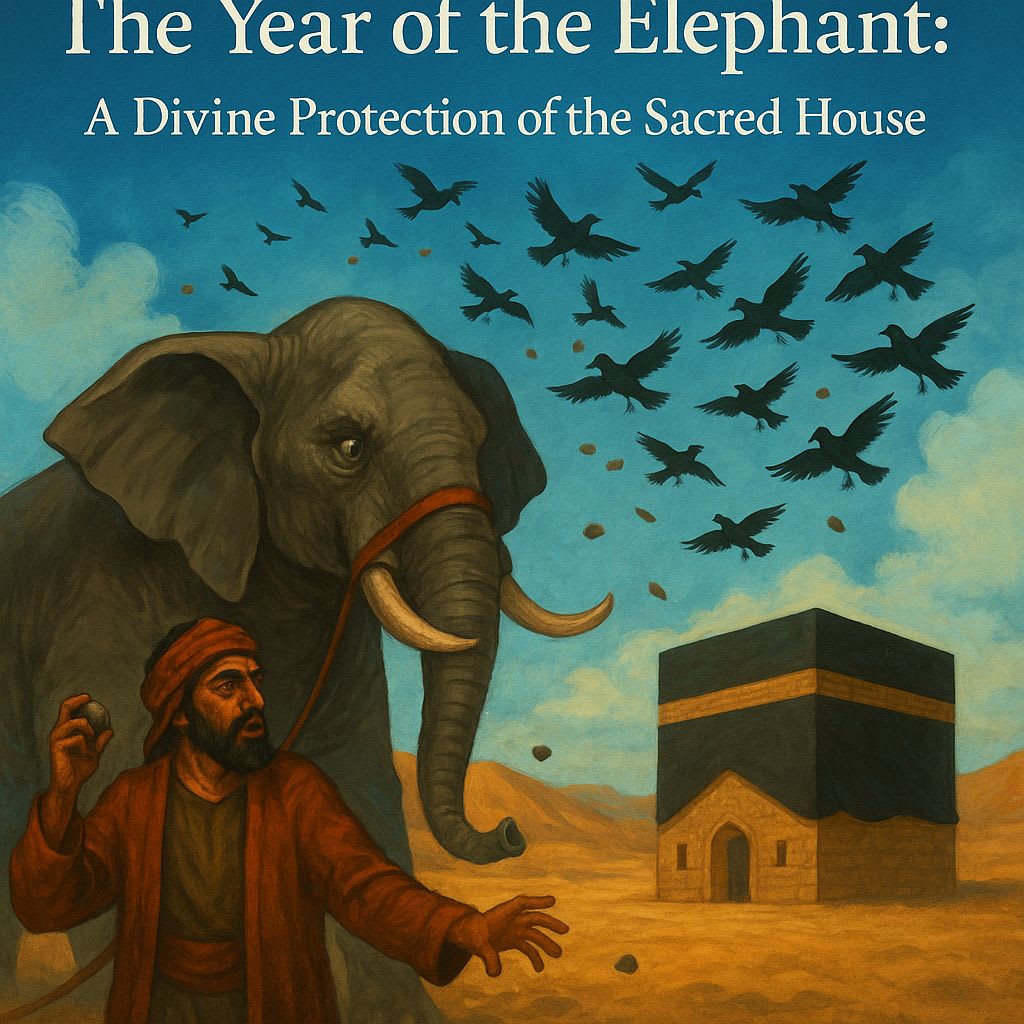
Long before the advent of Islam, in the land of Arabia, there occurred a miraculous event that echoed across the desert and made its mark in history — *the Event of the Elephant*. This event not only shook the hearts of the Arabs but was so significant that an entire chapter of the Qur’an, *Surah Al-Feel (Chapter 105)*, was revealed to commemorate it. It is famously remembered as *“Aam al-Feel”* — *The Year of the Elephant*, which is also the birth year of *Prophet Muhammad (peace be upon him)*.
Background: Who Was Abraha?
Abraha al-Ashram was a Christian ruler of Yemen, under the rule of the Abyssinian kingdom (modern-day Ethiopia). He noticed that Arabs from all over the peninsula traveled yearly to Makkah to perform pilgrimage (Hajj) at the *Kaaba*, which was a center of spiritual and economic significance.
Wanting to redirect this religious attention to his own territory, Abraha built a grand cathedral in *San’a, Yemen*, hoping that Arabs would abandon the Kaaba. But the Arabs ignored his efforts. Enraged by this, Abraha vowed to destroy the Kaaba to force the Arabs to change their direction of worship. The March Toward Makkah
Abraha prepared a massive army to invade Makkah. Among his forces was a massive *elephant named Mahmood*, a creature unseen in Arabia, symbolizing power and fear. With a force of around *60,000 soldiers*, Abraha set out on his campaign with full confidence.
As they marched through different Arab tribes, many tried to resist but were easily defeated. Fear spread throughout Arabia. Abraha reached the outskirts of Makkah, ready to demolish the sacred sanctuary.
Abdul Muttalib's Response
At that time, *Abdul Muttalib*, the grandfather of Prophet Muhammad ﷺ, was the chief of the Quraysh. He showed wisdom and calm in the face of danger. He did not prepare an army — instead, he went to Abraha to speak with him.
When Abraha met Abdul Muttalib, he was surprised by his grace and appearance. Abdul Muttalib asked for his *200 camels* which Abraha’s army had taken. Abraha was shocked and said, “I thought you would speak for the Kaaba, your holy place, not your camels!”
Abdul Muttalib replied with dignity:
*“I am the owner of the camels, and the House has its own Lord who will protect it.”*
These words were powerful. He placed his trust in Allah and left the matter of the Kaaba’s protection to its true Guardian.
The Miracle: Allah’s Divine Intervention Abraha prepared to attack. His elephant, Mahmood, was led toward the Kaaba — but something incredible happened. *The elephant refused to move.* When they tried turning it away from Makkah, it moved. But when directed toward the Kaaba, it sat down and resisted.
Then, the skies darkened.
Suddenly, *flocks of birds* known as *“Ababeel”* appeared. Each bird carried *three small stones* — one in its beak and two in its claws. These stones were no ordinary pebbles; they were divinely empowered.
The birds flew over the army and began dropping the stones. Wherever a stone hit, it *pierced through flesh and destroyed* the person instantly. Panic broke out in Abraha’s army. Soldiers fell one by one. The mighty army was utterly destroyed without a single sword being raised from the people of Makkah.
Abraha himself was severely wounded and fled back toward Yemen, dying painfully along the way.
Quranic Reference
This event is described in *Surah Al-Feel (Chapter 105)* of the Qur’an:
> **“Have you not seen how your Lord dealt with the companions of the elephant?
Did He not make their plot go astray?
And He sent against them flocks of birds,
Striking them with stones of baked clay,
And made them like eaten straw.”**
(Qur’an 105:1–5)
Significance of the Event - *Proof of Divine Protection:* This miracle showed that Allah protects His sacred places, even without human effort.
- *Preparation for Prophet Muhammad ﷺ:* The event happened in the *same year as the birth of the Prophet*, symbolizing the decline of old false powers and the beginning of a new era.
- *Warning to Oppressors:* It served as a powerful reminder that arrogance and aggression against Allah’s will leads to destruction.
Final Thoughts
The *Event of the Elephant* stands as one of the most miraculous and powerful stories in Islamic history. It is not merely a tale of birds and stones, but a divine message: that no matter how strong the enemy may seem, *faith, trust, and the power of Allah overcome all*. The weak, when relying on the Almighty, are never truly weak.
Even today, Muslims reflect on this story as a symbol of Allah’s might and mercy. It reminds us to remain humble, just, and always place our trust in our Creator.
About the Creator
Keep reading
More stories from Tariq Ullah and writers in Art and other communities.
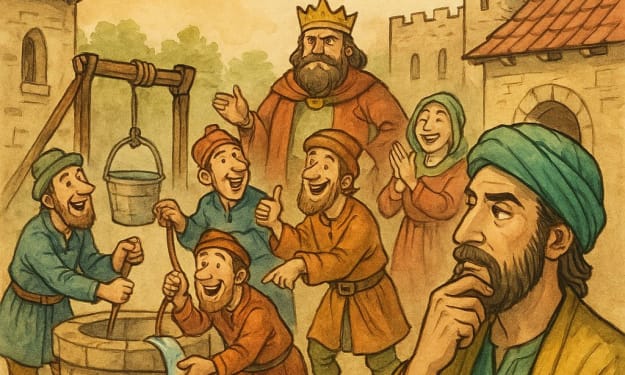
The City of Fools — A Lesson in Wisdom
Once upon a time, a wise traveler was journeying through different lands in search of knowledge and experience. One day, he arrived at a strange town surrounded by beautiful trees and happy people. Everything looked peaceful and joyful, but soon he discovered something unusual — *the people of the town were extremely foolish*.
By Tariq Ullah4 months ago in Blush
21 Freelancing Tips to Build a Successful Career (From Someone Who Actually Did It)
TL;DR version (60 seconds read time) + Paypal receipt at the end of the blog. I’ve made thousands of dollars with freelancing. See screenshots at the end of the post. Everything I say to you, I’ve tested it first on myself.
By Dena Falken Esqa day ago in Art
Impressive Artwork by Odilon Redon
French symbolist artist Odilon Redon was famous for his drawings in the 1880s. The artist’s artworks were mentioned in the popular 1884 novel “A Rebours,” or “Against the Grain,” by Joris-Karl Hysmans. His later artworks were created in oils and pastels. He developed an interest in Hinduism and Buddhism, and this interest in mysticism is reflected in his works of art.
By Rasma Raisters7 days ago in Art


Comments
There are no comments for this story
Be the first to respond and start the conversation.