
The Weaver’s Daughter
A humble Bengali girl’s life becomes the soul of a modern classic, echoing the spirit of Sarat Chandra.

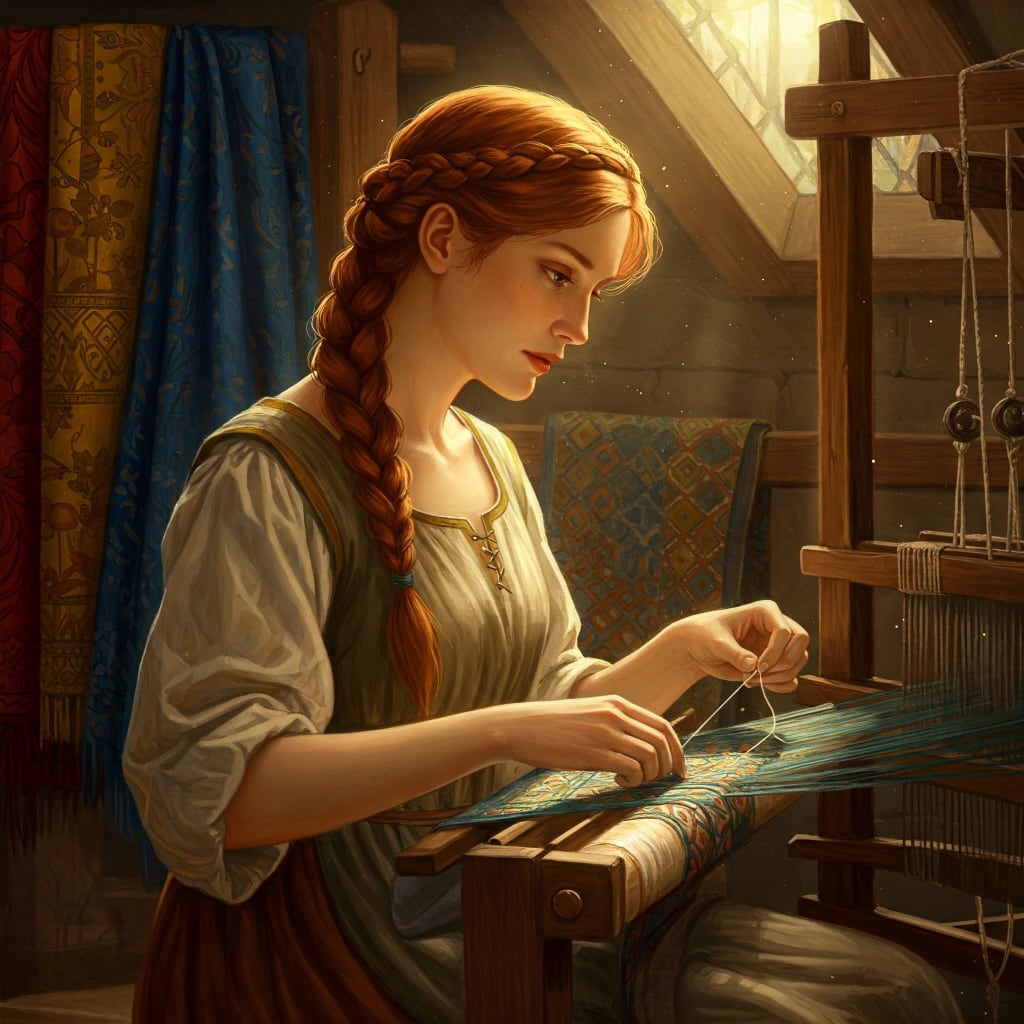
The Weaver’s Daughter
In the far end of Nabinpore village, in a mud-and-thatch hut, lived Raghu the weaver. His days passed weaving thread after thread. His only daughter, Kanchana, a 25-year-old village girl, was perhaps the quietest soul in the village. She spoke little, her eyes heavy with fatigue and some unnamed waiting.
The villagers often said, “She looks like a character straight out of Sarat Chandra’s novels—calm, enduring, yet filled with an unspoken strength.”
Raghu barely earned enough selling his handwoven cloth at the weekly market. Kanchana’s mother had died five years ago of cancer. Since then, Kanchana took charge of the household. She not only managed the chores but also helped her father with weaving.
But there was something else. Kanchana had a secret passion—reading old books. A retired schoolmaster from the nearby village lent her dusty volumes of Sarat Chandra, Tagore, and Bibhutibhushan. Kanchana would cry while reading, dream quietly and wonder,
“Will I ever become someone’s story one day?”
One morning, Raghu didn’t return from the market. By afternoon, news arrived—he had been struck by lightning on his way to the bazaar.
The village fell silent. Kanchana froze like stone.
Some offered rice and lentils. A few advised her to go to the city and work. Others suggested marriage.
But Kanchana did nothing.
She sat quietly, read her books, and slowly taught herself the skill of weaving. She spent three months making a red-bordered sari, her first solo creation. She took it to the market and sold it for just 350 rupees.
Holding that first earning in hand, tears welled up in her eyes.
“If I can keep my father’s craft alive… that would be enough,” she whispered to herself.
With time, Kanchana’s sarees gained quiet fame. One day, a young man arrived from the city—Arup, a writer. He came to see her creations. But more than the fabric, he noticed something deeper in her—the meditative look in her eyes while weaving. It felt like the beginning of a novel.
Arup said softly, “I want to write your story.”
Kanchana looked away. A long pause.
Then she spoke:
“You may. But don’t use my name. Like Sarat Chandra did—change the name. But please… don’t let the soul die.”
Arup returned to the city and wrote a novel titled “The Weaver’s Daughter.” It was a quiet, emotional masterpiece. He told the story of a village girl who lost her father, battled poverty, found strength in silence, and wove hope into every thread of her sari.
Readers from all over said, “This feels like Sarat Chandra is back!”
Kanchana, sitting silently in her little hut, smiled softly.
She knew.
She had become a story—
Just as she had once dreamed.
About the Creator
Kevin Hudson
Hi, I'm Kamrul Hasan, storyteller, poet & sci-fi lover from Bangladesh. I write emotional poetry, war fiction & thrillers with mystery, time & space. On Vocal, I blend emotion with imagination. Let’s explore stories that move hearts
Keep reading
More stories from Kevin Hudson and writers in Art and other communities.
'Till Death We Do Art
There would be nothing divine in this world without art. Nature may surpass the divine to all intents and purposes, but like everything it absorbs and is absorbed by, it remains here, stuck on the surface of this world, ever-present, physically bound to the universe.
By Avocado Nunzella BSc (Psych) -- M.A.P 25 days ago in Art
Where Courage Meets the Sunrise
In a small village called Alara, nestled between rolling hills and vast fields, the sun rose each day bringing light to the world. But today was different. Today was the day of the Great Awakening, when the villagers learned of new depths of courage within themselves.
By Hamad Afridi about 5 hours ago in Art




Comments
There are no comments for this story
Be the first to respond and start the conversation.