

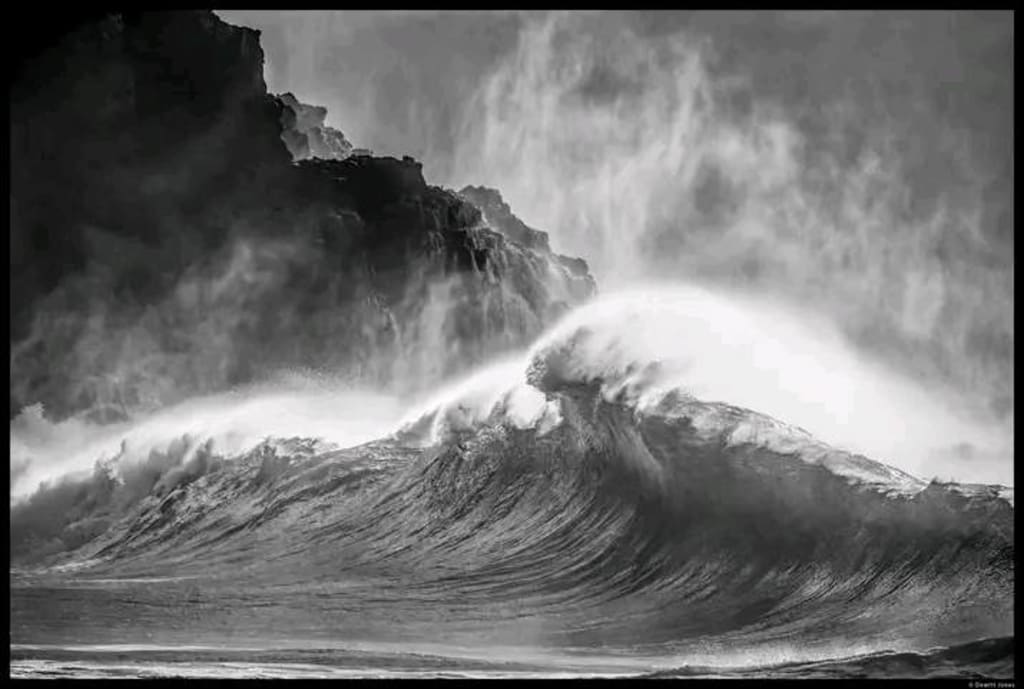
He had always been fascinated by the sea. Ever since he was a little boy, he would spend hours on the shore, collecting shells, building sandcastles, and watching the waves. He loved how the water sparkled in the sun, how it changed colors with the sky, how it moved with a rhythm of its own. He felt a connection with the sea, a sense of belonging and freedom.
But he also feared the sea. He had seen its power and fury, its ability to destroy and devour. He had lost his father to the sea, a fisherman who never returned from a stormy night. He had heard stories of monsters and mysteries that lurked beneath the surface, of ships that vanished without a trace, of curses and legends that haunted the sailors. He respected the sea, but he also dreaded it.
He dreamed of riding the waves, of conquering his fear and becoming one with the sea. He wanted to feel the thrill of speed, the rush of adrenaline, the joy of adventure. He wanted to prove himself, to his mother, to his friends, to his father's memory. He wanted to be a surfer.
He saved up money from his part-time job at the grocery store and bought a secondhand surfboard. He practiced on the calm days, when the water was gentle and forgiving. He learned how to balance, how to paddle, how to catch a wave. He made friends with other surfers, who taught him tips and tricks, who cheered him on and challenged him. He felt his confidence grow, his skills improve, his fear fade.
He was ready for the big wave.
He had seen it in a painting at the museum, a masterpiece by Katsushika Hokusai called "The Great Wave off Kanagawa." It was part of a series of woodblock prints depicting views of Mount Fuji from different locations and seasons. The painting showed a huge wave towering over three boats, with Mount Fuji in the background. The wave looked alive, almost like a dragon, with claws and eyes and teeth. It looked terrifying, but also beautiful.
He wanted to surf that wave.
He knew it was impossible, of course. The painting was not a realistic representation of the sea, but an artistic expression of its essence. The wave was exaggerated, stylized, symbolic. It was not meant to be taken literally, but metaphorically.
But he didn't care. He had a vision, a goal, a fantasy. He wanted to surf that wave.
He waited for the perfect day, when the wind was strong and the tide was high. He woke up before dawn and drove to the beach with his surfboard. He put on his wetsuit and waxed his board. He looked at the horizon and saw the waves rolling in.
They were big, bigger than he had ever seen before. They were roaring, crashing, foaming. They were magnificent.
He felt a surge of excitement and fear. He knew this was his chance.
He ran into the water and paddled out to the lineup. He joined the other surfers who were waiting for their turn. He watched them ride the waves one by one, some succeeding, some failing. He cheered for them and clapped for them. He waited for his turn.
He saw it coming.
It was the biggest wave of them all.
It was huge
It was monstrous
It was beautiful
It was his wave
He paddled towards it with all his strength
He felt it lift him up
He stood up on his board
He looked down
He saw nothing but water
He saw nothing but blue
He saw nothing but white
He saw nothing but green
He saw nothing but black
He saw nothing but red
He saw nothing but pain
He saw nothing but fear
He saw nothing but death
He saw nothing at all
About the Creator
karl jay saez
always love your family no matter what happen
Keep reading
More stories from writers in Art and other communities.
'Till Death We Do Art
There would be nothing divine in this world without art. Nature may surpass the divine to all intents and purposes, but like everything it absorbs and is absorbed by, it remains here, stuck on the surface of this world, ever-present, physically bound to the universe.
By Avocado Nunzella BSc (Psych) -- M.A.P 21 days ago in Art
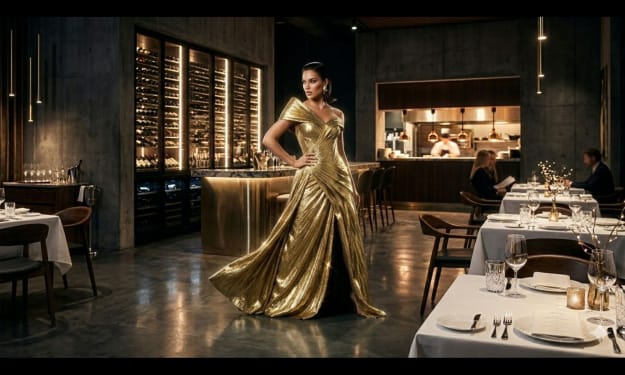
The Dress That Broke the Internet Was Gold and Nobody Could Agree on Why
She walked into the room and everything stopped. Not because of her confidence or music that was playing, though there was plenty of that. Everything stopped because of the dress. Floor-length, liquid, blazing gold, it caught every light in the room and threw it straight back.
By CurlsAndCommas5 days ago in Art



Comments
There are no comments for this story
Be the first to respond and start the conversation.