
The Timeless Charm of Francesco Bergamini’s "The Watermelon Seller"
Art story

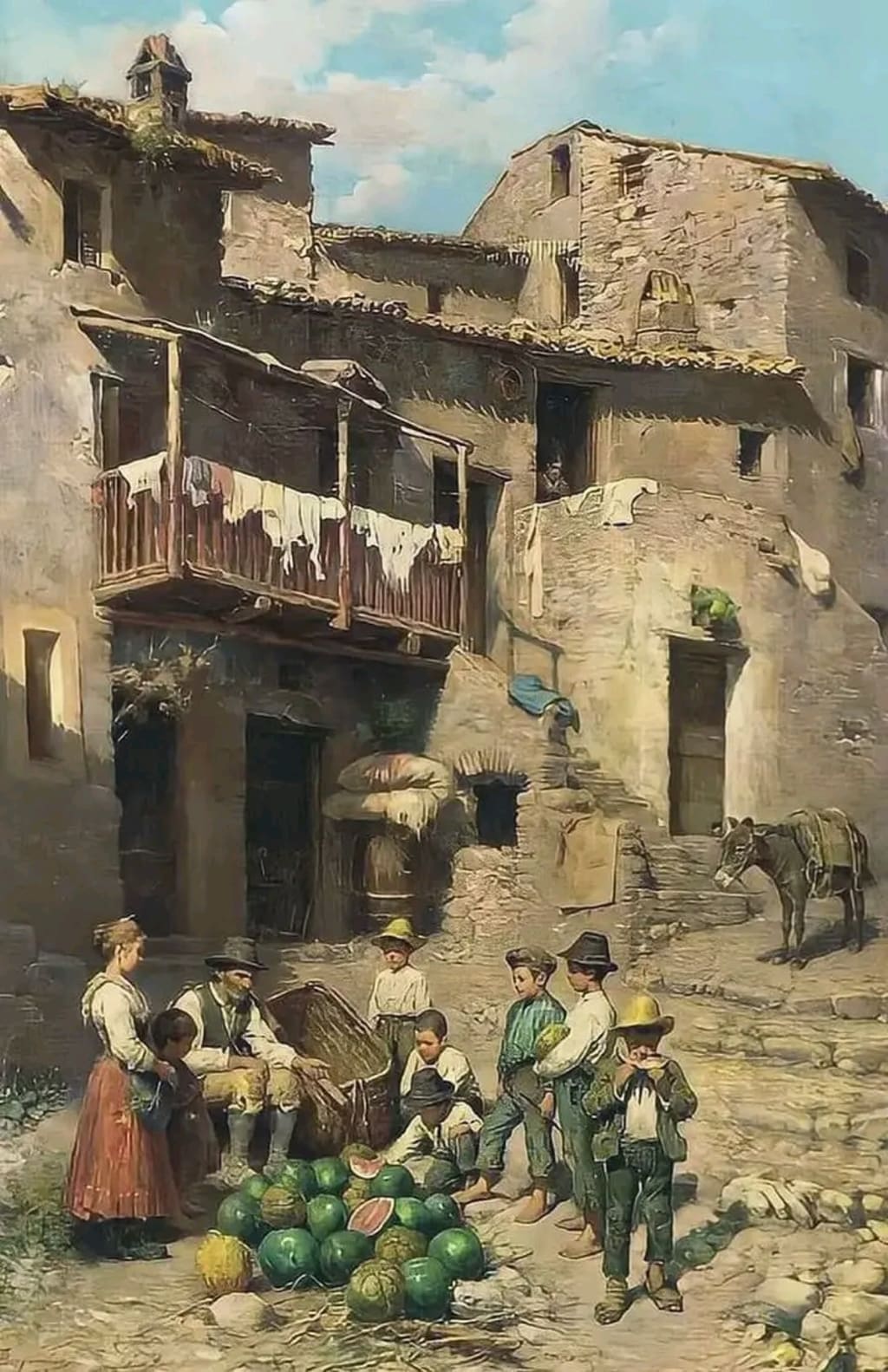
The Timeless Charm of Francesco Bergamini’s "The Watermelon Seller"
Francesco Bergamini (1815–1883), a celebrated Italian painter, was renowned for his ability to capture the essence of everyday life. His works are deeply rooted in the traditions of the 19th century, embodying the culture, emotions, and daily activities of the Italian people. Among his many masterpieces, The Watermelon Seller stands out as a vivid representation of rural commerce and community in Italy during his time. This painting is a testament to Bergamini’s remarkable talent for storytelling through art, where every brushstroke narrates a tale of hard work, simplicity, and human connection.
A Glimpse Into 19th-Century Italy
Bergamini’s The Watermelon Seller is not just a work of art but a historical window into the socio-economic dynamics of 19th-century Italy. The painting portrays a humble watermelon seller at his stall, surrounded by his wares, as he interacts with customers. The scene is likely set in a bustling marketplace or a quiet village square, where farmers and vendors converged to sell their produce. This setting reflects the agrarian lifestyle that was predominant in Italy during this era, a time when markets were vibrant hubs of activity and a vital part of local life.
The painting's details reveal much about the period. The seller’s attire, a simple yet functional outfit, emphasizes practicality over extravagance, reflecting the modest means of the working class. The watermelons themselves, plump and vibrant, symbolize the fruits of labor, a connection to the land, and the seasonal abundance that rural Italians cherished. Bergamini’s attention to these details allows viewers to appreciate the nuances of everyday life in a bygone era.
The Art of Storytelling Through Composition
What makes The Watermelon Seller so captivating is Bergamini’s masterful composition. The painting draws the viewer’s eye to the central figure—the seller—who exudes a sense of pride and resilience. His posture and expression suggest a man who takes satisfaction in his work, despite the simplicity of his trade. Surrounding him are neatly arranged watermelons, their vibrant green rinds contrasting with the earthy tones of the market stall and the background. This interplay of colors not only adds visual appeal but also highlights the freshness and allure of the fruit.
Bergamini’s use of light and shadow further enhances the painting’s realism. The soft sunlight filtering through the scene creates a warm and inviting atmosphere, while subtle shadows add depth and dimension. These elements work together to immerse the viewer in the scene, making it almost possible to feel the warmth of the sun and hear the lively chatter of the marketplace.
Cultural and Symbolic Significance
Beyond its aesthetic value, The Watermelon Seller holds cultural and symbolic significance. In 19th-century Italy, the marketplace was more than just a place for commerce; it was a social gathering point where people exchanged news, stories, and traditions. By choosing to depict a watermelon seller, Bergamini highlights the importance of food as a cultural cornerstone. Watermelons, with their refreshing sweetness, were a symbol of summer and communal enjoyment, often shared among families and friends.
The painting also speaks to themes of perseverance and the dignity of labor. The watermelon seller represents the countless individuals who toiled daily to sustain themselves and their communities. Through this humble figure, Bergamini pays homage to the resilience and spirit of ordinary people, reminding viewers of the beauty inherent in simple, honest work.
Bergamini’s Legacy
Francesco Bergamini’s art continues to resonate with audiences for its timeless appeal and humanistic themes. His ability to capture the essence of everyday life with such authenticity and emotional depth is a testament to his skill as a painter and storyteller. The Watermelon Seller, in particular, stands as a poignant reminder of the interconnectedness of people, nature, and culture.
While Bergamini may not be as widely known as some of his contemporaries, his works hold a special place in the hearts of those who appreciate art that celebrates the simplicity and beauty of ordinary life. His paintings serve as a bridge between past and present, allowing modern viewers to connect with the experiences and emotions of people from over a century ago.
Conclusion
Francesco Bergamini’s The Watermelon Seller is more than just a depiction of a marketplace scene—it is a celebration of life’s simple pleasures and the enduring spirit of humanity. Through his masterful use of color, composition, and storytelling, Bergamini invites viewers to step into the world of 19th-century Italy and experience its charm and vitality firsthand.
As we admire this painting, we are reminded of the value of hard work, the joy of community, and the timeless beauty of art that speaks to the soul. In The Watermelon Seller, Bergamini has immortalized not just a moment in time but a piece of cultural heritage that continues to inspire and delight. It is a work that resonates with anyone who cherishes the richness of everyday life and the power of art to preserve it.
About the Creator
Keep reading
More stories from Deji Akomolafe and writers in Art and other communities.
Leonardo da Vinci’s Study for Madonna with the Yarnwinder: A Masterpiece in Red Chalk and Silverpoint
Leonardo da Vinci’s Study for Madonna with the Yarnwinder, created around 1501, is a remarkable example of his genius as an artist, thinker, and innovator. This exquisite drawing, crafted with red chalk and silverpoint on rose-colored prepared paper, resides in the Gallerie dell’Accademia in Venice. It provides a glimpse into Leonardo’s creative process, showcasing his unparalleled ability to fuse technical precision with emotional depth.
By Deji Akomolafeabout a year ago in Art
'Till Death We Do Art
There would be nothing divine in this world without art. Nature may surpass the divine to all intents and purposes, but like everything it absorbs and is absorbed by, it remains here, stuck on the surface of this world, ever-present, physically bound to the universe.
By Avocado Nunzella BSc (Psych) -- M.A.P 28 days ago in Art
Why persistent hammering does not cause brain damage in woodpeckers
Woodpeckers use incredible speed and force to drive their beaks into solid wood, striking tree trunks thousands of times every day. For many years, experts believed that their skulls buffered each impact like shock absorbers.
By Francis Dami5 days ago in Art
The Forsyth House Fire
Since 1851, Forsyth House has stood on the corner of Union Street and Gordon Street in the heart of Glasgow. Its iconic, or was... because on Sunday 8th of March, 2026, a fire broke out in a small, seemingly un-named shop in the building and tore all that history down. As I write, the rubble is still unsettled and the street is still blocked off. Central Station is quiet on the upper level, and around 30 small businesses have quite literally gone up in smoke.
By S. A. Crawford3 days ago in The Swamp




Comments
There are no comments for this story
Be the first to respond and start the conversation.