
"The Tattoos on Her Body"
Each Mark a Memory, Each Line a Life Lived
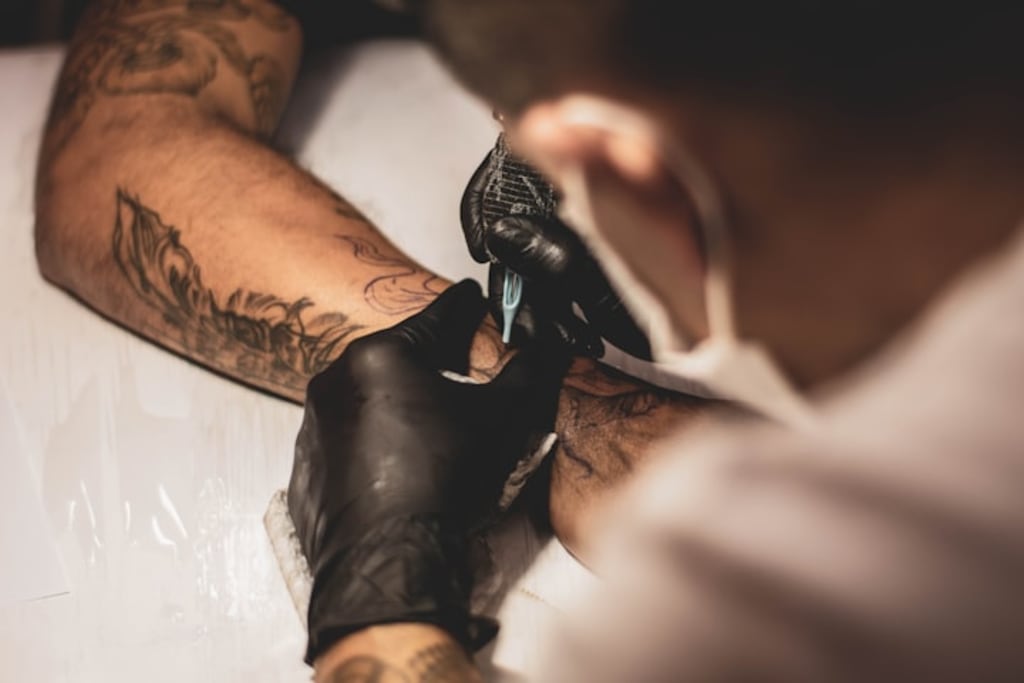
She never planned on having so many tattoos. In fact, the first one had been a reckless decision—a whim born from heartbreak and a bottle of cheap vodka in a downtown parlor that smelled like incense and second chances. But over the years, they had grown—crawling across her skin like vines, whispering secrets of a life that refused to be forgotten.
Her name was Camille, and her body was a map of everything she had survived.
The first tattoo, inked on her left wrist, was a small paper crane. It had delicate lines, as though it might fold into flight at any moment. She’d gotten it the night her mother died. The paper cranes had been part of her mother's hospice room decor, a symbol of hope she never gave up on, even as her body betrayed her breath by breath. Camille had clutched one in her hand as the machines flatlined. She’d walked out of the hospital and into the first parlor she could find. When the needle met her skin, it hurt less than the silence in her chest.
Years later, on her ribs, beneath the curve of her heart, she had inked a compass—its needle frozen, pointing always west. That one was for Elijah, the boy with the burnt-orange guitar and a laugh that sounded like Sunday mornings. He taught her how to play three chords, kissed her under thunderstorms, and then left her a letter instead of a goodbye. He'd gone west chasing dreams of Nashville stages, and she had stayed behind, learning how to live with music that suddenly hurt.
Her back was a canvas of contradictions. A phoenix spanned her shoulders, its wings stretched in mid-flare, feathers breaking into flames. It was bold, colorful, and alive—everything she had needed to become after the accident. The crash had been a blur of headlights, screaming metal, and a long, terrifying silence. She had woken up in a hospital with pins in her leg and a new understanding of how fragile everything really was. The tattoo was a declaration. She had burned, but she had also risen.
Across her thigh, in quiet script, were the words, “And still, she moved.” No one ever saw it unless she let them, but it was her favorite. It wasn’t a reference to Galileo or defiance, but to a summer night when she had danced alone in her apartment, music loud, feet bare, tears dry. That night, she realized she didn’t need anyone to keep going.
Each tattoo came with a memory—some painful, some powerful, some so faint they felt like dreams. There was the cluster of stars on her ankle for the night she and her sister slept on the roof watching meteor showers, whispering wishes they never shared. There was the tiny book on her collarbone, its pages fluttering open, symbolizing the stories she had written but never dared to publish. Her skin bore poems, symbols, scars disguised as art.
People often stared. Sometimes they asked questions. Men in bars with too much liquor in their confidence. Curious strangers in checkout lines. Occasionally, someone would tell her she was "too beautiful to cover herself up like that." She would smile politely, but her mind would always echo the same reply: This isn’t covering up. This is uncovering.
Camille didn’t wear her past like a burden. She wore it like armor. Each line of ink was a lesson, each shade a reminder. She hadn’t always made the best choices—some tattoos were crooked, some faded, some done in places that now made her wince with regret—but they were hers. And in a world that had tried to take so much from her, having something of her own mattered.
She stood in front of the mirror one evening, towel wrapped loosely around her, hair damp from the shower. The steam clung to the glass, but through the fog she could see the familiar shapes, the colors and curves. She traced the paper crane with her fingertip and then smiled.
Tomorrow, she had an appointment for another one.
She didn’t know exactly what it would be yet. Maybe a fern, for the way they curled into themselves before unfurling again. Maybe a line from a letter her grandmother once wrote her: “The world is cruel, but you are kinder.” Or maybe just a simple wave, to mark the day she finally stood still long enough to feel peace.
Either way, it would be hers.
And it would tell another piece of her story.
About the Creator
'Till Death We Do Art
There would be nothing divine in this world without art. Nature may surpass the divine to all intents and purposes, but like everything it absorbs and is absorbed by, it remains here, stuck on the surface of this world, ever-present, physically bound to the universe.
By Avocado Nunzella BSc (Psych) -- M.A.P 16 days ago in Art
Things to do in Casablanca:
Casablanca is one of lovely destinations around Morocco. Casablanca is considered the largest city in Morocco. It's famously known for its historic attractions, cultural sites and natural landscapes. Additionally, the city is well- known for its clean beaches offering visitors a lifetime experience. This blog cover the top things to do in Casablanca:
By Othmane Anaama day ago in Art
Review of 'Man on the Run'
My wife and I saw Man on the Run, a nearly 2-hour documentary on Amazon Prime, about Wings, Paul McCartney's group that flew around the world from shortly after The Beatles broke up in early 1970 to shortly after John Lennon was murdered at the end of 1980, making a Beatles reunion forever impossible.
By Paul Levinson4 days ago in Beat




Comments
There are no comments for this story
Be the first to respond and start the conversation.