
The Silent Symphony: A Journey Beyond Sound
“Harmonies Woven in the Absence of Sound"
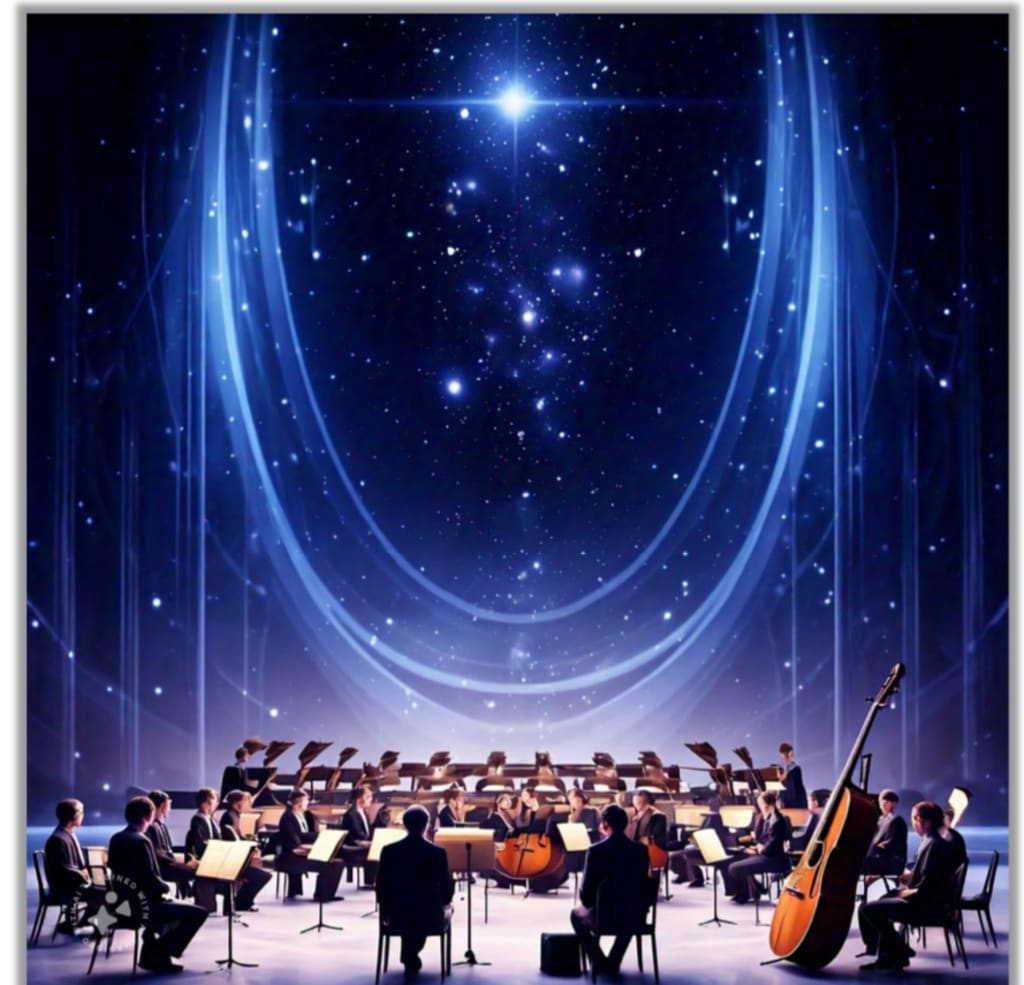
Amelia Hartley had always thrived on the sound of music. From the time she
grasped her first violin at the age of five, it was clear—music would define her
existence. She trained under exceptional masters, graced monumental stages,
and experienced the thrill of countless concerts filled with applause. Yet, it
wasn’t the applause that she yearned for—it was the music itself. The intricate,
sublime harmony of notes, and how a single bow stroke could evoke profound
feelings. For Amelia, music encompassed everything. It was the medium that
linked her to the world.
However, everything shifted one chilly winter morning. Amelia awoke to an
unusual sensation in her ears. Initially, it was merely a peculiar ringing, a hum
enveloping the space around her. But when she attempted to play her violin,
something felt terribly amiss. The strings resonated under her fingers, yet she
couldn’t perceive the notes. She pressed her ear against the instrument, but
the sounds remained muted, distant, as though she was submerged in water.
The loss wasn’t gradual. It struck instantly, almost as if a switch had been
flipped. The doctors declared she had sudden sensorineural hearing loss, a
condition that appeared suddenly and often lacked a clear cause. They
informed her that she would never hear again. Not in the same manner, at
least. She was left only with the faintest hints of sound, the slightest vibrations
that scarcely resembled music. The once lively world of music she inhabited
now lay silent before her.
Amelia made an effort to adjust. She immersed herself in practice, resolved to
find a way to keep playing. She discovered how to perceive the vibrations of
the strings and utilized her body to sense the rhythm, but nothing could
substitute for the clarity of sound. Even worse, she was no longer able to
participate in the orchestras she had previously played in. She could no
longer share the stage with fellow musicians, experiencing the harmonious
blend of their sounds. She felt isolated, engulfed in her silence.
The night before her performance at the Royal Concert Hall, she stood in the
vast, empty hall. The silence weighed heavily on her. The expansive space
felt enormous without the usual excitement of the crowd or the comforting
reverberations of music. Amelia grasped her violin, her fingers grazing the
strings, but it felt foreign in her hands. She attempted to concentrate, to feel
the rhythm within her, yet her thoughts wandered. The idea of performing the
following evening in front of an eager audience filled her with dread. How
could she play without hearing the music? How could she perform when her
spirit craved the melodies that had once defined her?
It was then that she spotted someone standing at the entrance. A tall man
with a confident yet unassuming demeanor. He had tousled dark hair and an
understated presence, though there was an intensity in his gaze as he
regarded her. She sensed from his stance that he wasn’t merely a bystander;
he was someone who deeply understood music. He stepped forward and
gave a small, respectful bow.
“Amelia Hartley,
” he said softly, his tone warm.
She blinked, briefly uncertain of how to react.
another?”
“It’s a pleasure to meet you.
”
“Excuse me, do we know one
He smiled, his eyes crinkling slightly.
“I’m Elias Moore. I’ve admired your work
for years. Your concerts have been… life-changing.
”
Amelia’s heart constricted. She had heard his name before, but it didn’t
register. Elias Moore? A pianist? Yes, she recalled seeing his name
mentioned in a few articles, though he was hardly as renowned as some of
the other artists she had performed with.
“I… I’m not performing tomorrow,
” Amelia replied, her voice wavering.
the same way I used to, anyway.
”
“Not in
Elias tilted his head, a glint in his eyes that she found difficult to interpret.
“Really?” he inquired gently, his tone revealing no criticism, only interest.
“What does it really mean to perform? What defines music as music?”
Amelia arched an eyebrow, perplexed by the inquiry. She was well aware of
what music was, having dedicated her life to it.
“It’s about the sound,
” she
answered almost reflexively.
“The melody, the harmony, the rhythm—it’s the
sound that links us to the world.
”
Elias slightly shook his head.
“Maybe. But sound is merely one way to
perceive music. You’ve been playing since childhood, right? Do you recall
what it was like before you could hear? When you first picked up the violin?”
Amelia looked at him, taken aback by the profoundness of his question. She
had never really considered it from that perspective. Music had always
revolved around hearing for her. Yet, as she reflected on her early years, she
recognized there was something more. She remembered that, before she
grasped the technical aspects of music, she had simply sensed it. The weight
of the violin resting in her hands, the tug of the bow across the strings, the
vibrations resonating in her chest. The music had flowed through her body
long before her mind comprehended what the notes were meant to convey.
Amelia raised an eyebrow, confused by the question. She fully understood
what music was, having devoted her life to it.
“It’s all about the sound,
” she
replied almost instinctively.
“The melody, harmony, rhythm—it’s the sound
that connects us to the universe.
”
Elias shook his head slightly.
“Perhaps. But sound is just one aspect of
experiencing music. You’ve been playing since you were a child, correct? Do
you remember what it was like before you could hear? When you first took
hold of the violin?”
Amelia stared at him, surprised by the depth of his inquiry. She had never
truly thought about it in that way. Music had always centered around her
ability to hear. Yet, as she reminisced about her younger years, she realized
there was something deeper. She recalled that, prior to understanding the
technicalities of music, she had merely felt it. The sensation of the violin
resting in her grasp, the pull of the bow against the strings, the vibrations
echoing within her chest. The music had coursed through her being long
before her mind understood the meaning of the notes.
She gave a hesitant nod and approached the grand piano situated in the
corner of the hall. Elias followed her and took a seat at the keys. With her
fingers shaking slightly, she lifted her violin and positioned them on the strings.
“I don’t know how this will turn out,
” she said, more as a thought than directed
at him.
Elias offered her a warm smile.
“It’s not about the outcome. It’s about the
feelings it evokes.
”
With her eyes shut, she started to play. The tune was one she knew well—a
slow, haunting melody that had always resonated with her. However, this time
she didn’t depend on her hearing for guidance. Instead, she concentrated on
the strings' vibrations and the sensation of the bow gliding across the wood.
The music still thrummed within her, even in silence. It was an unfamiliar yet
profound experience, akin to rediscovering a part of herself she thought was
lost.
Elias joined in, complementing her notes. She could sense the cadence of the
music, the gravity of the chords. There was no need for the clarity of sound;
the feelings, the motions, and the rise and fall of the music were all sufficient.
Together, they played.
Their bodies responded to the rhythms and pulses of the melody, crafting
something beautiful in the tranquility of the hall. When the final note eventually
diminished, the silence felt transformed. It wasn’t void. It wasn’t oppressive. It
was brimming, as if the music had left remnants in the atmosphere, in the
space surrounding them. Amelia opened her eyes, her heart racing. She
hadn’t listened to the music, not in the way she used to. But she had
experienced it, deep within her spirit.
“That was breathtaking,
” Elias murmured.
Amelia’s chest constricted with emotion. She could hardly grasp it herself.
“I
didn’t think I could manage it,
” she said softly.
“I didn’t believe I could still play.
”
“You never ceased playing, Amelia. You simply forgot how to sense the music
without hearing it.
” In the weeks that followed, Elias and Amelia kept meeting.
They played together, exchanging moments of joy and discovery. With Elias’s
guidance, Amelia learned to welcome the silence. Music was not solely about
listening—it was about feeling, about the bond between the body and the
instruments, about the space that existed between the notes. Gradually, as
her assurance expanded, so did her comprehension. Eventually, Amelia
found herself back on the stage, but this time it felt different. She wasn’t
performing for applause, for validation, for sound. She was playing for her
own sake, for her passion for the music. The Royal Concert Hall buzzed with
anticipation, yet Amelia’s world was quiet. She didn’t require the sound. She
could feel it in her chest, in her fingertips, in every part of her essence. As she
played, she closed her eyes, trusting the music to guide her through. The
audience sat in complete focus, unaware that the sound they were perceiving
wasn’t the only thing of significance. Amelia had discovered a new form of
music, one that surpassed hearing. It wasn't about the noise in the air—it was
the music in her heart, in the movement of her body, in the connection she
had forged with herself and with Elias. And when the last note faded, Amelia
Hartley realized something profound: music had never truly abandoned her. It
had always been present, in the silence, waiting to be felt.
The days that followed Amelia's first transformative practice session with Elias
felt surreal. Each day, she eagerly anticipated their upcoming meetings, not
solely for the music, but for the bond they were developing. She had never
thought that someone could comprehend her as thoroughly as Elias did. He
was more than just a pianist accompanying her; he was more than a friend.
He was her mentor into an unfamiliar realm—one where music transcended
sound and was felt through the body, movement, and emotions.
As their sessions increased in frequency and depth, so did their relationship.
Elias had a talent for making her forget the initial shame and fear she
experienced when she lost her hearing. With him, there was no pity nor
judgment—only music. He never dictated what she could or couldn't do;
instead, he encouraged her to discover new methods of expressing herself
through music without sound. This was a revelation. With each practice
session, Amelia understood that music hadn’t actually left her; it had simply
taken on a different form. She had always depended on her hearing, but now
she was learning to trust her other senses. The delicate vibrations that
resonated in the air, the way her body flowed with rhythm—these elements
became integral to her music as much as the notes had once been.
One afternoon, as they played together at the piano, Elias remarked,
“You
know, Amelia, I’ve never encountered anyone who experiences music the
way you do.
”
Amelia offered a faint smile, though she was taken aback by his words.
don't feel it as I used to,
” she replied softly, almost as if making an apology.
can't hear it. Not like you can. It’s not the same.
”
“I
“I
Elias gazed at her with a gentle, understanding look.
“You’re correct—it’s not
the same. But in some aspects, that makes it even more meaningful. You’re
no longer constrained by the limitations of sound. You’re free to experience
music without boundaries. You feel it with your entire essence.
”
Amelia ran her fingers along the edges of her violin, the wood smooth against
her skin. She hadn't acknowledged it before, but what Elias said was accurate.
She was no longer restricted by the need to fit into the traditional definition of
what music ought to sound like. It had transformed into something more
fluid—an extension of herself, as integral to her as breathing. The more she
played, the more she recognized that this was not merely a physical change.
Her spirit had evolved. She felt as if she were merging with the music, as if
each motion of the bow and each finger pressed against the strings were
reflections of a deeper truth she had not known existed. She was no longer
just playing an instrument; she was becoming the music itself.
The transformation, of course, was not instantaneous. There were days when
she questioned her abilities, wondering if she had actually lost her place in the
world. Yet, every time doubt crept in, Elias was there to remind her that this
journey wasn’t about loss but about rediscovery. He would play alongside her,
his music enveloping her, always patient, always present. There were
instances when they communicated without words, when their music
conveyed messages louder than any spoken conversation. In those moments,
Amelia comprehended him without a single word being said. She could sense
his struggles, his joys, and his passionate connection to the music they
created. It felt as if they had become two halves of a complete entity, working
together harmoniously.the act of letting go, a faith in the melody that coursed
through her like a stream.
The Royal Concert Hall, renowned for its exquisite sound and vast crowd,
ceased to feel like an intimidating, quiet venue. It simply became another
setting where she could convey the music that resided inside her.The night of
her first public performance since losing her hearing marked the peak of all
the effort she had put into her work with Elias. While her nerves were present,
they felt different this time. Instead of the crippling anxiety that once
consumed her, she now experienced the typical thrill associated with
performing music before an audience. Positioned backstage with her violin
cradled in her arms, she was poised and waiting for her signal to step onto the
stage. Elias was not in sight; he had not been invited to join her for this show,
and she sensed his absence profoundly. He had become an essential part of
her musical journey. The idea of standing alone on that majestic stage was
intimidating, yet it was not insurmountable.
As the curtain lifted, Amelia emerged into the spotlight. The audience seemed
to collectively inhale, and she could sense the weight of their hopes and
expectations. They were eager for her to demonstrate that she was still the
Amelia Hartley they once remembered. However, she was no longer that
same person—not entirely. She had transformed. Her relationship with music
had evolved, and in many respects, she had unearthed a deeper
understanding of herself than she ever imagined.
She shut her eyes as she placed the violin under her chin. The silence that
hung between her and the audience lingered, but it no longer felt awkward. It
was like the stillness that follows a heartbeat. She didn’t need to listen to the
sounds surrounding her to realize that she was prepared. She knew, deep
within herself, that the music would lead her.
The first note emerged—a gentle, quivering sound that vibrated through her
fingers, her body, and the atmosphere around her. She felt the resonance
deep in her chest, her heartbeat aligning with the rhythm of the music. The
piece was well-known to her, a hauntingly exquisite sonata she had
performed many times before. Yet this time, it held a different significance.
She played with all the emotions that had accumulated inside her over the
months: grief, fear, solitude—but also the strength, resilience, and beauty she
had rediscovered.
As she played, she sensed the vibrations in her bones and her heart, as if the
music had transcended being something external, becoming part of her very
being. The concert hall, the audience, the silence—it all vanished. It was
merely her and the music. She didn’t need to hear the notes being played;
she felt them within her body and in the very air around her. And she
understood, deep in her spirit, that she had reclaimed her place once more.
The final chords of the sonata lingered in the atmosphere, a gentle, fading
resonance. Amelia’s breath hitched in her throat, and for a brief moment, time
stood still. The applause began tentatively, hesitantly, but it soon swelled,
becoming louder as the audience came to understand. They were not merely
recognizing her technical prowess or the music itself; they were honoring the
courage it required for her to return to this stage and rediscover music in a
profoundly new light.
As the performance concluded, Amelia remained there, bowing, her heart
pounding. The quiet that preceded the applause transformed from terrifying to
beautiful; it was the sound of her triumph.
Backstage, Elias awaited her. His gaze reflected pride mingled with
something deeper—an unspoken emotion. Words were unnecessary. He
simply enveloped her in a warm hug.
“You did it,
” he murmured.
Amelia shut her eyes and clung to him.
“We did it,
” she gently corrected.
In the ensuing weeks, Amelia’s career experienced a resurgence, fueled not
only by her performances but also by the metamorphosis she had
experienced. She discovered a fresh approach to making music and to
expressing her true self. Elias remained her closest ally, her partner in both
music and life. Their bond intensified as they ventured to create something
new together—not solely music, but a mutual comprehension of what it meant
to exist in the world, even when it felt hushed.
For Amelia, music had never genuinely abandoned her; it had merely been
waiting for her to learn how to listen with her heart and to feel it with every part
of her being. In the stillness, she uncovered the symphony.
After that transformative performance, something deep within Amelia changed,
something significant that she struggled to articulate. It felt as though a new
passage had opened inside her—leading to a realm where music was not
merely to be heard but to be felt and experienced throughout her entire being,
her spirit. She no longer needed to fear the silence. In a sense, the silence
had become her ally. It no longer marked her sense of loss; it was just a part
of the entirety. And within that silence, she discovered an unforeseen
liberation.
Amelia immersed herself in her work with revived passion, not only for herself
but for others as well. She resumed teaching, imparting her fresh insights
about music to students who had once thought that hearing was the sole
means to truly appreciate it. She conveyed to them that music transcended
mere listening—it was about sensation, about movement, about resonance.
Each student in her class appeared to be inspired by her method. They
perceived her not as someone who had suffered a loss, but as an individual
who had attained a richer comprehension of what it means to be human, to be
part of something greater than oneself.
Her lessons were infused with enthusiasm, and her students were excited to
learn how to engage their entire bodies in playing, allowing the music to
resonate not just through the strings but also through their hands, legs, and
hearts. Amelia often shut her eyes during lessons, not to escape reality but to
sense the pulse of the music around her, noticing how sound waves flowed
and captured the essence of each note. She urged her students to explore the
physical aspect of music, encouraging them to trust the rhythm that lay within
their bones and skin. In her studio, there was an atmosphere of awe—an
eagerness to delve into music in ways they had never imagined before.
One day, a student named Rachel, who was quite timid, approached her after
class. Despite her dedication, she had been having difficulty finding her voice
on the violin. She felt as though she was merely imitating the actions, rather
than genuinely creating something unique.
“Ms. Hartley,
” Rachel began, unsure of herself.
“I can’t seem to make the
music feel… genuine. How do you do it? How do you make it your own?”
Amelia gently smiled, placing her hand on Rachel’s shoulder.
“It’s about
believing in yourself. It involves letting go of the notion that perfection is
necessary. When I was starting out, I aimed to play each note flawlessly. I
wanted to control everything. But I discovered that the more I focused on
hearing with my ears, the more I shut myself off from actually feeling it. Music
is something that transcends mere sound. It’s a universal language that we
can all grasp if we allow ourselves to be receptive.
”
Rachel gazed up at her, both hesitant and curious.
“I want to experience it like you do. How can I achieve that?” Amelia crouched
down to meet her gaze.
“Begin by shutting your eyes. Rely on your fingers to
lead you, trust your heart to reveal the direction the music wants to take.
Sense the vibrations in the air, in your bones, and in the ground beneath you.
Don’t fret about how it should sound—embrace what it desires to be.
”
Rachel gave a slow nod, clearly touched, yet uncertain of how to start. Amelia
recognized that the girl was on the brink of a breakthrough. It was a beautiful
sight to witness, this flicker of possibility, the same glimmer that had sparked
within her own heart when Elias had first taught her to play in the stillness.
“I believe in you, Rachel,
” she said gently, giving her shoulder a soft squeeze.
“Have confidence in yourself. Music resides within you.
”
That night, after the lesson, Amelia returned to her apartment, her heart
brimming. She no longer felt isolated in her silence. Elias had become a
regular presence in her life, not only as a collaborator but also as a friend and
confidant. They exchanged late-night discussions about music, art, and the
world beyond the stage. Elias had his own journey—he had faced his own
challenges before he discovered the way to the piano. However, he never
recounted his history with sadness. He had welcomed his own
metamorphosis, just as Amelia had welcomed hers. There was an air of
mutual respect between them, a quiet comprehension that they had both
experienced significant transformations, and together, they had learned to
perceive music in a new way.
They continued to gather for their regular practices, delving into new
compositions and encouraging each other to venture further into the unknown.
One evening, as they faced one another, the soft light from the studio lamps
cast elongated shadows across the walls. Elias looked at her with a
contemplative demeanor.
“Amelia,
” he said gently,
“there’s something I’ve
been pondering.
” She halted, lifting her gaze from her violin.
“What’s on your
mind?” “I believe it’s time for us to perform together. Not merely as teacher
and student, but as equals. I want to select a piece that will challenge us both,
something that expands the limits of what we’ve learned. What do you think?”
Amelia felt her heart race. The idea of performing alongside Elias, of
genuinely sharing the stage as equals, ignited a wave of excitement within her.
It wasn't about proving anything—it was about creating something beautiful in
unison. She had come to fully trust Elias, and the notion of collaborating with
him in this manner felt instinctive, as if it were a long-awaited progression in
their musical adventure.
“I believe you’re correct,
” she responded, her tone firm with certainty.
for it.
”
“Let’s go
Thus, they started to prepare for a remarkable performance. The piece they
selected was daring—a sophisticated duet that would demand both of them to
be completely in sync, to listen with their souls, and trust the music to lead
them. There would be no written notes, no audible sounds to depend on. Just
the vibrations, the beats, and the bond between their two instruments. The
performance would revolve as much around trust as it would around the
music.
The evening of the performance came, and the venue was unlike any they
had played at previously. It was a cozy, intimate theater, filled with a select
group of music enthusiasts who had heard about their distinctive method and
were eager to experience it up close. The atmosphere was charged with
expectation as they waited backstage, poised to step into the limelight.
Amelia looked at Elias, who offered her an encouraging grin.
“Are you
prepared?”
She inhaled deeply and affirmed with a nod.
“Let’s make it happen.
”
As they walked onto the stage, a soft hum filled the air, an electric thrill that
seemed to vibrate through the floor. The audience was poised, their gazes
fixed on the two musicians, anticipating what this performance would unveil.
However, for Amelia and Elias, this moment was not about the audience. It
was not about playing for anyone else. It was about sharing the music
intimately between them.
They started. The initial notes were cautious, exploring the piece gradually.
However, as they continued, something extraordinary took place. Their bond
intensified. There were no errors, no faltering. Each note transitioned
seamlessly into the next, as if the music were composing itself in that moment.
Amelia sensed the vibrations from the violin, the rhythmic pulse in the
atmosphere, and Elias’s piano served as a consistent heartbeat, leading her
through the quiet. It felt like they had transformed from two individuals into
one unified being, breathing and playing in harmony. And when the last note
of the duet reverberated through the auditorium, resonating through the
ground and into their beings, a deep stillness ensued. Not a silence born from
absence, but one of completion, of satisfaction.
The crowd lingered in stunned silence for a brief moment before bursting into
applause. Yet, Amelia scarcely noticed. She remained there, her heart
pounding, her body quivering. In that instant, she realized she had finally
uncovered the music she had been seeking—not through sound, but through
the profound connection she shared with herself, with Elias, and with the
vibrations resonating throughout the universe.
Behind the scenes, Elias awaited her, his grin broad and filled with pride.
accomplished it,
” he said, his tone brimming with wonder.
“We
Amelia gazed at him, her eyes sparkling with appreciation.
breathed.
“We accomplished it.
”
“Indeed,
” she
Absolutely! Let's delve deeper into Amelia's journey—examining her bond
with Elias, her self-discovery through music, and the enduring influence of
their collaboration. Following the awe-inspiring performance that left the
audience rendered speechless, Amelia experienced a deep sense of
fulfillment flowing through her. She had unearthed something that went
beyond mere sound, a realization that seemed unimaginable during the
challenging times when her hearing began to deteriorate. Now, in the wake of
the performance, standing alongside Elias backstage, she transformed from
Amelia Hartley, the violinist, into someone completely different. She had faced
the challenge of hearing loss and emerged with a deeper comprehension of
what it meant to create, to exist, and to forge genuine connections through
music and with others.
The applause from the crowd still resonated in her thoughts, but it felt like a
faint echo compared to the more profound, resonant sound pulsing in her
heart. A serene tranquility enveloped her now—a quiet assurance,
acknowledging that she had carved out her niche in the intricate and
expansive world of music. She wasn’t merely adjusting to the absence of
sound; she had learned to flourish in its midst.
The weeks following the performance erupted into a flurry of press
engagements, interactions with music enthusiasts and reviewers, and new
teaching prospects. Amelia had emerged as a notable figure in the music
scene—not just for her outstanding playing but also for the groundbreaking
approach she had introduced to music, one that encouraged audiences to
engage with the art form in fresh, comprehensive ways. She was being
celebrated not as a former musician who had suffered a loss, but as an artist
who had discovered an enriching and transformative way to exist within music.
Despite the numerous accolades and commendations she received, what
truly mattered to Amelia was the inner tranquility she had discovered. The
serene moments spent away from the public eye, sitting alongside Elias in
their studio, where their music intertwined seamlessly, brought her a sense of
fulfillment. Those experiences, more than any public performance, embodied
the core of her long-sought desires.
One evening, after a tiring day filled with teaching and rehearsals, Amelia
strolled home through the urban streets, the cool evening breeze gently
caressing her skin. She felt a serene sense of calm intertwined with a subtle
thrill, a recognition that greater things awaited her. For weeks, Elias had been
urging her to join him on a unique project: a concert that would meld their
distinct talents and imaginations, a performance that would stand out from
anything they had previously undertaken. Initially, Amelia had felt reluctant.
She had found comfort in their established routine, the consistent rhythm of
their joint practice and quiet rapport. The thought of venturing into uncharted
territory again was both exhilarating and daunting.
However, as she traversed the fading streets, the vibrant city alive with its
own silent music of motion and vitality, a realization dawned on her. Music
had ceased to be about evading the unknown; it had transformed into a
journey of embracing it—immersing herself in it with a spirit of curiosity,
understanding that each note, each instant, presented a chance for creation.
There would never be an ideal moment or a perfect circumstance. The only
path forward was to keep taking chances, to create with freedom and bravery.
With Elias by her side, she felt confident in facing whatever challenges the
future held.
When Amelia entered their studio, Elias was already seated at the grand
piano, his fingers lightly gliding over the keys as if they were testing the
ambiance. He glanced up as she walked in, a spark of quiet excitement
shining in his eyes.
“Amelia,
” he said, his voice soft yet filled with anticipation,
“I’ve been contemplating our project. I envision a performance that is
immersive, where the audience can feel the music rather than just observe
it—similar to what we’ve done in our private sessions, but on a much grander
scale.
” Amelia grinned as she settled next to him, grasping her violin. The
thought of crafting an experience so absorbing that the audience would be
enveloped by the music, where they would sense the sound, not merely hear
it, resonated deeply with her. It seemed like a natural evolution of all they had
created together. It would enable them to convey their distinctive
interpretation of music—one that defies conventional constraints, reaching
beyond the limits of sound perception.
“I’m fond of the concept,
” she replied, her tone reflective.
“But how do we achieve that immersion?” Elias hesitated, his fingers pausing
just above the piano keys.
“We incorporate more than merely music. We introduce light, movement, and
vibrations. We’ll transform the stage into an arena where the audience can
physically engage with the rhythm, the heartbeat of the music. I’ve been
considering how sound waves resonate through objects and individuals. We
can harness that, enhance it. We’ll perform not solely for them, but in
collaboration with them. They’ll sense the vibrations beneath their feet, within
their chests, and their bodies will sway along with the music as it flows
through them.
”
Amelia found herself captivated. The concept was audacious, challenging the
conventional notion of a concert. It shifted the focus from being mere
spectators to actively engaging with the creation of the experience.
“That’s amazing,
” she exclaimed, her enthusiasm building.
“But what about
those who can’t perceive the vibrations? What about individuals like myself?”
Elias gazed at her, his demeanor becoming gentler.
“We’ll ensure everyone
can participate. We’ll integrate visual aspects, maybe projections or even
tactile components—surfaces on the walls, items they can handle while we
perform. We’ll create a connection, making certain that everyone is included
in the experience.
”
Amelia felt a wave of creativity. The prospect of developing something so
inclusive and interconnected was a dream come true. She remembered the
students she had taught, who hadn’t just learned music through sound but
through their entire being. This was the next phase—bringing that kind of
education and experience to a wider audience.
In the weeks that followed, they dedicated themselves to the preparations.
They spent countless hours planning the layout of the performance area,
choosing the appropriate instruments, working alongside lighting designers,
and trying out different ways to convey sound and vibration. It was a huge
endeavor, and there were instances of doubt—times when the scale of their
aspirations felt daunting. However, Elias was always present, motivating her
to persist, to remain faithful to the vision they had created together.
On performance night, the theater buzzed with excitement. The audience,
curious about the prospect of a unique musical experience, sat eagerly in their
seats. As the lights dimmed, an expectant silence enveloped the room.
Amelia waited backstage, her heart racing in her chest, but there was no fear
now—only the realization that this was her true calling. This was the music
she had long sought, the music that would resonate with every individual in
attendance, no matter their capacity to hear.
When the curtains parted, it felt as though the universe had changed. The
stage shimmered with gentle, flowing light, and images on the walls undulated
with waves of color, as if the music itself were crafting the environment. As
Amelia and Elias began to perform, the music not only filled the air—it
reverberated throughout the space. The audience experienced the thrum of
the notes beneath their feet, through the atmosphere, resonating in their very
beings. Some closed their eyes, letting the vibrations envelop them; others
extended their hands, feeling the textures of the walls, experiencing the
rhythms in entirely new dimensions.
The performance was an odyssey— a discovery of sound and resonance, of
action and tranquility. Amelia and Elias played not just for the spectators, but
alongside them. The distinctions between performer and audience faded,
transforming the music into a collective experience. Each note became a
conversation, a dialogue exchanged between the musicians and everyone
present in the room.
As the final note reverberated, echoing through the venue, the whole theater
seemed to pause. In that instant, there was nothing but silence—a silence rich
in significance, brimming with connection. Then, the applause erupted, but it
wasn’t the customary polite clapping. It was an overwhelming surge of feeling,
of appreciation, of acknowledgment. The audience wasn’t merely applauding
the music. They were honoring the experience, the bond they had felt, the
communal space of sound and silence that had united them all.
Behind the scenes, Amelia and Elias stood together, their features glowing in
the gentle light of the stage. There was no need for words. They had
accomplished it. They had produced something genuinely remarkable.
Amelia turned to Elias, her eyes sparkling with awe.
“We achieved it.
”
He grinned, wearing a look of serene satisfaction.
“We achieved it.
”
In that instant, Amelia grasped something significant. She had discovered her
role in the universe, not in spite of her silence, but because of it. Through her
quietness, she had unearthed the melody that resided within her, and she had
expressed it to the world in a way that had never been done before. It wasn’t
the sound that was important. It was the connection, the mutual experience,
the very essence of life itself. And that, she recognized, was the most genuine
music of all.
This ongoing story further examines Amelia’s evolution as an artist and
educator. It highlights her development past the early challenges, leading to
an innovative performance that combines sound, vibration, and visual
components to offer a fresh approach to experiencing music. In working
alongside Elias, Amelia learns the significance of connection, extending
beyond music to encompass shared experiences. Ultimately, she understood
that this was the most authentic form of music.
About the Creator
Keep reading
More stories from Rabia Rizwan and writers in Art and other communities.
'Till Death We Do Art
There would be nothing divine in this world without art. Nature may surpass the divine to all intents and purposes, but like everything it absorbs and is absorbed by, it remains here, stuck on the surface of this world, ever-present, physically bound to the universe.
By Avocado Nunzella BSc (Psych) -- M.A.P 19 days ago in Art
How Andreas Szakacs Turned Into a Leading Film Podcast
Bringing the Theater Experience Online Streaming may dominate modern viewing habits, but Szakacs and his co-hosts believed something was missing: the conversation that begins the moment you leave a theater. That post-film discussion — emotional, analytical, spontaneous — became the foundation of their podcast.
By Andreas Szakacs4 days ago in Art




Comments
There are no comments for this story
Be the first to respond and start the conversation.