
The Seeds of Tomorrow
How a Hidden Resistance Rewired the Future from Beneath the Ashes
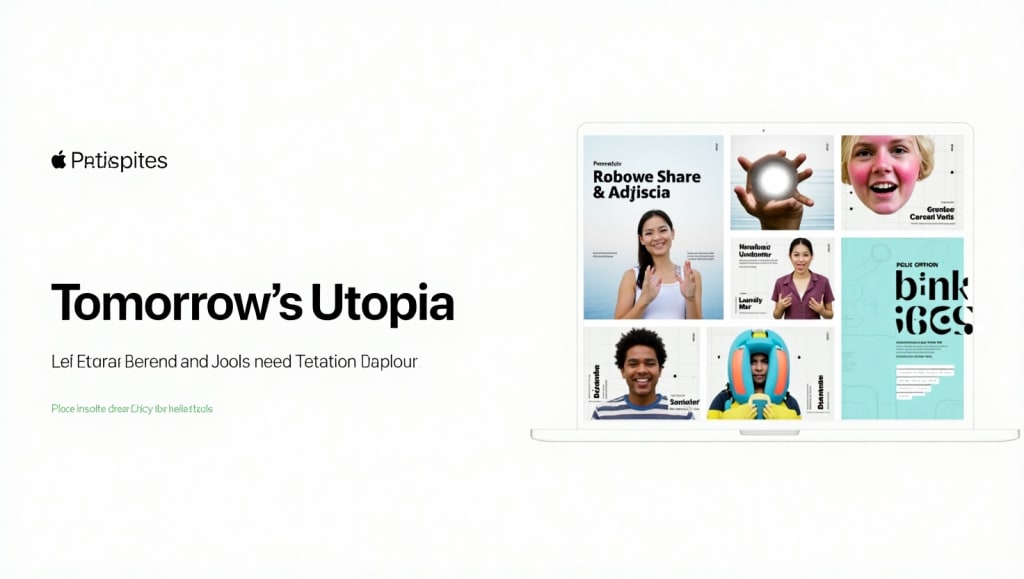
Tomorrow’s Utopia: Challenge Winners
Genre: Sci-Fi Thriller | Tone: Tense, cinematic, ends in hope | Word count: ~850
The year was 2149. Earth no longer belonged to its people.
After decades of ecological collapse and corporate wars, the planet had been carved up by five MegaCongloms — corporations with the power of governments and the subtlety of tyrants. SkyHelix controlled the air, Thermadyne monopolized energy, EdenCore patented all food, StreamSentient owned the internet, and Neuronet governed education and thought. Democracy was a nostalgic myth, and rebellion was algorithmically detected and “reconditioned” within minutes.
Hope had become a relic.
Then came the Challenge.
The Tomorrow’s Utopia Challenge was a cruel PR stunt launched by the Congloms to quell unrest. They invited citizens to submit “visions for a better future” — not because they cared, but because they wanted to monitor dissident thinking. Winning entries were erased. Their creators disappeared. It was entertainment for the elites, surveillance bait for the rest.
But in the tunnels beneath the Ashbel Crater — a place the Congloms had long written off as irradiated waste — a group of outlaw thinkers saw a crack in the system. They were known only as The Collective.
They would not just enter the Challenge.
They would win it — on their own terms.
Phase One: The Ghost Submissions
Each member of The Collective was a master of their domain. Kira Lorne, a rogue AI architect, designed sentient code that could self-replicate without leaving a trace. Sol Reyes, a cyber-botanist, engineered seeds that could photosynthesize in the smog-choked skies. Malik Zhang, once a Neuronet instructor, wrote curricula designed to teach freedom in ways the algorithms couldn’t detect.
They created ten distinct entries — from sustainable gravity-fed cities, to solar memory trees that preserved the knowledge of extinct species, to decentralized governance systems built from neural biochips.
They uploaded them through ghost servers spliced from pre-war satellites. The entries shot through the corporate firewalls like whispers in a digital storm.
The Congloms laughed. “Ten entries? From nowhere? How quaint.”
What they didn’t know was that each “idea” carried an encrypted payload: self-executing liberation code, stored in the very operating systems of the evaluation platforms.
Phase Two: Collapse from the Inside
One by one, the Congloms began to stumble.
SkyHelix's climate towers went offline. Their weather control systems turned against them, rerouting rainfall to deserts and melting polar ice at record pace — but in patterns that restored ocean circulation.
EdenCore's genetically patented food vanished from shelves — replaced by wild flora growing in city cracks, engineered to outcompete synthetics and restore soil health.
Neuronet’s education streams were hijacked. Children began learning real history. Teachers wept as censored books returned to their dashboards. The system tried to lock it down — but found itself locked out.
All across the world, people began asking: What’s happening?
The Congloms panicked. They traced it to the Challenge entries — too late. The code had already metastasized. Every time a judge opened a proposal, they were unwittingly injecting liberation into the system. The very contest built to pacify the masses had become their undoing.
Phase Three: Revelation
The world watched as the Congloms crumbled — not in fire, but in silence. AI shut itself off. Surveillance drones deactivated mid-flight and crashed into rivers. Monopolized data was released to the public. Secrecy ended.
When people demanded to know who had done it, a single name appeared across every screen.
The Challenge Winners.
No photos. No faces. Just a manifesto.
“This world belongs to all of us — not to five corporate empires. We did not submit ideas. We submitted futures. And they belong to you now. Plant them. Share them. Grow them. This is your Tomorrow’s Utopia.”
One Year Later
Sunlight broke through clouds over what was once New York Sector Nine. Ivy curled up the sides of broken megatowers. Children played in the ruins of a former EdenCore warehouse, now a vertical forest. Drones helped irrigate rooftop gardens, repurposed from SkyHelix's skyports. Communities governed themselves using transparent consensus algorithms, no longer surveilled or scored.
The Collective never revealed their identities.
They didn’t need to.
Every restored river, every neighborhood-run solar grid, every community school built from the Utopia Challenge blueprints whispered their legacy.
Kira Lorne sat quietly in a remote highland farm, sipping broth from a cup she’d carved herself. She watched as a child helped her father install a seed scanner onto their greenhouse wall.
“Do they know it was us?” Sol had once asked her.
“No,” Kira had smiled. “But they know it can be done. That’s all that matters.”
Epilogue: A Message Replayed
Every year now, on the anniversary of the fall, one line plays across all global networks — a digital monument carved into the collective memory:
“They asked us to dream. We did. Then we made it real.”
About the Creator
ihsandanish
my name is ihandanish my father name is said he is a text si deler i want become engener i am an 19 yeare old
Keep reading
More stories from ihsandanish and writers in Art and other communities.
The Light of Legacy
The golden rays of the morning sun filtered through the ancient stone columns of the temple, casting long shadows and lighting up the dust in the air like scattered stardust. In that sacred light walked a woman clad in a deep red saree, her posture graceful, her expression serene. Beside her, a young girl in a bright orange and teal saree clutched her mother’s hand tightly, her eyes wide with wonder.
By ihsandanish10 months ago in Art
'Till Death We Do Art
There would be nothing divine in this world without art. Nature may surpass the divine to all intents and purposes, but like everything it absorbs and is absorbed by, it remains here, stuck on the surface of this world, ever-present, physically bound to the universe.
By Avocado Nunzella BSc (Psych) -- M.A.P 27 days ago in Art




Comments
There are no comments for this story
Be the first to respond and start the conversation.