
The Secret Life of Colors
Stories behind pigments (e.g., why ultramarine was once more expensive than gold).

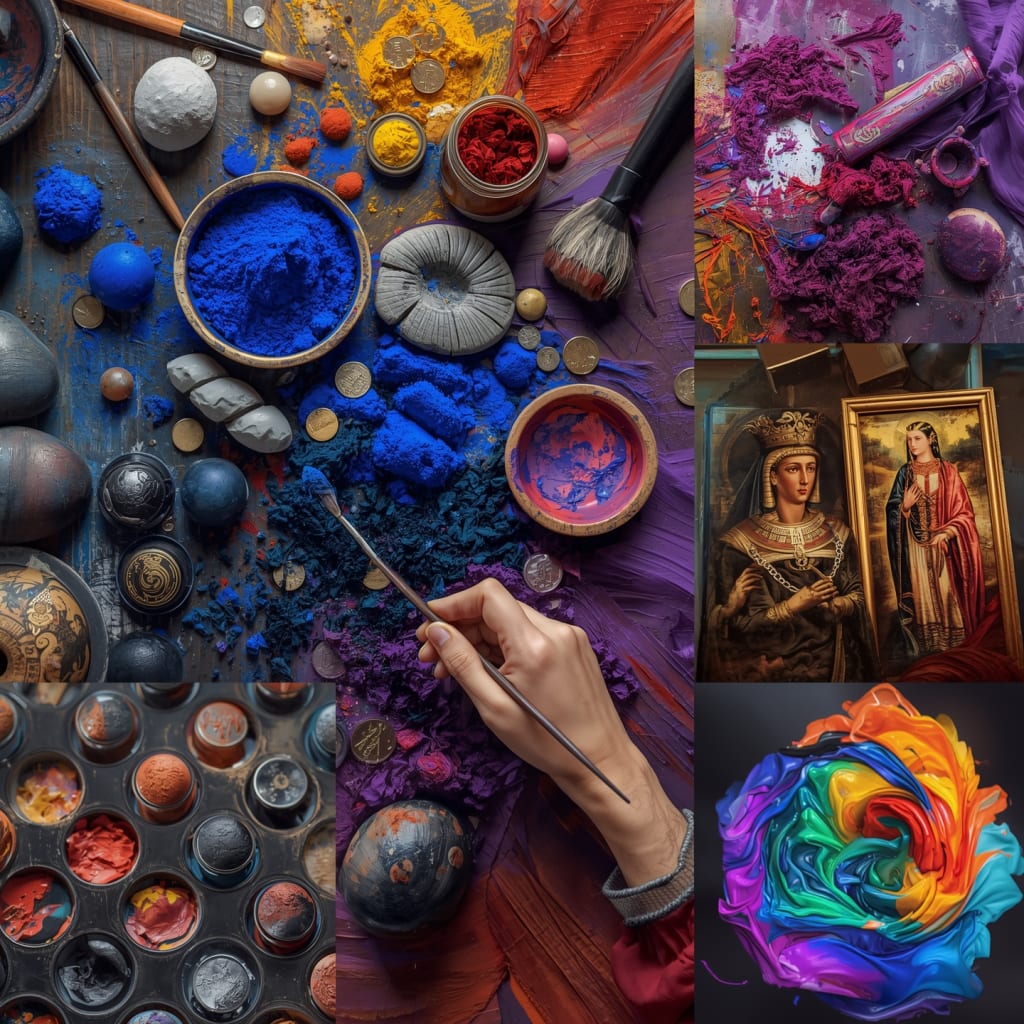
The Secret Life of Colors
By Hasnain Shah
Colors are everywhere. They live in our clothes, our walls, our books, and our food. They brighten our mornings and soften our nights, often so seamlessly woven into our lives that we hardly stop to ask where they come from. Yet behind every shade is a story—sometimes of wealth, sometimes of war, sometimes of the stubborn creativity of human beings who refused to see the world in black and white.
Let’s open that hidden palette and take a look at the secret life of colors.
Ultramarine: Blue Worth More Than Gold
Imagine a painter in Renaissance Italy—brush in hand, canvas stretched, and a patron waiting impatiently behind him. If that painter wanted to paint the Virgin Mary’s robe, he faced a serious problem: blue was the costliest color on earth.
The most radiant blue, ultramarine, came from a semi-precious stone called lapis lazuli. The stone was mined in only one place in the world: the rugged mountains of Afghanistan. From there, it traveled across deserts and seas into Europe, where it was ground into a powder and painstakingly purified into a pigment so bright it looked almost holy.
Patrons paid a fortune for it, sometimes more than they paid for gold. Artists had to use it sparingly, reserving it for sacred subjects. A single wrong brushstroke could cost them their reputation—or their contract. Ultramarine’s story is not just about beauty, but about how color itself became a form of devotion and status.
Tyrian Purple: The Royal Shade of Snails
Long before ultramarine ruled the palette, another color wore the crown—purple. Specifically, Tyrian purple. This dye wasn’t made from flowers or minerals, but from the glands of sea snails found off the coast of Phoenicia. Thousands of snails had to be crushed to make a single ounce of the dye. The process stank so badly that ancient writers complained you could smell a purple workshop from miles away.
Because it was so expensive and labor-intensive, Tyrian purple became the color of emperors, kings, and priests. To wear it without permission was often a crime. It was more than just a dye—it was a political statement stitched into fabric. When we talk about someone being “born to the purple,” we’re echoing this ancient monopoly of color and power.
Vermilion: The Dangerous Beauty of Red
Red has always been a color of passion, danger, and vitality. In ancient China, the most brilliant red was vermilion, made from the mineral cinnabar. It was dazzling on lacquerware and imperial scrolls, but there was a catch: cinnabar is mercury sulfide.
Artists who worked with vermilion often paid the price with their health. Prolonged exposure could lead to mercury poisoning, tremors, and madness. And yet, the color was so important—so symbolically powerful—that civilizations kept producing it despite the risks. In this sense, vermilion is the perfect reminder that beauty sometimes demands a hidden cost.
Mummy Brown: Art from the Dead
Few stories of color are as macabre as Mummy Brown. In the 16th and 17th centuries, European artists discovered a brown pigment that came from a very strange source: the ground-up remains of Egyptian mummies. Traders, desperate to profit off the craze for anything Egyptian, sold powdered mummy flesh mixed with bitumen as a paint pigment.
Artists loved its rich, earthy tone, but eventually the truth became too disturbing. By the 19th century, when artists realized they were literally painting with the dead, demand for Mummy Brown declined. Today, the color exists only as a ghost in old paintings and art history books.
The Modern Revolution: Synthetic Colors
Thankfully, we don’t need to grind stones, crush snails, or disturb ancient tombs to fill our palettes anymore. In the 19th century, chemistry changed everything. Synthetic dyes and pigments made color accessible to everyone, not just the rich or the royal.
The first synthetic dye, mauveine, was discovered by accident in 1856 by an 18-year-old chemistry student named William Henry Perkin. He was trying to create a malaria treatment, but instead he stumbled onto a vivid purple that could be produced cheaply in labs. The world of fashion and art exploded into new possibilities, and for the first time, ordinary people could wear the colors once reserved for emperors.
Why Colors Still Matter
Today, we take pigments for granted. We can print any shade with the click of a button or buy a hundred tubes of paint for a modest price at a craft store. But the hidden history of colors reminds us of a deeper truth: color has always been more than just decoration. It’s been a symbol of power, faith, sacrifice, and discovery.
Next time you see a painting or slip on your favorite shirt, pause for a moment. Think about the centuries when blue was a treasure, purple was law, red was deadly, and brown was born from a grave. Every color carries a story, and those stories—bright, dark, and everything in between—paint the human experience.
About the Creator
Hasnain Shah
"I write about the little things that shape our big moments—stories that inspire, spark curiosity, and sometimes just make you smile. If you’re here, you probably love words as much as I do—so welcome, and let’s explore together."
Keep reading
More stories from Hasnain Shah and writers in Art and other communities.
The Secret Life of Colors
The Secret Life of Colors Colors are everywhere. They live in our clothes, our walls, our books, and our food. They brighten our mornings and soften our nights, often so seamlessly woven into our lives that we hardly stop to ask where they come from. Yet behind every shade is a story—sometimes of wealth, sometimes of war, sometimes of the stubborn creativity of human beings who refused to see the world in black and white.
By Hasnain Shah6 months ago in Art
'Till Death We Do Art
There would be nothing divine in this world without art. Nature may surpass the divine to all intents and purposes, but like everything it absorbs and is absorbed by, it remains here, stuck on the surface of this world, ever-present, physically bound to the universe.
By Avocado Nunzella BSc (Psych) -- M.A.P 25 days ago in Art
Where Courage Meets the Sunrise
In a small village called Alara, nestled between rolling hills and vast fields, the sun rose each day bringing light to the world. But today was different. Today was the day of the Great Awakening, when the villagers learned of new depths of courage within themselves.
By Hamad Afridi about 6 hours ago in Art




Comments
There are no comments for this story
Be the first to respond and start the conversation.