
The Rise of the AI Artist
Creativity in the Digital World
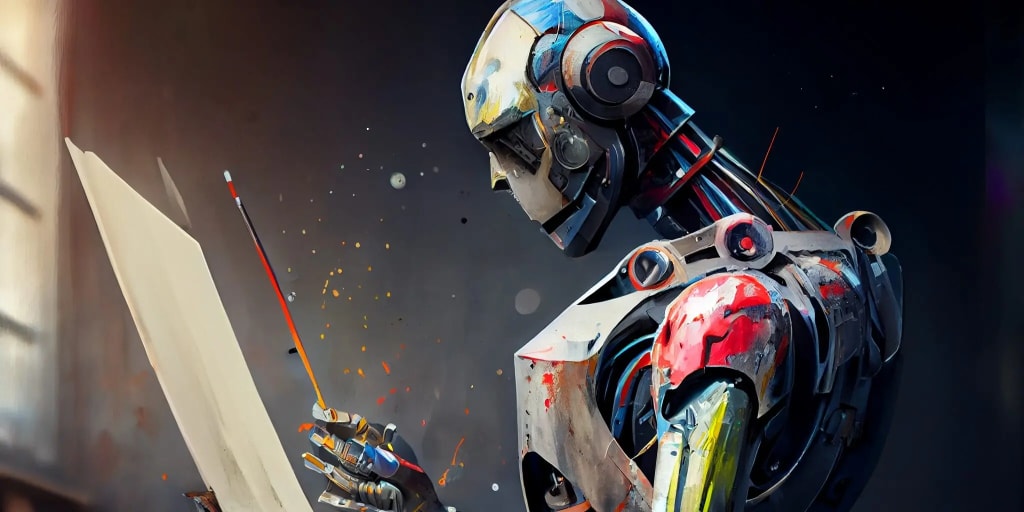
At a time when art and technology go hand in hand, a new form of creativity is emerging: AI art. Artificial intelligence has worked itself up from a tool for scientific research to a powerful force within the art community. Using complex algorithms and deep learning techniques, AI systems are now creating masterpieces that transcend the boundaries of traditional art.
The rise of the AI artist has sparked exciting discussions about the nature of creativity and what it means to make art. Proponents of AI art argue that it can enhance human imagination by providing new perspectives and approaches. By processing large amounts of data, AI systems can identify patterns and styles that people might overlook, creating unique works of art.
One of the most striking aspects of AI art is the collaboration between humans and machines. Artists work with the AI systems as "creative partners", using the AI as a tool to expand and amplify their vision. The AI acts like a paintbrush, brush, or chisel, but the final concept and direction of the artwork still comes from the human mind. This hybrid approach combines human emotions and ideas with the computing power and analysis of AI, resulting in a stunning fusion of art and technology.
Yet there are also skeptics who see the rise of AI art as a threat to the authentic artist and the value of handmade art. They wonder whether art created by machines can really be considered art, or whether it is rather a cold imitation of human creativity. This discussion raises important questions about the role of technology in the art world and how we value art.
The phenomenon of AI art began as an experimental venture. In the early years of artificial intelligence, the resulting artworks were often rudimentary and limited in their aesthetic value. But as AI algorithms grew more complex and got better at understanding human expression, they started producing more impressive works of art.
One of the standout examples of AI art is the work of a project called "The Next Rembrandt". This project, supported by a team of data collectors, engineers and art experts, analyzed the works of the famous Dutch master Rembrandt to understand his style and techniques. The AI algorithm then used this knowledge to create a new painting in the style of Rembrandt. The result was astonishing, a painstaking reconstruction that would almost mislead the viewer into thinking it was an original work by Rembrandt.
Another fascinating example is the AI artist "Aiva" (Artificial Intelligence Virtual Artist). Aiva is an advanced algorithm that creates compositional music. The algorithm is trained on a huge database of classical music pieces and is able to compose unique pieces of music that reflect the characteristics of famous composers such as Bach, Mozart and Beethoven. Aiva's music has already been used in movies, video games and other creative projects, and has even given concerts where the work has been performed side-by-side with human musicians.
In addition to generating new works of art, AI has also contributed to the restoration and preservation of existing works of art. By applying advanced image processing techniques, AI systems can restore damaged artworks and reconstruct lost details. This contributes to the preservation of our cultural heritage and ensures that future generations can continue to enjoy masterpieces that would otherwise have been lost.
Although AI art is currently still in an emerging stage, it has already had a significant impact on the art market. Auction houses and galleries are incorporating AI-generated artworks into their collections and auctioning them off for significant sums. This has led to new copyright and originality challenges, as some AI systems have been trained on existing artworks and styles.
Looking to the future, the evolution of AI art is likely to continue. New algorithms and technologies will enable AI systems to create even more complex and sophisticated works of art. The discussion about the definition of art and creativity will intensify as AI plays a larger role in the art world.
However, ethical issues surrounding AI art also remain. If AI systems can create art that is barely distinguishable from human creations, what does that mean for the value and uniqueness of handmade art? Some critics worry that AI art could marginalize human artists and compromise the authenticity of art.
In addition, there is also concern about the control and creative direction of AI art. If AI systems generate works of art based on previous data, there is a risk that they will get stuck in repetition and lack originality. It is important to follow.
About the Creator
Keep reading
More stories from Senne Wauters and writers in Art and other communities.
The Impact of Sustainable Tourism on World Heritage Sites
Sustainable tourism has become an increasingly important topic in the travel industry in recent years. Travelers are increasingly aware of the environmental, cultural and social impact of their travels, especially when it comes to visiting unique World Heritage sites. These beautiful places, designated by UNESCO as of Outstanding Cultural or Natural Interest, attract millions of visitors from all over the world every year. While tourism can provide a significant economic boost to these regions, it also poses conservation and sustainability challenges.
By Senne Wauters3 years ago in Earth
'Till Death We Do Art
There would be nothing divine in this world without art. Nature may surpass the divine to all intents and purposes, but like everything it absorbs and is absorbed by, it remains here, stuck on the surface of this world, ever-present, physically bound to the universe.
By Avocado Nunzella BSc (Psych) -- M.A.P 27 days ago in Art
The Rising Demand for Custom Physical Therapy Apps
Healthcare delivery is evolving faster than ever, and rehabilitation is no exception. Physical therapy — once limited to in-clinic sessions and paper-based exercise plans — is now being transformed by mobile technology. With increasing smartphone adoption and a growing demand for remote care, healthcare providers are exploring digital solutions to improve patient engagement and treatment outcomes.
By Steve Waugh3 days ago in Art
The Forsyth House Fire
Since 1851, Forsyth House has stood on the corner of Union Street and Gordon Street in the heart of Glasgow. Its iconic, or was... because on Sunday 8th of March, 2026, a fire broke out in a small, seemingly un-named shop in the building and tore all that history down. As I write, the rubble is still unsettled and the street is still blocked off. Central Station is quiet on the upper level, and around 30 small businesses have quite literally gone up in smoke.
By S. A. Crawford3 days ago in The Swamp



Comments