
The Power of Words
How a Few Simple Sentences Can Change a Life

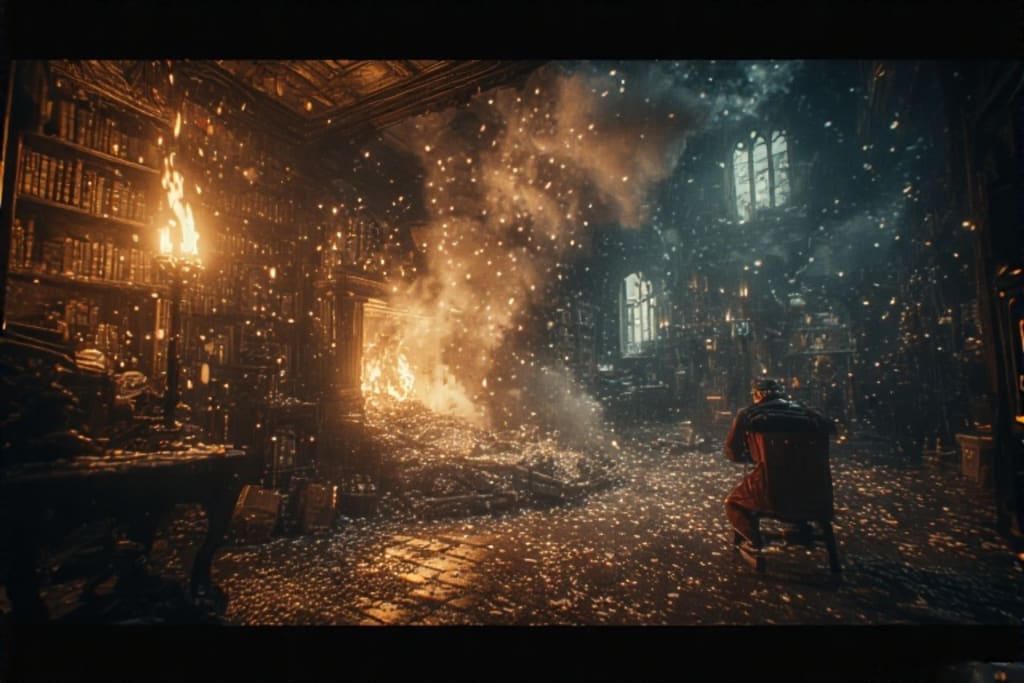
There is a force more powerful than fists, louder than shouts, and longer-lasting than memories: words. Spoken or written, whispered or declared, words carry the weight to heal or to harm, to build or to break. They are tools we all possess, yet few understand the true power they hold. This is a story—and a reflection—on the invisible but undeniable strength of words.
Chapter 1: A Letter in the Dust
In a small village nestled between two rivers, a boy named Hamza lived with his grandmother. His parents had died in a road accident when he was just five, leaving him in the care of the woman who had little more than her love to offer. Their home was modest, their meals simple, and their clothes stitched with care and prayer.
Hamza was a quiet child. He spoke rarely, not because he didn’t have thoughts, but because he believed no one cared to listen. At school, he was often overlooked. Teachers paid attention to the louder boys, the confident girls, the ones who raised their hands high and answered without hesitation. Hamza sat in the back, shrinking further with every day, every ignored answer, and every smirk thrown his way.
But everything changed one Wednesday morning.
The class had just finished a test. Their teacher, Miss Fareeda, asked them to write a short essay about their dreams. Most students scribbled quickly—doctors, engineers, pilots. Hamza hesitated but eventually wrote down his thoughts. He didn’t want to be anything grand. He simply wrote, “I want to make stories that help people feel seen.”
The next day, Miss Fareeda stopped the class and held up a paper.
“I want to read something that moved me,” she said.
And then she read Hamza’s paragraph aloud. For the first time, every pair of eyes turned to him—not in mockery, but in awe. She smiled and said, “Words like these can light the darkest of rooms.”
Those few words changed Hamza’s life. They didn’t make him instantly popular or erase his grief. But they gave him something stronger than fame: belief. Miss Fareeda’s words planted a seed, and from that seed, Hamza began to write. Short stories, poems, thoughts, even letters to his grandmother. Every sentence he wrote made him feel a little less invisible.
Chapter 2: A Voice Behind the Counter
Years later, Hamza had grown into a young man. By day, he worked at a bookstore, arranging titles, recommending reads, and saving pennies. By night, he wrote. But doubt began to creep in again. Every rejection letter from a publisher whispered that maybe he wasn’t good enough.
One rainy evening, as Hamza was closing the shop, a young woman walked in. She looked tired, lost, and emotionally drained.
“I just need something… anything,” she said, brushing wet hair from her face.
He handed her a thin book of poetry he had loved as a child. “This one feels like a friend,” he said softly.
She looked at the cover and asked, “Do you write, too?”
Hamza hesitated, then nodded. “Yes, but it’s nothing special.”
She smiled faintly. “Sometimes the words that don’t shout are the ones that echo longest.”
He didn’t know her name. She didn’t come back. But those words stayed. They reminded him of what Miss Fareeda had once said. And just like that, he began again. This time, he self-published his stories online.
It didn’t take long for his words to find the people who needed them most.
Chapter 3: Ripples and Echoes
A mother who had lost her child messaged him, saying, “Your story gave me the strength to get out of bed.”
A teenage girl who was bullied wrote, “I felt seen for the first time.”
A man recovering from addiction said, “Your words were a mirror and a map.”
Hamza realized something beautiful. He wasn’t famous. He wasn’t rich. But his words traveled to places he’d never go, entered hearts he’d never meet, and gave hope to those he’d never know. That was more than enough.
Final Thoughts
Words matter. Whether spoken with love or thrown in anger, they take root. They bloom or they bruise. In a world full of noise, kindness in words can be a form of revolution. You never know which sentence becomes someone’s anchor in the storm.
A teacher’s praise.
A stranger’s encouragement.
A friend's honest truth.
Even the quietest voice can become a lighthouse.
So speak wisely. Write bravely. And never underestimate the power of words—because a single sentence can save a life, and sometimes, it already has.
Moral:
Words are not just sounds or scribbles on a page—they are forces that shape lives. Use them to heal, to lift, to connect. You never know who’s listening, and what they’re clinging to.
About the Creator
Keep reading
More stories from Najeeb Scholer and writers in Art and other communities.
"The Climb No One Saw"
Rafiq had always been small for his age — slight in build, quiet by nature. Growing up in the shadow of towering cliffs that surrounded his village, he dreamed of climbing one day, touching the clouds that kissed the peaks. But life had other plans.
By Najeeb Scholer7 months ago in Art
'Till Death We Do Art
There would be nothing divine in this world without art. Nature may surpass the divine to all intents and purposes, but like everything it absorbs and is absorbed by, it remains here, stuck on the surface of this world, ever-present, physically bound to the universe.
By Avocado Nunzella BSc (Psych) -- M.A.P 25 days ago in Art
Where Courage Meets the Sunrise
In a small village called Alara, nestled between rolling hills and vast fields, the sun rose each day bringing light to the world. But today was different. Today was the day of the Great Awakening, when the villagers learned of new depths of courage within themselves.
By Hamad Afridi about 3 hours ago in Art




Comments
There are no comments for this story
Be the first to respond and start the conversation.