
The Mystery of Winged Horses: Myth, Symbolism, and Ancient Legends
Were There Ever Horses That Could Fly, or Were They Just the Wings of Human Imagination?

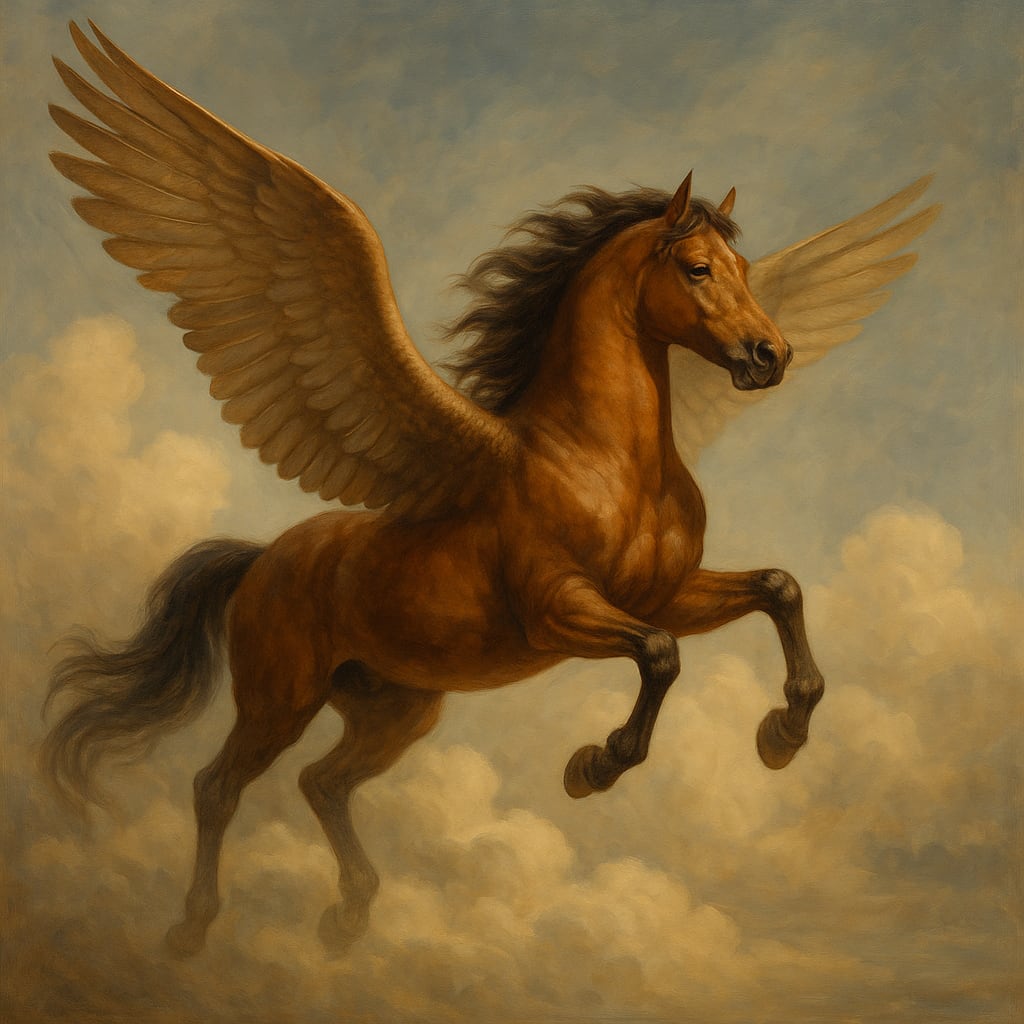
Throughout human history, stories of extraordinary creatures have captured the imagination of people across cultures and continents. Among these legendary beings, winged horses hold a particularly majestic and mysterious place. These creatures — depicted with the body of a horse and wings of a bird — have appeared in ancient texts, carvings, folklore, and even royal emblems. But were winged horses ever real? Or were they simply powerful metaphors for freedom, strength, and divine connection? This article explores the legend of winged horses, examining their cultural origins, symbolic significance, and the enduring fascination they hold today.
---
Winged Horses in Ancient Civilizations
The idea of a horse with wings is not unique to one culture or mythological system. From the sands of Persia to the hills of Greece, from Chinese scrolls to medieval European tales, winged horses appear time and again — each time with slightly different meaning.
Greek Mythology – Pegasus:
Perhaps the most famous of all winged horses is Pegasus, the white horse born from the blood of Medusa. Pegasus was said to soar through the skies, serving heroes like Bellerophon and later becoming a symbol of poetic inspiration. Greek art often depicts Pegasus rising above clouds, representing both physical and intellectual elevation.
Persian and Middle Eastern Legends:
In some Middle Eastern stories, majestic flying steeds appear as companions of great kings or mythical warriors. These horses were not only fast but also divine, capable of carrying their riders across vast distances in moments.
Asian Traditions:
In Chinese folklore, celestial horses are sometimes described with wings, or the ability to leap into the heavens. These horses often symbolize fortune, endurance, and connection to the spiritual world.
---
Symbolic Significance of Winged Horses
Even in cases where winged horses were never considered physically real, they have always carried deep symbolic meaning.
Freedom and Transcendence:
Wings on a horse — an already powerful land animal — suggest a breaking of limits. They symbolize liberation from earthly constraints and the ability to rise above conflict or suffering.
Power and Nobility:
In many ancient societies, horses were associated with nobility, war, and kingship. Adding wings amplified these qualities, implying a connection between the rider and divine forces.
Messenger Between Worlds:
Winged creatures often serve as messengers in mythology. A winged horse, then, becomes a bridge between the human and the celestial, the known and the mysterious.
---
Were They Ever Real? The Possibility and the Myth
From a scientific perspective, the existence of actual horses with wings is highly unlikely. The biological structure of a horse — including its size, weight, and muscular composition — makes flight physically impossible, especially in the way birds or bats do it.
However, that hasn’t stopped people from believing, imagining, and even trying to recreate these majestic beasts. Some theories include:
Artistic and Symbolic Representation:
Ancient artists often used symbolic exaggeration in their depictions. Wings may not have represented actual flight but rather speed, spirit, or divinity.
Hybrid Creatures in Art and Literature:
Cultures throughout history have created composite creatures — like centaurs, griffins, or sphinxes — to represent powerful ideas. Winged horses may belong to this tradition, merging the earthly with the heavenly.
Early Engineering or Imagination?
Some fringe theories even suggest that ancient advanced civilizations might have developed primitive flying devices, and winged horses could be mythical reinterpretations of such inventions. However, there's no historical evidence to support this.
---
Cultural Appearances Through the Ages
Winged horses have continued to appear in literature, religious symbolism, and even modern popular culture:
Literature and Poetry:
Pegasus has long been a symbol of poetry and the muses. Writers and artists invoke the image to represent inspiration that "takes flight."
Royal Symbols and Emblems:
In some cultures, winged horses have been adopted into coats of arms or military symbols to represent courage and strength.
Modern Fantasy and Media:
From animated films to fantasy novels and video games, winged horses remain a favorite element of magical storytelling. They often serve as loyal companions to heroes or gateways to other worlds.
---
Psychological and Spiritual Interpretations
Some psychologists and mythologists argue that winged horses represent the human desire to overcome limitations, not just physically but emotionally and spiritually.
Jungian Perspective:
Carl Jung, the famed psychologist, would likely interpret winged horses as “archetypes” — deep, shared symbols that live within the collective unconscious of humanity. These creatures symbolize our yearning for growth and higher purpose.
Dream Symbolism:
In dreams, horses are often associated with personal drive and freedom. Add wings, and the dream may reflect ambition, spiritual awakening, or the pursuit of something beyond one’s current reach.
---
Legacy and Modern Fascination
Even in an age of science and reason, winged horses continue to captivate us. They are painted on murals, sculpted in stone, and animated in films. Children dream of riding them. Writers use them as metaphors. Nations use them as symbols.
Why do they endure?
Perhaps because they represent the best of both worlds: the grounded power of the horse and the limitless freedom of the sky. In them, we see not only ancient dreams but also our own — dreams of rising above fear, moving beyond limits, and touching something divine, if only in imagination.
---
Conclusion
The legend of winged horses may never be proven by science or history, but its power lies elsewhere — in its symbolism, its universality, and its ability to inspire across generations. Whether real or imagined, these creatures gallop through the collective mind of humanity, reminding us to dream bigger, reach higher, and always believe in the possibility of flight.
About the Creator
The Best Philosophy in the World Is the One You Can Live
Ask ten philosophers what the best philosophy in the world is, and you will receive at least ten different answers—possibly delivered with footnotes, counterarguments, and mild contempt for the other nine. This disagreement is not a flaw of philosophy; it is its essence. Philosophy was never meant to be a universal prescription handed down like a rulebook. It exists to help human beings live better lives. By that standard, the best philosophy in the world is not the most elegant or complex—it is the one that can be lived.
By Fred Bradford4 days ago in Art
My New Book is Finally Here
My poetry collection Beautiful and Brutal Things is done. It's actually done and finally published over 270 pages. Over a year of my life went into this book. More than a year, really. Long days at my computer, sometimes seven days a week because I couldn't stop even when I probably should have. Then two months of editing that felt harder than the writing itself. But it's finished, and I'm still standing, and the book is real.
By Tim Carmichael2 days ago in BookClub




Comments
There are no comments for this story
Be the first to respond and start the conversation.