
The Mysterious Godolphin Cabinet: A Journey Through Time and Art
Ancient Artifact

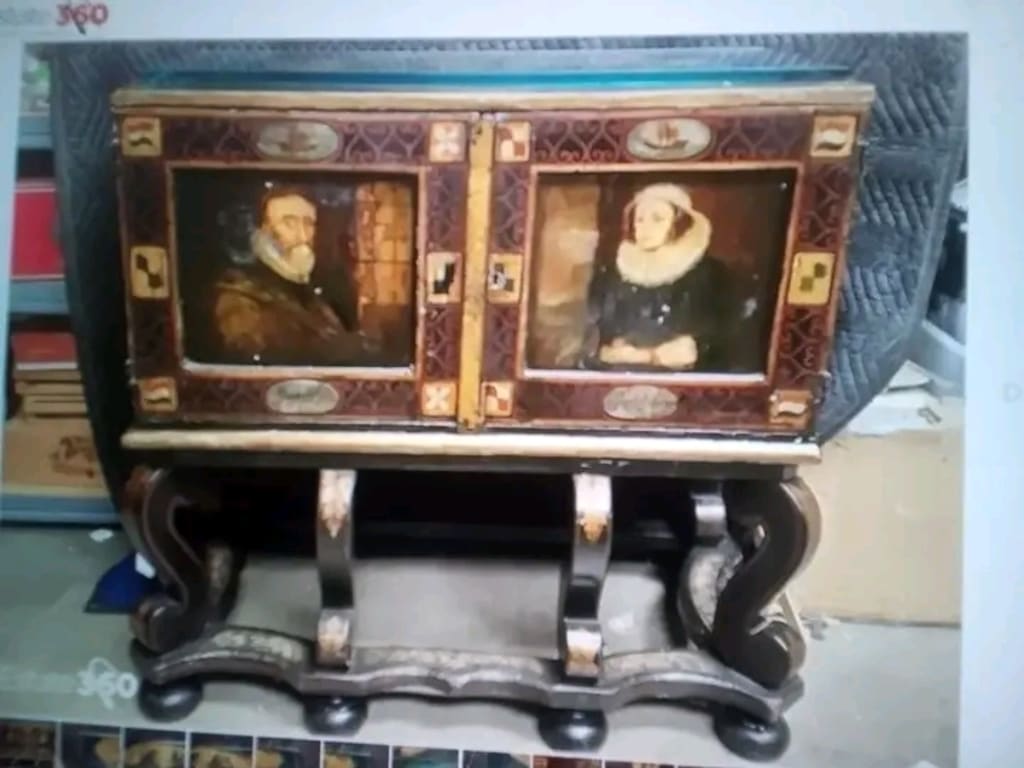
When I first purchased this cabinet, I was intrigued by its craftsmanship and its apparent age. After a careful analysis, I deduced that it likely dated back to between 1581 and 1610. However, after sharing my thoughts with members of art groups on Facebook and learning more about its history, I’ve come to believe it was actually made around 1650. This piece of furniture, a stunning blend of history, art, and craftsmanship, has a rich and fascinating backstory, particularly tied to the Godolphin family, a prominent aristocratic lineage from Cornwall, England.
---
A Closer Look at the Cabinet’s Design
At first glance, this cabinet is a work of art. The intricate details and the quality of the materials used immediately suggest that it was not an ordinary piece of furniture. The most striking feature is the cabinet's decoration, which is covered in Dutch flags. This choice of design is unusual and captivating, especially when paired with the other features of the piece. On the top of the cabinet, there is a vivid painting depicting a naval battle between English and Dutch warships. The caption reads "Cape Passaro," a reference to the Battle of Cape Passaro, fought off the coast of Sicily in 1718. This naval engagement between the British and Dutch forces was a significant event during the War of the Quadruple Alliance, marking a time when naval warfare and power struggles defined European geopolitics.
The inclusion of Dutch flags and the naval battle scene on this cabinet hints at the political and military climate of the time, particularly the rivalry between England and the Netherlands in the 17th century. What makes this piece even more intriguing is the fact that the Godolphin family, whose name appears beneath the portraits inside the cabinet, was heavily involved in the politics and military affairs of the era.
---
The Godolphin Family Connection
The Godolphin family, hailing from Cornwall, was one of the most prestigious aristocratic families in England. The name "Godolphin" itself carries significance; in the Cornish language, it means "white eagle," a symbol of power and nobility. The family crest, with its motif of feathers, ties directly into the cabinet’s design. On both ends of the cabinet, the family motto, “Pennas Anno Domini,” is inscribed, which translates to "Feathers in the year of our Lord." The feathers refer not only to angels but also to the Godolphin family name, reinforcing the family's long-standing association with divine protection and aristocratic prestige.
The portraits inside the cabinet, which are undoubtedly of two members of the Godolphin family, further solidify this connection. These aristocrats likely played a significant role in both local and national affairs. The Godolphins were deeply entrenched in the political and military landscapes of England during the 17th century, and their legacy is still remembered today.
---
The Unique Smell: A Touch of History
One of the most peculiar aspects of this cabinet is the smell that emanates from its interior. It’s a scent that I have struggled to describe—earthy, old, and somehow familiar. Interestingly, I noticed the same smell when walking through Spanish colonial missions in California, where the air is filled with the aroma of aged wood, old furniture, and centuries of history. This scent, in many ways, is a sensory bridge to the past, a link to an era where these objects were not just artifacts, but part of everyday life.
The unusual smell might be attributed to the specific types of wood and finishes used in the cabinet's construction. Over time, furniture absorbs oils and dust, and the combination of these elements creates a distinctive scent that is unique to old, well-maintained pieces. The cabinet’s history, particularly its proximity to the Godolphin family and their involvement in the military and political affairs of the time, makes the smell feel even more significant—a reminder that the cabinet has lived through centuries of change, bearing witness to history in a way that few objects can.
---
The Cabinet's Role in History
This cabinet isn’t just a piece of furniture; it’s a time capsule. It offers a glimpse into the world of the 17th century, where art, politics, and military conflicts intertwined in fascinating ways. The inclusion of a naval battle, the Dutch flags, and the Godolphin family motto all point to a time of great social and political upheaval. The Godolphin family was deeply involved in England's military affairs, and their connection to this cabinet further emphasizes the importance of such objects in the homes of aristocrats during this period.
The cabinet also offers a glimpse into the material culture of the time. The craftsmanship, the choice of materials, and the intricate details all reflect the wealth and status of the Godolphin family. It’s easy to imagine that such a cabinet would have been displayed in a grand estate, housing not just practical items but also serving as a symbol of the family’s power and influence.
---
Conclusion: A Living Artifact
As I reflect on the journey of this cabinet—from my initial analysis to my conversations with art enthusiasts and the discovery of its connection to the Godolphin family—I’m reminded of how objects like this serve as more than just decorative items. They are living artifacts, preserving pieces of history, culture, and personal stories.
The cabinet’s unusual smell, its Dutch flags, and the portraits of the Godolphin family all paint a vivid picture of a time long past. The blend of art, politics, and family history embodied in this cabinet is a testament to the enduring power of historical objects to transport us to different eras. It’s a tangible connection to the past, one that continues to fascinate and inspire those lucky enough to encounter it.Start writing...
About the Creator
Keep reading
More stories from Deji Akomolafe and writers in Art and other communities.
The Enigma of Jan van Eyck’s Arnolfini Portrait: A Masterpiece Beyond Its Time
Few paintings in history captivate and perplex audiences as much as Jan van Eyck’s Arnolfini Portrait. Completed in 1434, this 600-year-old masterpiece is considered one of the most mysterious and innovative works of art ever created. At first glance, it appears to be a simple portrait of a wealthy couple, Giovanni di Nicolao Arnolfini, an Italian merchant, and his wife, Costanza. However, a closer inspection reveals a wealth of hidden details, intricate symbolism, and unparalleled technical skill that elevate it to legendary status.
By Deji Akomolafeabout a year ago in Art
What Happened to Keith Porter?
I am writing this letter with a heavy heart and an unwavering commitment to justice. On New Year’s Eve, our community lost a beloved father, son, and friend—Keith Porter Jr., a 43-year-old Black man whose life was tragically cut short at his Northridge apartment complex. Keith was not just a name in the news; he was a loving father, a “girl dad,” and a man who brought joy and kindness to everyone who knew him. His mother, Franceola Armstrong, described him best:
By Organic Products 5 days ago in Art



Comments
There are no comments for this story
Be the first to respond and start the conversation.