
The Loom of Life and the Tapestry of Dreams
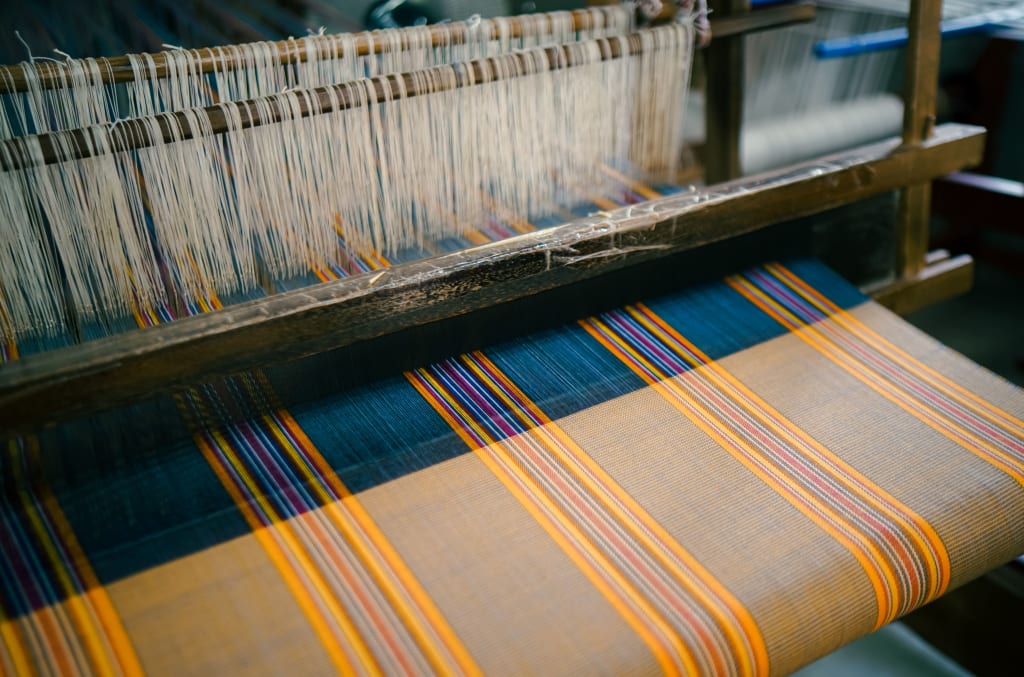
Textiles are storytellers through colors and fibers. The intricate patterns and designs are visually stunning and alluring to the eyes. They seem to be beckoning you to hold them close and feel the threads as if they were speaking. But, will you believe it if it is woven by the hands of weavers with a magical touch? Traditional handloom weaving is known to be in the provinces of Baguio and Iloilo; however, only few know that traditional weaving is still alive in the home of Ibaan, Batangas.

Revival of Habing Ibaan
The weaving culture is not new to Ibaan, as it was known as the home of "kulambo," or mosquito net, throughout the years. The kulambo has been losing its luster, but the locals' ardent devotion to weaving—the kababaihan of Ibaan—has ensured that it would thrive and gradually revive the traditional weaving and craft.
A glimmer of hope for the Habing Ibaan emerged with the establishment of the association; yet, if you think it was easy, it never was. There were a lot of challenges in the process of establishing the association, but the most crucial was having knowledge and experience in weaving.
"Actually, ang iba ay mga dayo, na dito lang talaga natuto sa amin. Kami pa ang nagturo sa iba”, says Remidios Valencia, the President of the SM Sunrise Weaving Association.
Kababaihan strives for more
But one may ask, how hard is it to learn and master the process of doing the habing ibaan?
A single thread undergoes a great deal of processing before it reaches the weaving itself.
Making lovely traditional fabrics goods could seem like a piece of cake, but behind the alluring colors and patterns is the long process of a single thread, endless moving of feet to pedal, and nonstop working of hands to move the shuttle from left to right.
Five years from now, these women aim to retain the quality of handmade products through Habing Ibaan. Their initiative still has a long way to go and many aspirations to pursue; hence, the kababaihans are eager to carry on the tradition of habing ibaan to future generations.
The Kababaihans, though, hold out hope and will do everything in their power to ensure that the weaving culture continues to strive for more.
“Ang masasabi ko lang, sa pagdaraan siguro ng panahon, kaya rin namin makisabay. Hindi pa siguro oras namin, pero darating siguro. Napaka-importante kasi nito. Dahil dito nga, nasasalamin ang kultura ng habing Pilipino. Kaya hindi dapat natin baliwalain ang paghabi ng kamay,” Remidios emotionally stated.
For most, maybe they see weaving as the only source of livelihood, but for them, they consider it an integral aspect of our cultural heritage. It brings people together in communities where their inventiveness and enduring traditions bind them together.
Each fabric and garment is made up of woven single strings that form a beautiful art that signifies the beauty of Philippine culture.
About the Creator
Camille Angela Zarate
Camille Angela Zarate is a Journalism graduate from the Polytechnic University of the Philippines who is passionate about writing, creating, and sharing different stories while elevating perspectives.
Keep reading
More stories from Camille Angela Zarate and writers in Art and other communities.
The Loom of Life and the Tapestry of Dreams
Revival of Habing Ibaan The weaving culture is not new to Ibaan, as it was known as the home of "kulambo," or mosquito net, throughout the years. The kulambo has been losing its luster, but the locals' ardent devotion to weaving—the kababaihan of Ibaan—has ensured that it would thrive and gradually revive the traditional weaving and craft.
By Camille Angela Zarate2 years ago in Art
Dog Shoes for Small Dogs and Puppy Shoes A Practical, Paw-Friendly Guide
Small dogs and puppies may look tough, but their paws often need more protection than people realize. Their bodies are lighter, their paws are smaller, and many of them spend a lot of time on surfaces that were never designed for delicate paw pads. Add cold sidewalks, hot pavement, rough gravel, wet grass, or even slippery indoor floors, and you start to see why dog footwear has become more than just a cute trend.
By aliyashahzadi2 days ago in Art



Comments
There are no comments for this story
Be the first to respond and start the conversation.