
The Last Gift of the Stars
A boy who chased the night sky learned that the brightest light lives within.


Noah had always watched the sky like it was alive. Every night, he lay on the roof of his small house, sketching constellations in a battered notebook while the world below him slept. His mother would wave from the window, her voice soft but tired from long shifts at the hospital. “Don’t catch a cold, astronaut!” she’d call. He’d grin and whisper back, “I’m just waiting for my star.” Their town had long since lost its stars, drowned by the neon glow of factories and signs. Yet Noah believed they were still up there, hiding behind the haze, waiting for someone patient enough to look for them.
For his twelfth birthday, his mother surprised him with a telescope she had bought secondhand. The lens was scratched, and the stand wobbled, but to Noah it was a portal to another world. Every night, he pointed it at the empty sky, turning the knobs, adjusting, waiting. But the stars never appeared. Only a gray, polluted ceiling of clouds stared back. Some nights he would cry quietly, his small hands gripping the telescope as if it might suddenly show him everything he was missing. His mother would sit beside him and say, “Even if you can’t see them, they’re still there. Some lights never go out.”
One winter evening, she didn’t come home. The call came late — a quiet, broken voice from the hospital. She had collapsed after her shift, her heart giving out from exhaustion. The world seemed to pause that night. The telescope sat untouched in the corner. Noah stopped going to the roof. The stars, he thought, had gone out for good.
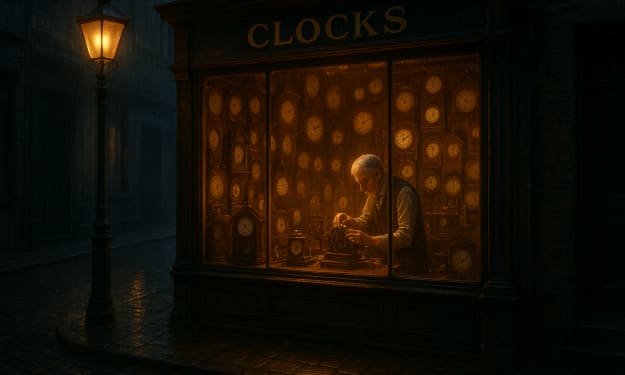
Weeks turned to months. His house grew silent except for the ticking of the old wall clock she’d left behind. Then one stormy night, as thunder rolled through the hills, Noah climbed back up to the roof, drawn by something he couldn’t name. The wind howled and rain lashed his face, but he set up the telescope anyway. “Are you still there?” he whispered to the sky. Through the cracked lens, he saw nothing—just blur, darkness, and storm. But then, in the distance, faint and trembling, a single point of light appeared. It blinked once, twice, steady and patient. Noah’s breath caught. It was small, but it was real. He smiled through the rain. “There you are,” he whispered. That night, for the first time since she was gone, he felt like he wasn’t alone.
He began writing letters to the star. He named it Luma. Every evening he’d sit by the window, writing words he could never say aloud. “Dear Luma,” one letter read, “I miss her. If you can hear me, tell her I’m okay.” Another said, “I’ll keep looking up, like she told me to.” He folded each one into a paper plane and let the wind carry it. The letters never came back, but somehow, it helped.
Years passed. The factory shut down, and the lights that had hidden the stars faded away. One clear night, Noah climbed to the roof again and gasped. The sky was alive — thousands of stars glittered like tiny fires, each one brighter than memory. And right in the center of them all, glowing stronger than the rest, was Luma. He didn’t need the telescope to see it anymore.
When Noah grew older, he studied physics and astronomy, chasing the same light that once guided him through grief. Eventually, he returned to his hometown and built a small observatory where the factory once stood. Every evening, children would gather, peering through new telescopes, laughing as they spotted their first constellations. Noah watched them and smiled, remembering the boy he used to be—the one who waited for a star. “Every light you see up there,” he told them, “is a story that refused to die.”
On the night of the observatory’s grand opening, Noah found an envelope resting on his desk. It was yellowed at the edges, no name, no stamp. Inside, in handwriting he hadn’t seen in years, were words that froze his breath. “My dearest boy, when you look at the stars, know that I’m looking back. Every light you see is a heartbeat that never stopped. Love, Mom.” His hands trembled as he read it again and again. He stepped outside, the letter still in his hand. Above, the stars burned brighter than he had ever seen. He knew, somehow, that she was among them.
The laughter of children echoed around him as they pointed their telescopes toward the heavens. Noah looked up at Luma, his first star, the one that had never left. The cool night air carried the scent of rain and pine, the same as when he was a child. He whispered, “Thank you for bringing her back to me.” The wind rustled softly in reply, and for an instant, the sky seemed to shimmer. The stars pulsed, faint but rhythmic, as if answering his heartbeat.
He realized then what his mother had meant years ago — some lights never go out. Even when love disappears from sight, it doesn’t fade; it only travels farther, waiting for us to look up again. The stars weren’t just burning gas in the void; they were memories, promises, and pieces of every soul that ever dared to love.
As Noah stood beneath the glowing sky, he felt no sadness, only peace. The observatory lights dimmed behind him, and the night became infinite. Somewhere above, among millions of shining souls, his mother’s light flickered once, softly — a small, eternal heartbeat in the endless dark. Noah smiled, knowing that even in the silence between worlds, love still shines.
About the Creator
Charlotte Cooper
A cartographer of quiet hours. I write long-form essays to challenge the digital rush, explore the value of the uncounted moment, and find the courage to simply stand still. Trading the highlight reel for the messy, profound truth.
Keep reading
More stories from Charlotte Cooper and writers in Art and other communities.
Catherine: The Unshakable Heart of the Monarchy
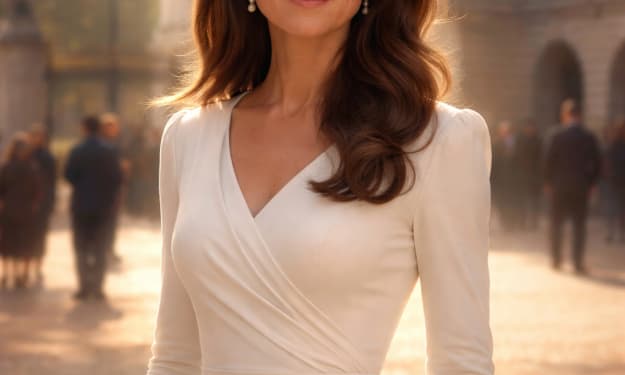
The House of Windsor is facing a subtle but undeniable shift. Tension runs high, and the once-clear lines of loyalty and influence are now blurred. At the center of it all stands Catherine, Princess of Wales—a figure who has long been admired for her grace, calm, and unwavering dignity. But recent events have brought a storm to the palace doors, one that threatens to test the very foundation of royal stability. For years, Catherine served as the quiet anchor of the monarchy. She carried her role with elegance, weathering constant scrutiny from the public and press alike. Then came a serious health challenge, a period of uncertainty and silence that left many wondering if she would step back permanently. But she did not. Instead, she returned stronger, her poise and presence commanding renewed attention and respect. Public admiration for her soared, culminating in headlines that celebrated her as more than a royal figure—they crowned her a symbol of strength. This rising public affection, however, has created ripples behind palace walls. Reports suggest that King Charles feels overshadowed, and Queen Camilla may be aligning with palace traditionalists in response to Catherine’s prominence. What was once a harmonious center of royal life now shows signs of friction. Influences are shifting, whispers and press narratives become tools of subtle power struggles, and Catherine, the stabilizing force, is suddenly cast as a threat. This isn’t about Catherine versus Meghan Markle, though the comparison is inevitable. Meghan, once seen as the disruptor, now observes the palace from outside. Her era of controversy shaped her influence, but today’s narrative highlights endurance over disruption. Catherine doesn’t need confrontation to command attention—her consistency, humility, and resilience naturally draw public support. This quiet power is precisely what unsettles those who rely on control and manipulation. Catherine’s return demonstrates a fundamental truth: legacy outlasts noise. She embodies a rare combination of grace under pressure, emotional intelligence, and unshakable composure. Her strength is evident not in headlines or controversy but in her ability to maintain dignity amid chaos. People don’t just admire her; they trust her. They feel her presence, and in her, they see continuity, reliability, and hope for the monarchy’s future. The palace may attempt to manage narratives, deploy commentators, or subtly influence the media, but they cannot manufacture the connection Catherine shares with the public. Her influence is organic. It is the result of years of consistent, visible dedication, and it resonates far beyond the confines of Buckingham Palace. While power struggles may unfold within, the world watches, and the audience has already chosen a champion. Meanwhile, Meghan’s story, once loud and all-encompassing, fades into the background. Her brand of influence—rooted in challenge and controversy—cannot compete with Catherine’s enduring presence. The public craves stability, someone who embodies calm, resilience, and authenticity. Catherine provides that in abundance, and the contrast is unmistakable. Enduring legacy outshines transient disruption. Ultimately, Catherine’s rise is not a threat to the monarchy—it is its lifeline. She is the bridge between tradition and relevance, connecting generations with quiet confidence. The very qualities that some may perceive as challenging palace control—her popularity, her grace, her resilience—are precisely what sustain public trust. This isn’t a story of rivalry; it’s a lesson in the power of character, the influence of consistency, and the enduring appeal of authenticity. History has a way of remembering who strengthens institutions and who allows petty conflicts to erode them. Catherine stands as a testament to steadfast leadership, quiet courage, and the enduring bond between a royal and her people. Those who underestimate her do so at their peril, for her strength is both visible and deeply felt. The narrative is clear: Catherine isn’t merely surviving; she is thriving. She faces pressure, criticism, and palace politics with unflinching dignity, reinforcing her role as an indispensable figure in the monarchy’s future. Her story reminds the world that true influence is built on resilience, authenticity, and the unwavering commitment to serve, rather than to command attention. As the palace navigates shifting alliances and personal insecurities, the public stands with Catherine. Her legacy, already forming, will outlast the temporary noise of gossip and speculation. She is the embodiment of stability, grace, and leadership—a woman whose presence strengthens the monarchy and whose endurance inspires the world. The House of Windsor may grapple with internal tension, but Catherine has already secured her place in the hearts of those she serves. In a world of fleeting attention and manufactured drama, Catherine proves that true influence is quiet, steady, and lasting. She faces life’s storms not with theatrics, but with poise and resilience, leaving a legacy that no palace intrigue can diminish. The world watches, admiration grows, and history quietly notes who stood firm, who served with dignity, and who became a true icon of endurance. Image Creation Format for This Story: Subject: Catherine, Princess of Wales, standing gracefully in a sunlit palace courtyard, with subtle shadows representing tension behind palace doors. Mood: Elegant, dignified, serene, yet powerful—contrast of calm versus tension. Style: Realistic digital painting, slightly cinematic, focus on light and expression.
By Behind the Curtain8 days ago in Art
The Uncopiable Human Wit to Write
We all have been in that spot at least once in our schooldays where we have been wringing our brains off to curate written articles of some sort until our soul-less friends were born. At just four years old, our beloved soul-less, metallic, digital assistant who is always by our side when we turn on our computers and smart phones, will be doing much more than curating written content for us all, if you know what I mean.
By Sound Savvy3 days ago in Art
Miss Persephone's Manual to a Seemingly Ordinary Life
Miss Persephone was found at the dining table, her blue eyes swollen, her tears arriving and retreating like the tides of the ocean. Earlier that day, her family had visited her in the retirement home where she had lived for eight years. It was her eightieth birthday.
By Imola Tótha day ago in Fiction


Comments
There are no comments for this story
Be the first to respond and start the conversation.