
The Last Flame
Hope was fading, but one flame still burned


The Last Flame
Hope was fading, but one flame still burned
The night was unusually silent. The sky stretched wide and dark, scattered with stars that looked like forgotten wishes hanging above the earth. In the center of the village, a fire burned tall and fierce, its flames rising straight into the air as if the ground itself was trying to speak to the heavens. The crackling sound of burning wood echoed softly through the empty streets.
This was not just a fire.
This was the last flame.
A small group of villagers sat around it, their faces glowing orange in the firelight. Shadows danced behind them, stretching across broken walls and abandoned houses. No one spoke, yet every heart was heavy with unspoken words. This village had once been full of laughter, voices, and life. Now, it stood quietly on the edge of disappearance, as if holding its breath.
Years of drought had cracked the land until it resembled shattered glass. Crops failed season after season. Work vanished, shops closed, and schools locked their doors. One by one, the young people left for the city, chasing survival if not success. Houses stood empty, doors hanging loose, memories trapped inside silent walls. What remained were the old, the tired, and the stubborn—those who refused to leave even when hope seemed to have packed its bags long ago.
At the front sat Rahmatullah, the oldest man in the village. His back was bent with age, and his face carried deep lines carved by time, loss, and endurance. His hands trembled slightly as he held them close to the fire for warmth. He stared into the flames, not really seeing them, but seeing the past—fields once green, nights filled with songs, weddings that lasted for days, and children running barefoot under the moonlight.
“This is the last one,” someone whispered from the crowd.
“The last fire.”
The words fell heavily into the night.
Rahmatullah nodded slowly. “Yes,” he said quietly. “But remember this—sometimes the last thing is not the end. Sometimes, it is a test.”
The fire had been lit every year as a tradition, a symbol of unity passed down through generations. But this year felt different. The government had announced that the remaining services would be withdrawn. The village school was officially closed. The water supply was unreliable. Once this flame died, many believed the village would die with it, fading into memory like so many others before it.
Suddenly, a young man stepped forward from the crowd.
His name was Arif.
He was different from the others—young, educated, and restless. He studied in the city but had returned for a short visit, carrying both guilt and longing in his heart. He looked at the fire, then at the faces around him—faces filled with fear, resignation, and quiet grief.
“Why are we accepting this?” Arif asked. His voice trembled, but it was strong enough to cut through the silence.
“Why do we act like this is fate?”
No one answered. Silence had become their habit, their shield against disappointment.
“This fire isn’t burning because of wood alone,” Arif continued, stepping closer to the flames. “It’s burning because of everything we still have—our memories, our pride, our refusal to disappear. If we let it die tonight, it won’t be the government or poverty that ends this village. It will be us.”
The wind picked up suddenly, rushing through the narrow streets. The flames surged higher, twisting and roaring as sparks flew upward, glowing like tiny stars breaking free from the fire.
A woman stood up slowly. Her face was tired, her clothes worn, but her eyes held determination. Without saying a word, she placed a piece of dry wood into the flames. Then a man followed, dragging an old broken chair. Another added fallen branches from his yard. One by one, the villagers rose.
It wasn’t just wood they were offering.
It was fear.
It was doubt.
It was surrender.
Rahmatullah watched with tears filling his eyes. “I thought I wouldn’t live to see this,” he said softly. “I thought this village was waiting to die. But maybe… maybe it was only waiting to wake up.”
That night, no one slept. They sat around the fire and talked—really talked—for the first time in years. Stories were shared, laughter returned, and forgotten dreams resurfaced. Plans were made with cautious hope. They decided to reopen the school themselves, even if it meant teaching without pay. They agreed to revive the fields together, sharing water, tools, and labor. Most importantly, they promised not to abandon one another again.
The fire burned through the night, steady and alive.
When morning came, the flames were smaller and calmer—but they still burned. Smoke curled gently into the pale sky as the sun rose, painting the village in gold. The houses looked less broken in the daylight, as if hope had repaired them overnight.
Arif stood beside Rahmatullah, watching the last embers glow.
“This flame is our responsibility now,” he said quietly.
Rahmatullah smiled—a smile filled with sorrow, pride, and hope.
“No, my son,” he replied. “This flame is now our identity.”
People often say fire destroys everything it touches. But some fires do not destroy. Some fires remind. Some fires awaken what was sleeping.
And in that forgotten village,
The Last Flame
was never meant to be the end
It was the beginning.
✍️Writer mehman
About the Creator
Keep reading
More stories from writermehran and writers in Art and other communities.
Small Heat
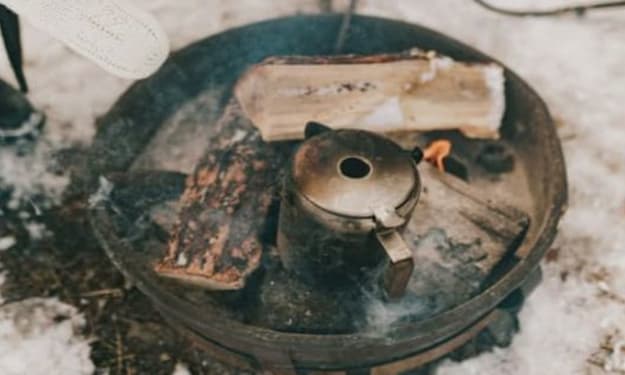
Small Heat A story about patience, suSmall Heatrvival, and the quiet power of slowing down The man built the fire carefully, feeding it only what it needed. Not too much. Not too fast. The flames stayed low, almost shy, glowing softly beneath the old metal kettle. This was small heat—the kind that didn’t demand attention, the kind that worked slowly but faithfully.
By writermehran2 months ago in Chapters
'Till Death We Do Art
There would be nothing divine in this world without art. Nature may surpass the divine to all intents and purposes, but like everything it absorbs and is absorbed by, it remains here, stuck on the surface of this world, ever-present, physically bound to the universe.
By Avocado Nunzella BSc (Psych) -- M.A.P 14 days ago in Art
A Planetary Alignment will coincide with Mercury Retrograde
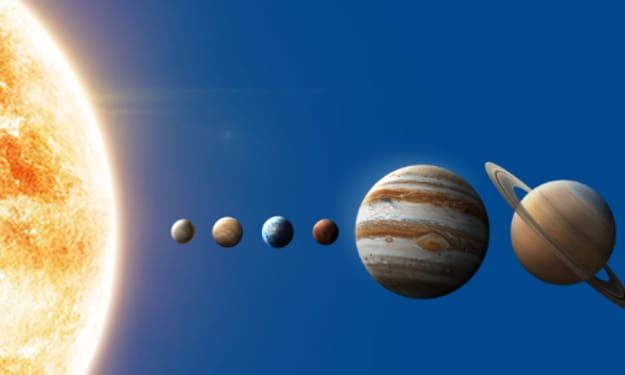
Double phenomena in the heavens Some people say in jest that the planets have aligned in their favor when life works the way they desire. Were you aware that there are seasons when things do line up in the heavens? There will be a planetary alignment AKA a planet parade, on February 28, 2026.
By Cheryl E Preston5 days ago in FYI


Comments (2)
Best story
Bees