
"The Last Candle in the Dark"
When All Light Fades, Hope Still Burns

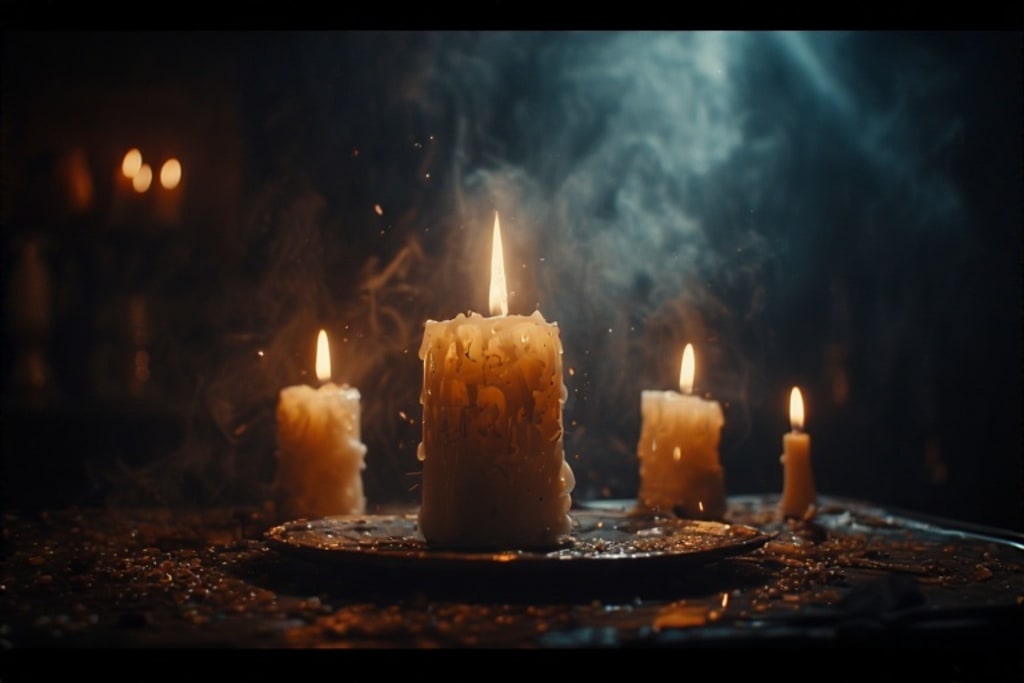
The war had turned the city into a shell of ash and echoes.
Once a vibrant place where birds sang at dawn and shopkeepers laughed in the alleys, the city now lay under a gray sky, muted and broken. Smoke curled from buildings with no roofs. Schools were abandoned, markets empty, homes shattered. The world had gone quiet—not the peaceful kind of quiet, but the kind that hums with loss.
In the heart of this broken place, hidden deep inside the ruins of what had once been the city’s public library, a boy named Sami clung to life.
He was twelve.
And he was alone.
Sami had been with his parents when the first bombs fell. They told him it would be over soon. That help was coming. That he just had to be brave.
But three days ago, his mother and father left to find clean water from a distant well. They promised to be back before nightfall. Sami waited with growing fear as the sun sank and the cold came. He waited the next day. And the next.
They never returned.
He didn't cry at first. He couldn't. Fear had frozen his tears. He sat curled between fallen bookshelves, surrounded by dust and charred paper. The stories that once danced in pages were now blackened fragments.
He might have disappeared like the others—another shadow swallowed by war—if not for one thing.
A candle.
He found it on the third day, tucked away in a forgotten drawer beneath a scorched librarian’s desk. Just one candle. Short, a bit bent, but unburned.
And next to it, a single match.
His hands shook as he struck the match against the drawer. It sparked. For a second, it fizzled. Then, flame.
He lit the candle.
And in the midst of that hollow, colorless world, a tiny warm light flickered into being.
Sami stared at it like it was magic. For the first time in days, the darkness stepped back. Shadows retreated. The cold didn't feel as sharp. It was just a candle, but to him, it was life.
That night, he placed the candle in front of him and whispered stories to it. About his parents. About school. About his dream of becoming a teacher one day. The flame swayed gently as if listening.
It was the first thing that hadn’t left him.
Over the next days, the candle became his ritual. He would light it only for a short time each night, careful to conserve it. During the day, he’d explore the ruins of nearby buildings in search of food or anything useful. He found a rusted tin of beans. A tattered blanket. Pieces of charcoal.
Using the charcoal and scraps of paper from the library, he began writing notes—memories, small poems, things he wanted people to know in case he didn’t survive.
“My name is Sami. I lived here once.”
“If you find this, please remember my mother loved roses.”
“I still believe the world can be good again.”
He hid the notes in books, under rocks, in cracks in the wall.
Little messages for a future he still believed in.
One night, a powerful wind blew through the ruins. It howled like a wounded animal and tore at the walls. Sami huddled in a corner, shielding his candle with both hands. He wept then, the tears hot against his dust-covered cheeks.
“Please,” he whispered, “don’t go out.”
But the candle didn’t. The flame shivered, danced wildly—but held on.
So did he.
Days blurred.
Then, one morning, Sami heard something—voices. Distant but real.
He crawled to the edge of the broken window and saw figures moving cautiously through the wreckage. Soldiers—this time wearing white helmets and the blue patch of peacekeepers. They were calling out in different languages, searching the ruins for signs of life.
Sami wanted to scream, to run, but fear pinned him down. Then he looked at the candle. It was almost gone—just a small nub of wax. But he knew what he had to do.
He took the last bit of his hope, walked out into the middle of the city square—what once had been the fountain where children played—and placed the candle on the edge.
And he lit it.
It flickered bravely in the daylight wind, tiny against the endless sky. But it was there.
The soldiers saw the smoke first.
Then they saw the boy.
A medic rushed forward, wrapping him in a blanket, offering water. They asked his name. He barely whispered it.
When asked how he had survived, Sami didn’t speak at first. Then he pointed to the candle and said simply:
“Because I had light. Even when there was none.”
Moral:
Even in the darkest moments, one small act of hope can illuminate the way forward. Strength isn’t always loud—it can be a whisper, a flicker, a flame that refuses to die.
Final Thought:
War can destroy buildings, families, and dreams—but it can never destroy the human spirit entirely. Somewhere in the rubble, the last candle still burns. And as long as it does, there’s a reason to keep going.
Ask ChatGPT
About the Creator
Keep reading
More stories from Najeeb Scholer and writers in Art and other communities.
'Till Death We Do Art
There would be nothing divine in this world without art. Nature may surpass the divine to all intents and purposes, but like everything it absorbs and is absorbed by, it remains here, stuck on the surface of this world, ever-present, physically bound to the universe.
By Avocado Nunzella BSc (Psych) -- M.A.P 16 days ago in Art
Golden Journey
Once in a small town named Willow Creek, something extraordinary was about to happen. The sun was setting, casting long shadows and a golden glow across the landscape. Among the townspeople was a curious boy named Ethan. A dreamer with bright green eyes and messy brown hair, Ethan was often lost in his thoughts. He wanted to explore worlds beyond his own, driven by the tales of adventure his grandmother used to tell him.
By Hamad Afridi 4 days ago in Art
Guard Your Battery
Why are some people so attractive just by standing there? It’s not because they are "likable," but because they don’t need everyone to like them. I realized later that truly charismatic people allow themselves to be criticized, but they never criticize themselves. They never try to please the world; instead, the world stops to watch them.
By Emily Chan - Life and love sharingabout 19 hours ago in Poets




Comments
There are no comments for this story
Be the first to respond and start the conversation.